
Bangladesh has warned that the prolonged presence of more than 1.2 million Rohingya refugees is becoming an increasingly unsustainable humanitarian, economic, and security burden, urging stronger international action to ensure their safe and dignified return to Myanmar.
Speaking at the 26th Commonwealth Foreign Affairs Ministers Meeting in London, Bangladesh’s Foreign Minister Khalilur Rahman called on the global community to intensify diplomatic pressure and coordinated action to resolve one of the world’s most protracted displacement crises.
The meeting, hosted at Lancaster House, brought together representatives from the 56 member states of the Commonwealth of Nations to discuss major geopolitical and humanitarian challenges facing the international community.
A Prolonged Crisis with Regional Consequences
Nearly a decade after the mass exodus triggered by Myanmar’s 2017 military crackdown in Rakhine State, Bangladesh continues to host the world’s largest concentration of Rohingya refugees in camps in Cox’s Bazar.
Addressing the conference, Rahman emphasized that Bangladesh’s humanitarian commitment has stretched far beyond emergency relief.
“Hosting such a large displaced population for an extended period has placed immense pressure on Bangladesh’s resources, environment, and security,” he said.
Officials warn that the crisis is entering a dangerous phase of donor fatigue, as humanitarian assistance declines while the refugee population remains trapped in limbo without prospects for safe return.
New Rohingya arrivals have also continued to cross the border from Myanmar in recent months, reflecting persistent instability in Rakhine State and the absence of meaningful protection guarantees for the Rohingya population.
Declining Aid, Rising Risks
Humanitarian agencies operating in the camps have repeatedly warned that reductions in international funding are already affecting food rations, education services, and health programs.
Aid reductions risk intensifying desperation, human trafficking, and irregular migration, particularly maritime departures from the Bay of Bengal toward Southeast Asia.
Regional security analysts warn that prolonged displacement without political resolution could further destabilize the region, fueling criminal networks and increasing pressure on neighboring states.
Bangladesh has consistently maintained that repatriation to Myanmar remains the only sustainable solution to the crisis.
However, repeated bilateral repatriation attempts have failed due to the lack of security guarantees, citizenship recognition, and basic rights for Rohingya communities in Myanmar.
International Responsibility and Accountability
During his address, Rahman urged the international community to move beyond humanitarian assistance and pursue concrete political solutions, including sustained diplomatic engagement and accountability mechanisms.
“The conditions necessary for safe, voluntary, and dignified return must be created in Myanmar,” he said, calling for stronger global engagement to address the root causes of the crisis.
The Rohingya crisis has increasingly become a test of the international rules-based order, with human rights organizations warning that the failure to resolve the situation risks normalizing impunity for mass displacement and ethnic persecution.
Bangladesh Seeks Global Cooperation
The Bangladesh delegation to the meeting was led by Rahman and included Prime Minister’s Foreign Affairs Adviser Humayun Kabir and other senior officials.
Conference participants also discussed preparations for the upcoming Commonwealth Heads of Government Meeting scheduled for November, along with broader global concerns including violations of international norms, climate change, and economic instability.
Rahman also thanked the Commonwealth Secretariat for deploying a high-level observer mission to monitor Bangladesh’s 13th National Parliament elections, which he said contributed to ensuring transparency and international confidence.
Diplomatic Engagement on the Sidelines
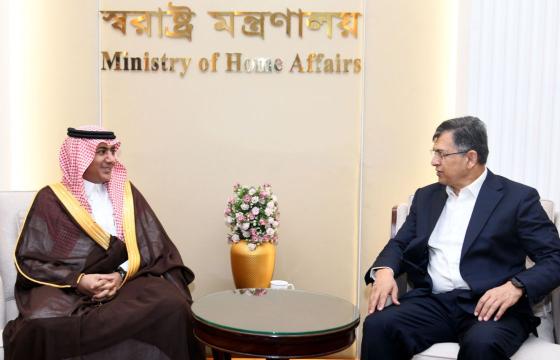
On the sidelines of the conference, the Bangladeshi foreign minister held several bilateral meetings with international counterparts.
These included discussions with Robert Oliphant, Parliamentary Secretary of Canada; Alvin Botes, South Africa’s Deputy Minister of International Relations and Cooperation; Chet Greene, Foreign Minister of Antigua and Barbuda; and Samuel Okudzeto Ablakwa, Foreign Minister of Ghana.
During the meetings, Rahman sought diplomatic support for Bangladesh’s candidacy for the presidency of the United Nations General Assembly, while also highlighting the need for stronger international partnership in addressing the Rohingya crisis.
A Crisis Without a Political Solution
Despite years of humanitarian support, the Rohingya crisis remains fundamentally a political problem without a political settlement.
Until conditions in Myanmar allow Rohingya communities to return safely with full rights and citizenship, Bangladesh and the broader region are likely to continue bearing the consequences of a crisis that shows no immediate sign of resolution.