
The National Unity Consultative Council (NUCC) and the National Unity Government (NUG) have completed the "zero draft" of the Articles of Federal Transitional Arrangements (AFTA) — a proposed federal transitional constitution for post-coup Myanmar.
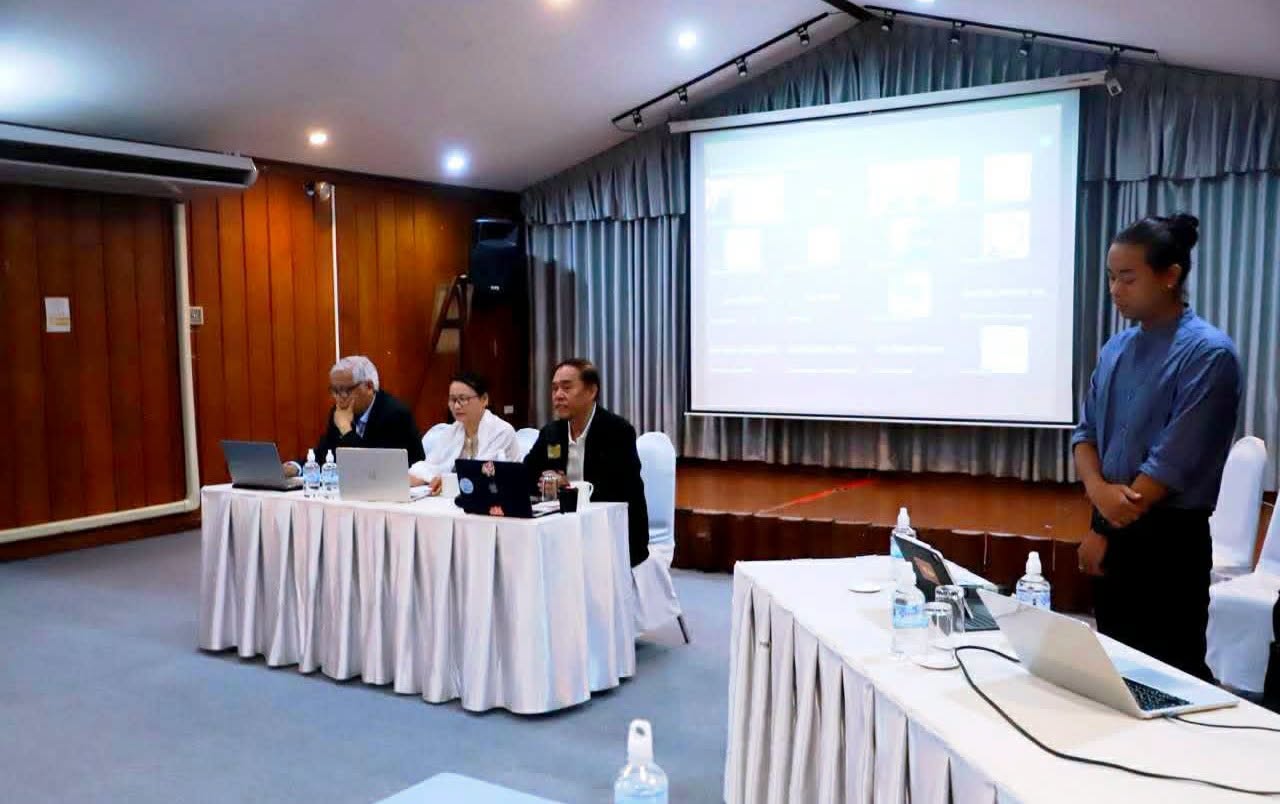
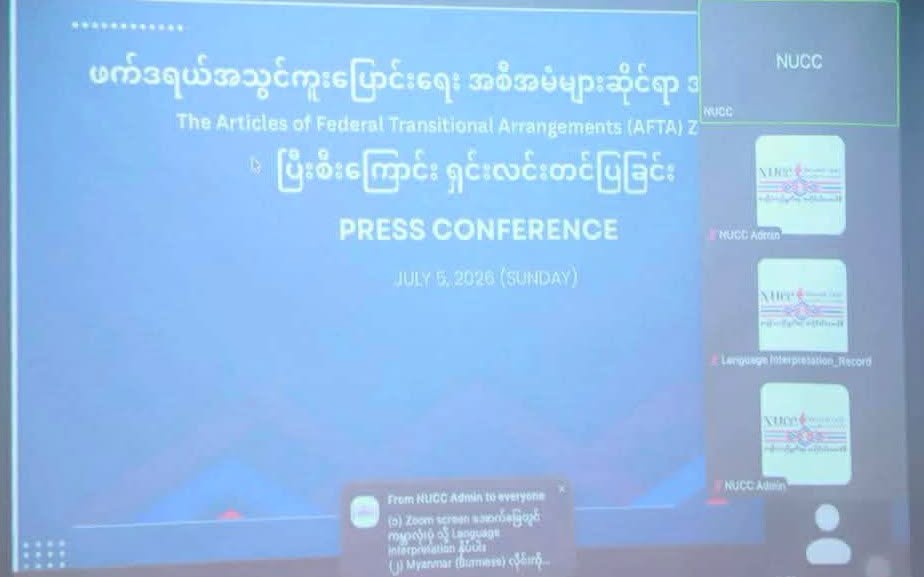
The two resistance bodies announced the breakthrough during a joint press conference held on July 5 at an undisclosed location along the Thailand–Myanmar border.
A "zero draft" represents the first comprehensive working blueprint of a legislative document. Comprising 13 chapters, the text is built on a bottom-up federalism model, which aims to forge a resilient Union by prioritizing the empowerment and autonomy of individual states and federal units first.
According to briefing participants, the draft primarily establishes fundamental principles. More detailed, granular provisions are slated for negotiation during the upcoming transitional period, which will culminate in an inclusive federal convention involving all revolutionary stakeholders.
“Excluding the preamble, the AFTA consists of 13 chapters," said U Toe Kyaw Hlaing, a prominent member of the NUCC. "At this stage, we have focused predominantly on fundamental principles. Once the transitional period reaches a stage where all diverse groups and stakeholders can fully participate, we intend to convene a federal convention to finalize negotiations and reach a definitive consensus.”
The current AFTA framework outlines core pillars, including the fundamental rights of citizens, state boundary demarcations, the separation of executive, legislative, and judicial powers, fiscal and monetary policies, post-war reconstruction measures, and women's rights.
The drafting committee emphasized that these provisions will undergo rigorous further deliberation before being codified into binding legislation.
Crucially, the draft redefines the division of powers between the Union and individual states.
This legal separation aims to prevent the nationwide fallout from controversial, large-scale projects, such as the Chinese-backed Myitsone Dam in Kachin State, which the military regime is currently attempting to revive.
Daw Hnin Hnin Hwme, an NUCC member and spokesperson for the Democratic Party for a New Society (DPNS), stressed that the dam project must not be viewed solely through a localized lens.
“The Myitsone issue is not merely a regional concern for Kachin State; it impacts the entire country," she noted. "There is also significant geopolitical pressure from China behind this revival. We urge the media to maintain broad public awareness on this matter.”
Both the NUCC and NUG stated they view this transitional constitution as both a strategic political weapon to dismantle the military dictatorship and a foundational roadmap for rebuilding the nation and securing lasting peace.
Representatives of allied resistance organizations, journalists from border-based and international media agencies, and diplomatic officials from foreign embassies attended the press briefing.