
Rice farmers in Myanmar’s southern Mon State are bracing for a sharp drop in this year's monsoon harvest as unpredictable weather, labor shortages, rising input costs, and persistent pest infestations continue to strain the agricultural sector.
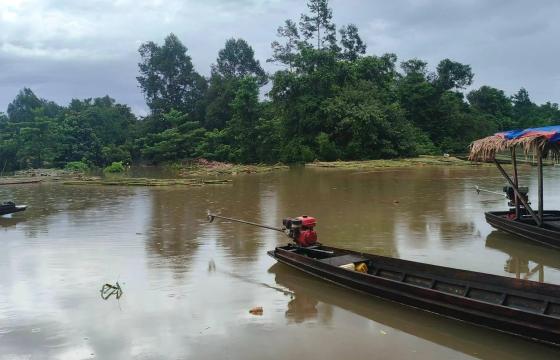
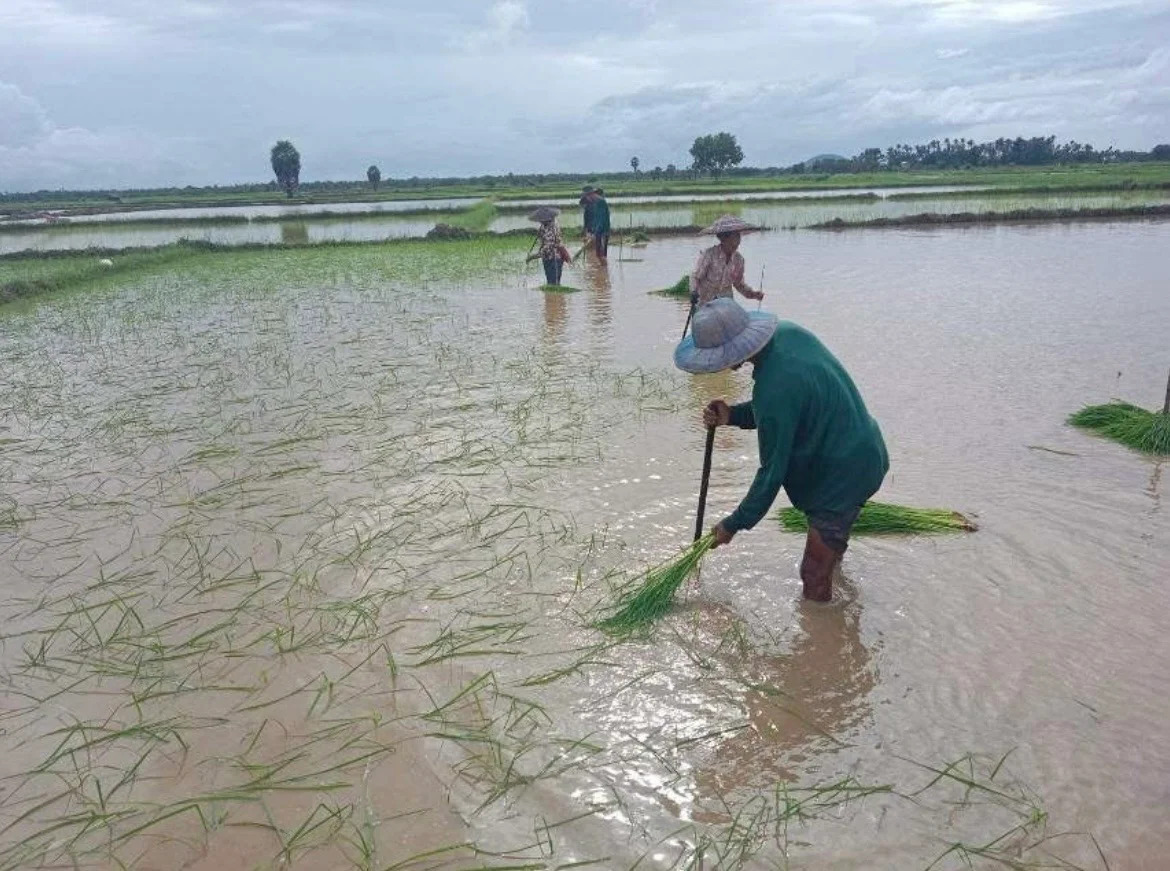
The region’s rice-planting season began with severe dry spells, followed by heavy, prolonged rainfall that flooded fields and destroyed young crops.
Beyond extreme weather, farmers are struggling with skyrocketing costs for fuel, seeds, fertilizers, pesticides, and manual labor.
Pests, including crop diseases and invasive snails, have hit fields in Ye, Mudon, and Paung townships particularly hard.
“This year’s rice yield will definitely be lower. It was already down last year,” said a farmer from Mudon Township. “Pests and snails are damaging the rice. We spray pesticides, but the problem keeps returning—it has happened more than 10 times. How can rice grow well under these conditions? Some farmers have already given up.”
Last year, erratic rainfall and fertilizer shortages reduced average yields from a normal output of over 40 baskets per acre down to roughly 25 baskets per acre.
To cut costs, many farmers are abandoning traditional seedling transplanting—a labor-intensive method that yields higher returns—in favor of seed broadcasting (scattering seeds directly onto fields).
However, agricultural experts note that direct broadcasting under current conditions is likely to reduce overall production.
Local market dynamics are adding to the farmers' burden.
While demand for remaining stocks of last year’s harvest has driven local prices up to between 30,000 and 40,000 Myanmar Kyats per basket, price fluctuations and transport risks leave farmers with slim profits.
In addition to economic pressures, transport routes have been heavily compromised by military junta-affiliated forces.
Local traders face extortion, arbitrary arrests, and checkpoint demands when moving rice between townships. This bottleneck previously left farmers stranded with unsold crops and artificially depressed local buying prices.
“Traders are coming around to buy rice now, so prices have picked up slightly, but they set rates based on quality,” said a farmer from Ye Township. “Those who need immediate cash have no choice but to sell.”
Mon State relies heavily on monsoon rice as its primary staple crop, alongside secondary cash crops like summer rice, sunflowers, peanuts, and various pulse varieties.
However, compounded by high inflation, rising commodity costs, and ongoing political instability, many farmers are forced to scale back the land they cultivate, raising broader concerns about regional food security.