
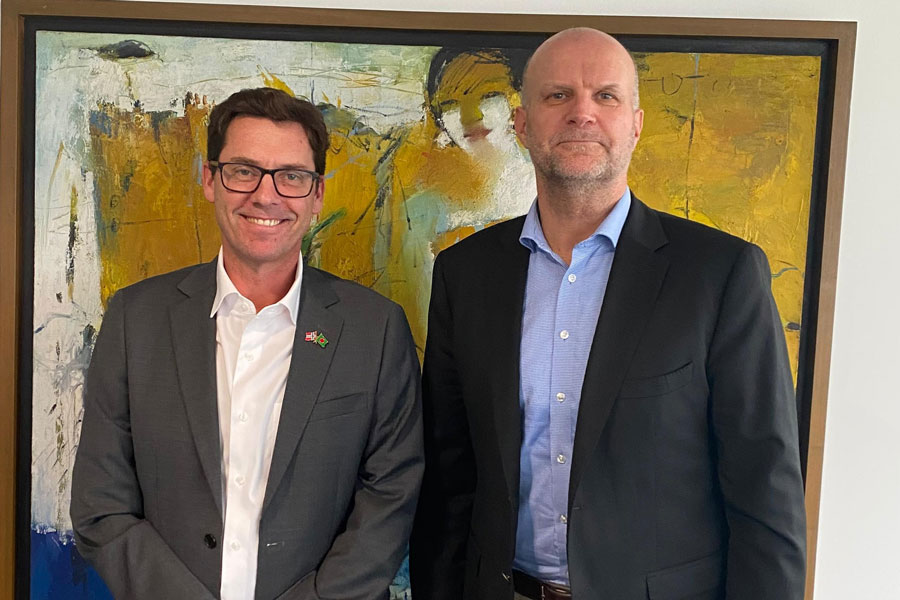
The United Nations High Commissioner for Refugees (UNHCR) has welcomed a generous contribution of USD 1 million from the Government of Norway to support nearly 1.2 million Rohingya refugees currently living in Bangladesh.
The funding forms part of Norway’s 2025–2026 contribution to UNHCR’s global budget and will help ensure the continuation of life-saving humanitarian assistance and essential protection services for Rohingya refugees amid growing needs. UNHCR has warned that declining humanitarian funding in 2025 has already forced difficult prioritisation decisions, resulting in reduced services and heightened vulnerability across the refugee camps.
“Now into the ninth year of the crisis, the Rohingya people need international support more than ever to sustain their well-being and keep hope alive,” said Ivo Freijsen, UNHCR Representative in Bangladesh. “Norway’s contribution will help strengthen refugee resilience through education, skills development, and livelihood opportunities, while supporting self-reliance until voluntary, dignified, and safe return to Myanmar becomes possible.”
Norway’s Ambassador to Bangladesh, H.E. Håkon Arald Gulbrandsen, reaffirmed his country’s commitment to principled refugee protection. “Norway and UNHCR share a common vision that is rights-based, principled, multilateral, and future-oriented,” he said. “In the Rohingya response, this means being a predictable partner that upholds dignity, promotes rights, and supports long-term solutions.”
He added that Norway is proud to support UNHCR’s work in strengthening the protection and resilience of Rohingya women, men, girls, and boys in line with humanitarian principles.
Beyond direct humanitarian assistance, Norway also contributes to joint initiatives such as SAFE+2, a programme that provides refugees with sustainable cooking fuel. The initiative reduces reliance on firewood, helps protect the environment surrounding the camps, and improves safety and health conditions—particularly for women and children.
Globally, 71 per cent of refugees are hosted by low- and middle-income countries, including Bangladesh. UNHCR stresses that sustained and predictable international support remains critical to easing the burden of displacement on both refugees and host communities, especially at a time of shrinking humanitarian budgets.
In cooperation with the Government of Bangladesh, UNHCR and its partners are preparing to launch the 2026 updated Joint Response Plan (JRP) for the Rohingya humanitarian crisis. Since 2017, Norway has been one of UNHCR’s leading partners, contributing more than USD 55.2 million in flexible core funding to the Rohingya response.
UNHCR noted that Norway’s continued support highlights the vital role of the international community in reinforcing Bangladesh’s efforts to host Rohingya refugees safely until political progress in Myanmar creates conditions for their voluntary return.