

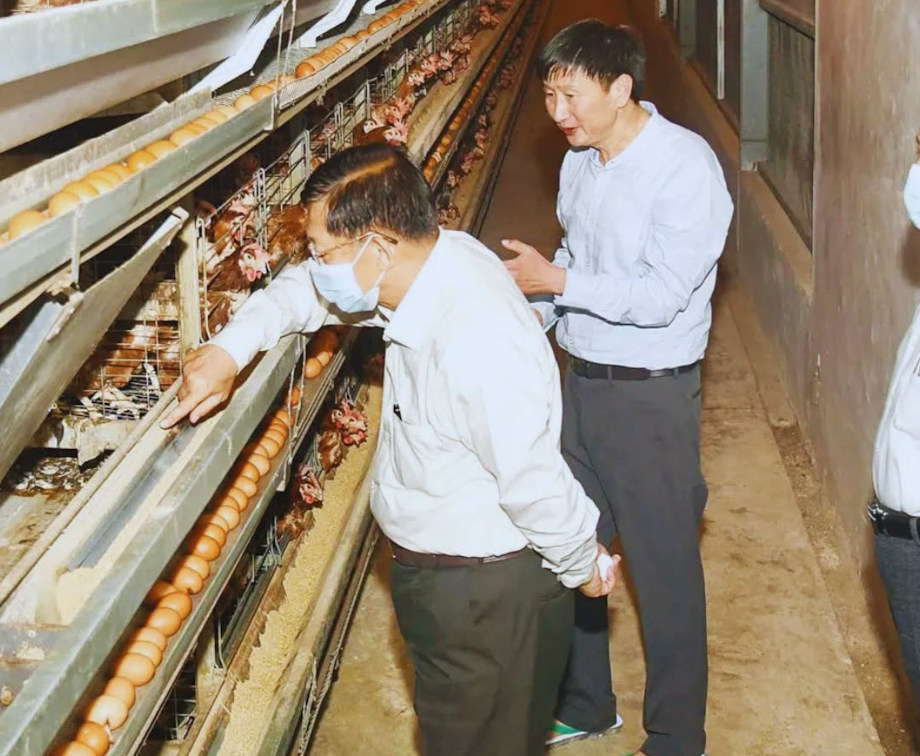
Egg prices in Myanmar have soared to nearly 700 MMK per egg under the military’s rebranded administration—a more than sevenfold increase compared to rates under the ousted National League for Democracy (NLD) government—placing a basic dietary staple out of reach for low-income households.
In early July, eggs were selling for between 450 and 500 MMK each, depending on size, before surging to current record highs within weeks.
Livestock operators and industry experts unanimously attribute the sharp rise to the regime's misguided economic policies, particularly severe import restrictions aimed at preserving foreign exchange reserves.
A local poultry farm owner told Than Lwin Times that the crisis stems from government bans on importing laying hens, feed raw materials, and essential veterinary vaccines.
"The main driver is the prohibition on importing breeding stock. Without new laying hens, maintaining production has become increasingly difficult," the farm owner said. "The regime wants to curb foreign currency outflows, so it froze imports. We are forced to rely on aging stock and makeshift solutions. Combined with rising feed costs and acute vaccine shortages, price hikes were inevitable."
Industry experts warn that vaccine shortages have triggered rising mortality rates among poultry, creating a severe supply-demand imbalance.
They caution that if import bans on feed ingredients persist, the country’s livestock sector faces potential collapse.
"With import permits frozen, local poultry stocks have shrunk dramatically, causing supply to fall far short of market demand," a livestock expert told Than Lwin Times. "While authorities are pressuring producers to offer temporary price cuts, these are short-term fixes. Unless import bans are lifted, egg prices—and other basic food items—will inevitably spike even higher."
In an attempt to contain public discontent, the regime has pressured the Livestock Breeding Federation to distribute eggs in Yangon for 550 MMK each, while directing authorities to enforce similar price caps in other townships.
However, industry insiders emphasize that price controls fail to address the underlying shortages.
Under the NLD administration, an egg cost roughly 100 MMK.
Today, at nearly 700 MMK, one of the country's most affordable sources of protein has become a luxury for millions of struggling families.