
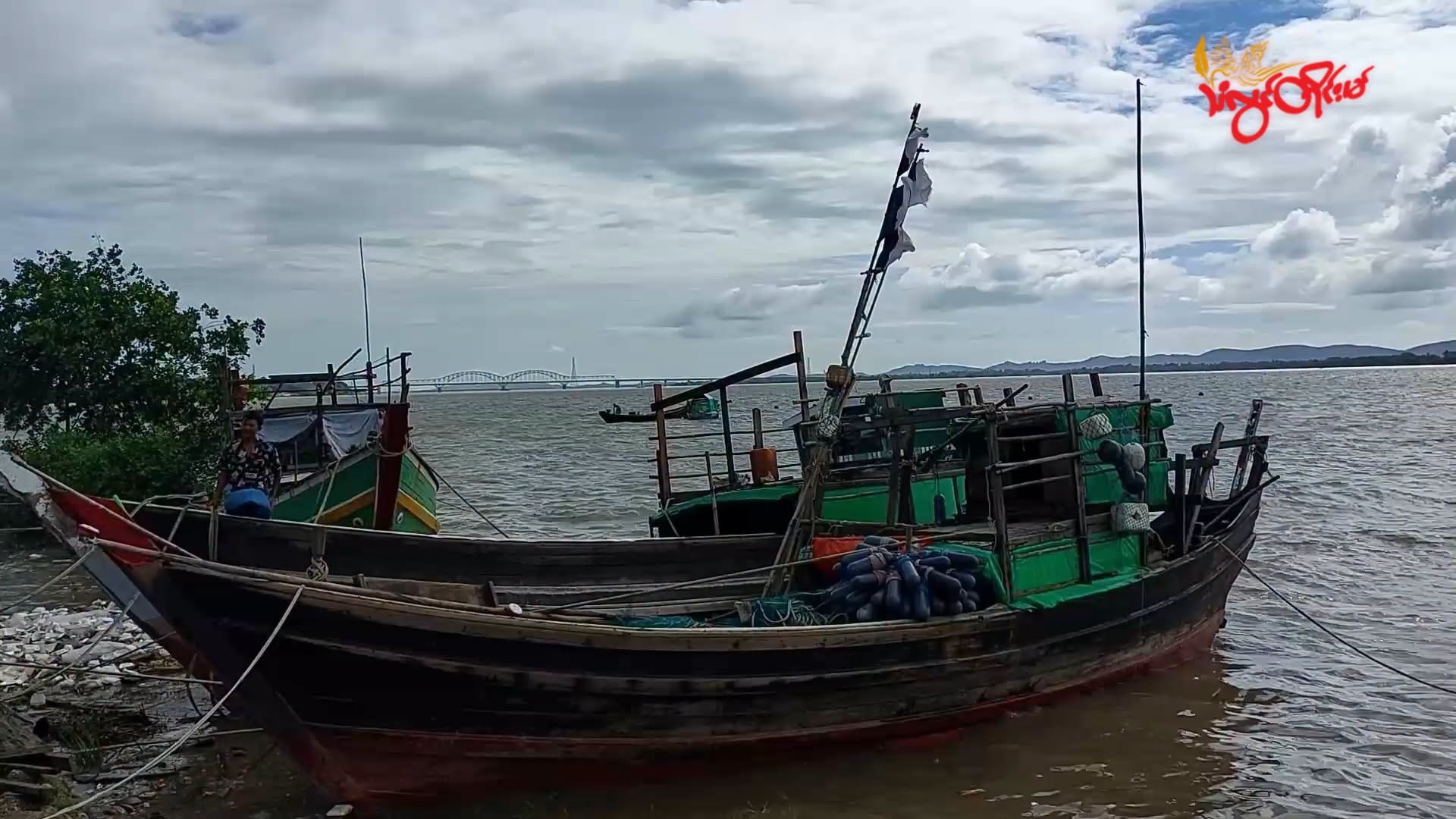
Mon State’s vital commercial fishing sector remains crippled as strict military junta regulations ban fuel sales in portable containers, forcing trawler fleets to stay idled in ports despite the opening of the new fishing season in July.
While nearshore and offshore fishing represents the region's third-largest economic sector—supporting over 3,000 vessels and tens of thousands of families—operators are facing acute shortages.
Fuel stations are strictly forbidden from dispensing fuel into any portable containers, restricting sales exclusively to direct vehicle tanks.
Although some operators attempt to siphon fuel from cars, the workaround yields only a fraction of required supplies, driving operators onto an expensive black market where prices have surged to between 1.1 million and 1.5 million MMK per barrel.
"We try to take fuel out of cars after filling them, but even then, we can’t get half of what we actually need," said one local fishing operator. "When black-market fuel prices rise to the point that fishing is no longer profitable, we have to suspend our operations."
The junta-appointed Mon State administration tightened fuel restrictions in July, expanding a QR-code quota system initially rolled out in April.
The draconian rules—ostensibly aimed at national conservation—have battered industries, relying on generators and grounded fishing fleets across nearly all Mon State townships.
The industry-wide shutdown is already rippling through the local economy. Skilled fishery workers are abandoning the trade for daily wage labor or fleeing abroad for employment, while consumers face looming spikes in local seafood prices.
Without an immediate policy reversal to permit containerized fuel sales, industry leaders warn that Mon State's historic fishing economy faces total collapse.