
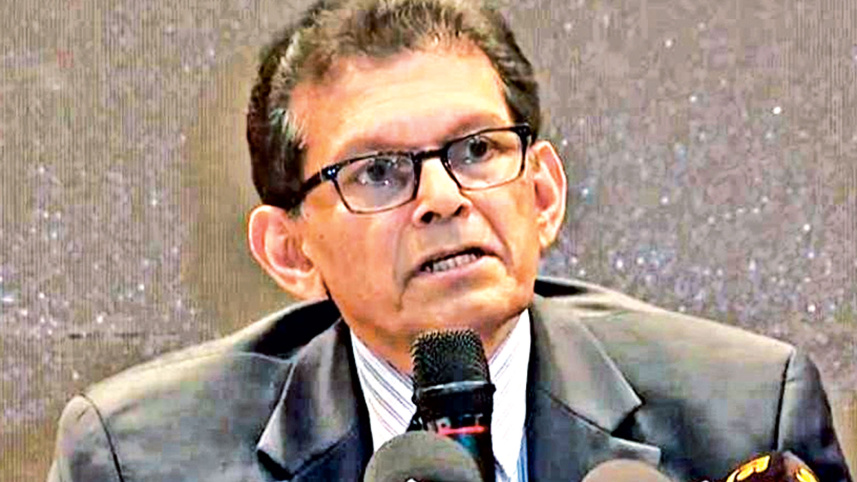
Bangladesh has shared data on 829,036 Rohingya refugees with Myanmar authorities in six phases as part of ongoing efforts to facilitate repatriation, Foreign Minister Khalilur Rahman informed parliament on Tuesday.
Responding to a query from lawmaker Shahjahan Chowdhury, the minister said that as of January 2026, Myanmar has verified approximately 354,751 individuals. Among them, 253,964 have been recognized as “persons previously residing in Myanmar.”
Despite progress in verification, Rahman cautioned that the repatriation process cannot begin immediately due to the continuing conflict inside Myanmar.
“Given the current security situation, conditions are not yet conducive for the safe return of refugees,” he stated.
The minister reaffirmed that Bangladesh considers “safe, voluntary, and dignified repatriation” as the only sustainable solution to the Rohingya crisis. He added that Dhaka will continue its diplomatic, legal, and humanitarian engagements with strong backing from the international community.
Rahman also highlighted that a high-level event on the Rohingya crisis was convened on September 30, 2025, during the 80th session of the United Nations General Assembly, where repatriation was emphasized as the long-term resolution. The event marked the first high-level conference on the Rohingya issue at the General Assembly.
Addressing accountability efforts, the minister referred to the ongoing genocide case at the International Court of Justice in The Hague, titled “Gambia vs Myanmar.” Hearings on the merits phase were held from January 12 to 29, 2026. Bangladesh has extended financial and diplomatic support to the case through the Organisation of Islamic Cooperation and has committed additional funding as costs increase.
He further noted that the Rohingya crisis is currently under discussion at the United Nations Human Rights Council in Geneva. Bangladesh organized a side event on March 12 focusing on human rights conditions, repatriation challenges, and accountability mechanisms.
Looking ahead, Rahman said the upcoming meeting of the OIC Council of Foreign Ministers is expected to adopt two resolutions on the Rohingya issue, with Bangladesh playing a leading role in drafting and negotiations.
Separate Development: Fuel Supply Concerns Addressed
In response to a supplementary question from opposition lawmaker Mir Ahmad Bin Quasem, State Minister for Foreign Affairs Shama Obaed Islam stated that Bangladesh is not facing a fuel crisis.
Her remarks triggered protests from opposition members in parliament.
Shama said the government is actively working to diversify fuel import sources beyond the Middle East. “Efforts are underway to secure alternative supply chains, and we are confident of achieving that goal,” she said.
She added that since the onset of the Middle East conflict, ensuring the safety of Bangladeshi nationals residing in the region has remained the government’s top priority.