
Incident underscores internal power contest between religious adjudication, centralized authority, and intelligence enforcement in northern Rakhine
An internal armed confrontation between legal and intelligence bodies affiliated with the Arakan Army (AA) and its political wing, the United League of Arakan (ULA), has exposed emerging governance tensions inside areas under AA control in northern Rakhine State.
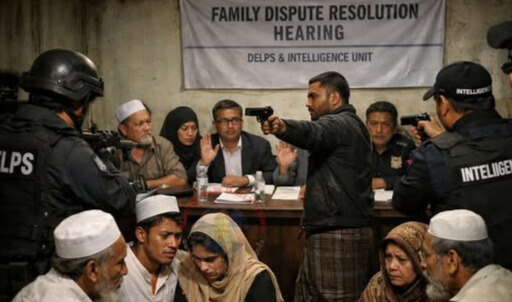
The clash reportedly occurred on February 27 in Maungdaw Township during deliberations over a marriage dispute involving two young residents of Thayet Oke village. While the case initially appeared to be a domestic matter, it escalated into an institutional confrontation reflecting deeper structural fault lines within the AA/ULA administrative apparatus.
Case Background
According to local sources, a young man and woman left their homes on February 23 by mutual consent. They were located two days later, after which the woman’s family retrieved her despite objections from the man’s side.
The man’s family subsequently filed a complaint with the AA/ULA’s local jury body. During hearings held on February 25, both individuals reportedly testified that they were in a consensual relationship and wished to marry. The jury ruled in favor of permitting the marriage on February 26.
However, the woman’s parents objected and escalated the matter to an AA/ULA investigation unit. Sources allege that the investigation team overturned the jury’s decision and moved to block the marriage plan. Community members further claimed that financial inducements may have influenced the reversal, though these allegations remain unverified.
Escalation to DELPS and Intelligence Intervention
Dissatisfied with the intervention, the jury referred the matter to a higher judicial mechanism locally known as DELPS. On February 27, while DELPS representatives were discussing the issue with an AA intelligence unit, tensions reportedly escalated into an exchange of gunfire.
Local witnesses described a heated dispute over whether the jury’s ruling—reportedly grounded in Islamic religious principles—could be implemented under the AA/ULA’s centralized political-administrative system.
Intelligence officials allegedly rejected the religious basis of the decision, arguing that adjudication must conform to the movement’s unified governance structure rather than community-based jurisprudence.
Broader Governance Implications
The incident highlights three emerging institutional tensions within AA-administered areas:
Religious Adjudication vs. Centralized Authority
In northern Rakhine, particularly in Muslim-majority townships such as Maungdaw, informal Islamic dispute-resolution mechanisms continue to operate. However, AA/ULA’s consolidation of administrative control increasingly places these community-based rulings under centralized oversight.
Judicial vs. Intelligence Power Dynamics
The reported armed confrontation suggests friction between quasi-judicial bodies and intelligence enforcement units regarding decision-making authority and final jurisdiction.
Allegations of Corruption and Procedural Arbitrary Action
Claims that investigative officials accepted bribes—though unverified—raise concerns regarding transparency and due process within parallel governance structures operating outside internationally recognized state institutions.
Outcome
According to local accounts, despite support from the jury and DELPS to proceed with the marriage, the intelligence wing ultimately intervened to halt the arrangement. The woman was reportedly returned to her family. Allegations of subsequent mistreatment have surfaced but remain independently unconfirmed.
No official statement has been released by AA/ULA authorities regarding the reported gunfire or internal dispute.
Analytical Context
Since expanding territorial control across northern Rakhine following intensified conflict with Myanmar’s military junta, the AA/ULA has established parallel governance institutions, including taxation systems, policing structures, courts, and intelligence networks.
However, as the movement transitions from insurgent force to de facto administrator, incidents such as this suggest unresolved institutional overlap and unclear chains of authority.
For Muslim communities in Maungdaw Township, the case also underscores a sensitive intersection between religious legal traditions and emerging nationalist governance frameworks.
Observers note that if left unaddressed, such jurisdictional ambiguities may deepen internal fragmentation and erode civilian trust in dispute-resolution mechanisms under AA control.