

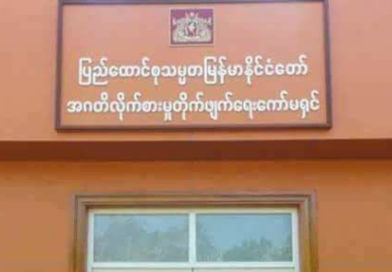
The Anti-Corruption Commission has only received three complaints from the Kayah (Karenni) State in the first half of the year.
The commission has received over 3,000 complaints from across the country and the lowest number of complaints came from the Kayah State.
The commission has been taking actions on the complaints that were sent to its office and the majority of the complaints from the Kayah State are concerned with land issues.
The commission’s information officer U Han Nyunt said they are still investigating the land issues and other cases.
The complainants can only submit corruption cases that took place after September 17, 2013 and they need to send solid evidence instead of complaining based on hearsay.
Lack of knowledge on submitting the complaints may be the reason why only a few complaints have been submitted to the Anti-Corruption Commission from the Kayah State.
“The public doesn’t know that they can file their complaints. Even if they want to file the complaints, they are afraid of the authorities. Some of them don’t dare to file the compliant due to lack of legal knowledge,” said U Saw Reh, a farmer.
The commission has announced that it will take action if the corruption has been reported in news articles in accordance with the guideline for compliant letter.
“We can’t take action on reports that only state which township, which office, and which judge are corrupt,” said U Han Nyunt.
The commission needs to inform the chief justice to take action against corrupt judges. If the chief justice fails to take action, the commission will cooperate with the Bureau of Special Investigation to take action against the corrupt judges, he continued.
The Anti-Corruption Commission submitted a fourth bill to amend the Anti-Corruption Law to the Amyotha Hluttaw on May 3. The Amyotha Hluttaw passed the 24-point bill on May 23 after making amendments and returned it to the Pyithu Hluttaw. The Pyithu Hluttaw also passed it after it was discussed with the Pyithu Hluttaw Bill Committee.
“A law hasn’t been passed down to regulate them (the Anti-Corruption Commission). If they act unfairly or they take bribes, they will be charged under the law, which has been enacted by them,” said Amyotha Hluttaw MP U Kyi Win.
Under the Anti-Corruption Law, any political post holder convicted of corruption can receive up to 15 years’ imprisonment and a fine.
According to the Corruption Perception Index 2017, Myanmar has been ranked 130 out of 180 countries.