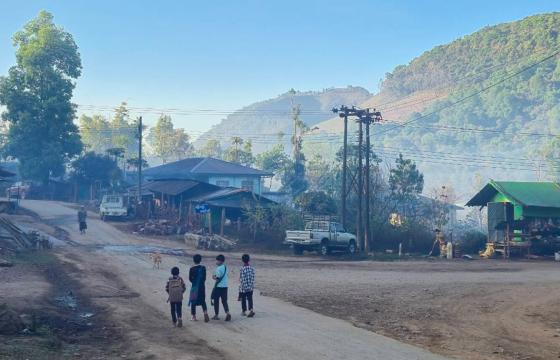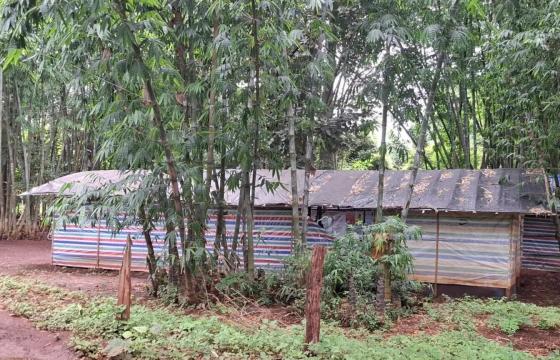

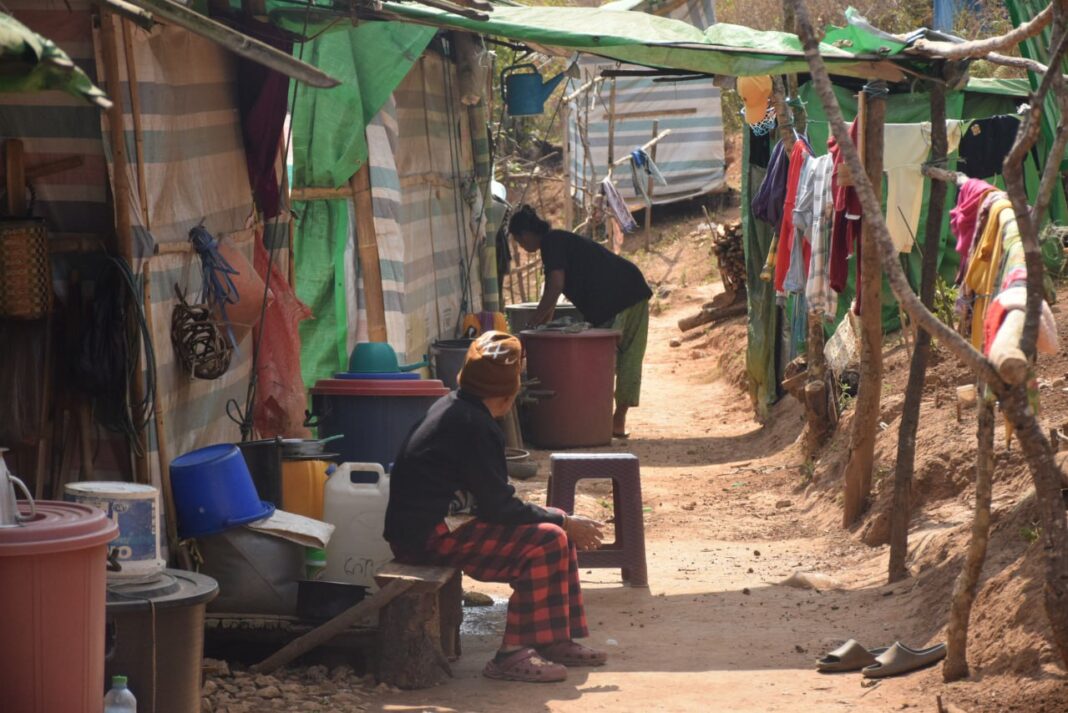
Internally displaced people (IDPs) in Saw Pa Htan camp, who replanted rice and corn near Demoso town last year while fleeing conflict, are now facing food shortages because they were unable to harvest their crops, according to local sources.
During the harvest period, military junta drone, artillery shelling, and ground troop operations forced them to abandon all of their cultivated rice fields, IDPs said.
“Some people don’t own farmland at all and survive on daily wage labor. Others did plant crops, but couldn’t harvest or store them. Drones were hovering, aircraft were circling, and soldiers arrived, so a lot of corn and rice were left behind. As a result, we couldn’t collect the crops we had grown. That’s why there isn’t enough food now. On top of that, donor support has stopped, so we’re facing many kinds of hardship,” said U Hoo Ko, an IDP.
Since early this year, the Saw Pa Hta camp has been experiencing food shortages, and rice supplies have become especially difficult as no donors have reached the camp for around eight months.
At present, some IDPs work as daily laborers on local farms and plantations when such work is available, while others are trying to survive by selling their remaining assets, such as lands, cattle, or farms, at whatever price they can get.
Previously, when it was still possible to return to areas near Demoso town, IDPs could make a living by farming. But now, they are surviving by borrowing food, said Daw Apollonyar, a displaced woman.
“In the past, when things were tough, we could collect fish, small snails, and cow dung to sell and use that money to buy food. Now, donors don’t come anymore, and even if we want to collect cow dung, the places we used to go are under drone surveillance. It’s not free like before, and we can’t even go there anymore,” she said.
She added that because there is no income-generating work, families are struggling not only to buy rice but also to cover children’s school expenses and even to purchase water for cooking and daily use.
The Saw Pa Htan IDP camp hosts displaced people from Demoso town wards as well as from areas along the Demoso–Hpruso township border, with a population of around 3,000 people.