

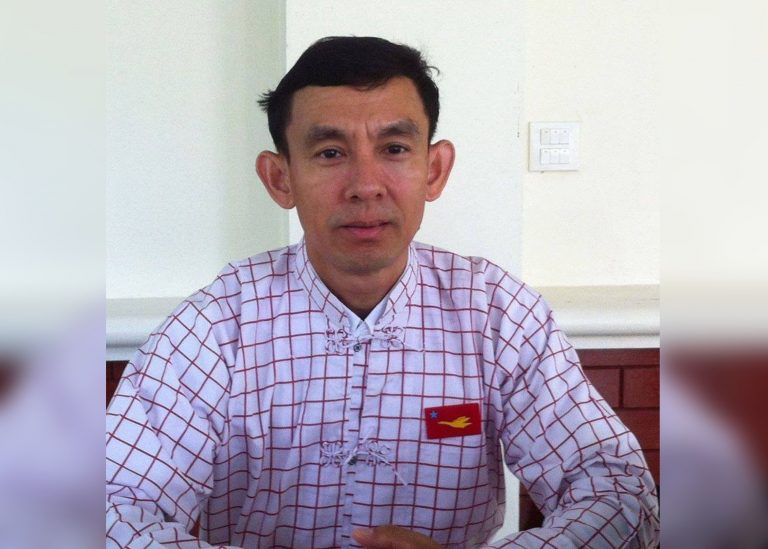
The Committee Representing Pyidaungsu Hluttaw (CRPH), a group of lawmakers ousted during the February 1 coup, recently announced a 'Federal Democracy Charter' at the same time annulling the controversial 2008 Constitution. While political analysts applauded this as a good first step, they said more needs to happen to form a people's government, end the dictatorship and build a federal democracy. NMG interviewed Nai Banyar Mon, director of Federal Affairs and Policy Center (FAPC), about his opinion the charter and annulment of the constitution.
What your thoughts about CRPH dissolving the 2008 Constitution?
As a political analyst and federalist, I welcome this move. The 2008 Constitution is on a completely different path from that of a federal union. Actually, it's an obstacle.
The objectives of the charter include equality, and building a federal union based on self-determination and in my opinion, these are the same objectives that the ethnic people want. 'Member states and people are the original owner of sovereignty of this country' is something clearly written in the directive for building federal democratic union. This means sovereignty is something that exists in the hands of the people living in member states and it is essential for building genuine federal union.
Do ethnic people believe they can achieve self-determination, equality, and federal democracy working with CRPH?
There are many necessary tasks and processes to be implemented in the future. CRPH announced the charter after dissolving the 2008 Constitution. We still need to draw up a new constitution. Another important factor is for the people's revolution to succeed.
There's concerns that CRPH will become a soft dictatorship. What are your thoughts about this?
I am not entirely clear about some of the points included in the second section of 'management and implementation during interim period'. For example, the 'structure of ministries'. It seems like some of the concepts from the 2008 Constitution influenced the charter. In my opinion, it was drafted in a very shot time and there's are some ambiguous points that require more negotiation with CRPH.
Is there anything else that you would like to add?
Dissolving the 2008 Constitution is the right step and we have to welcome it. But there's some points probably missing from the charter. In particular 'management and implementation during interim period'. In my opinion, CRPH needs to have an inclusive discussion about this with all of the stakeholders until there's a consensus. Obviously, some points will need to be fixed.