
Civil society organisations in Indonesia have filed a criminal complaint against Myanmar President Min Aung Hlaing, accusing him of committing genocide against the Rohingya population, marking a potentially significant legal development under Indonesia’s revised penal framework.
The complaint was formally submitted on Monday to Indonesia’s Attorney General’s Office by a coalition of activists and public figures, including Rohingya advocate Yasmin Ullah. The filing is supported by prominent Indonesian individuals, including a former attorney general and the chairman of Muhammadiyah, one of the country’s largest Muslim organisations.
According to a statement released by the claimants, the case includes evidence alleging forced displacement, mass killings, and other atrocities carried out against the Rohingya community under Myanmar’s military leadership. The group claims that Indonesian prosecutors have formally accepted the complaint, making it the first case processed under the country’s newly enacted penal code provisions addressing grave international crimes.
Ullah described the development as a historic milestone. “This is the first time a case has been officially received under Indonesia’s new penal code. It represents a critical step forward in the Rohingya people’s long pursuit of justice and accountability,” she said.
Legal Basis and Regional Implications
The complaint invokes the principle of universal jurisdiction, which allows national courts to prosecute individuals for serious international crimes such as genocide, regardless of where the alleged acts occurred or the nationality of those involved.
Indonesia, host to the Association of Southeast Asian Nations (ASEAN) Secretariat, has faced increasing diplomatic pressure over Myanmar’s political crisis since the military coup in 2021 led by Min Aung Hlaing. The coup triggered widespread conflict, humanitarian deterioration, and renewed displacement of Rohingya populations.
As the world’s largest Muslim-majority country, Indonesia has also become a destination for Rohingya refugees fleeing persecution in Myanmar or departing overcrowded camps by sea.
Background to Genocide Allegations
The allegations stem largely from the 2017 military crackdown led by Myanmar’s armed forces under Min Aung Hlaing, which forced more than 730,000 Rohingya to flee into neighbouring Bangladesh. Refugees have since reported widespread human rights violations, including killings, sexual violence, and the destruction of villages.
Separately, Gambia has initiated a landmark case against Myanmar at the International Court of Justice, accusing the state of violating the Genocide Convention. Proceedings in that case remain ongoing.
Myanmar’s authorities have consistently denied allegations of genocide.
Consolidation of Power
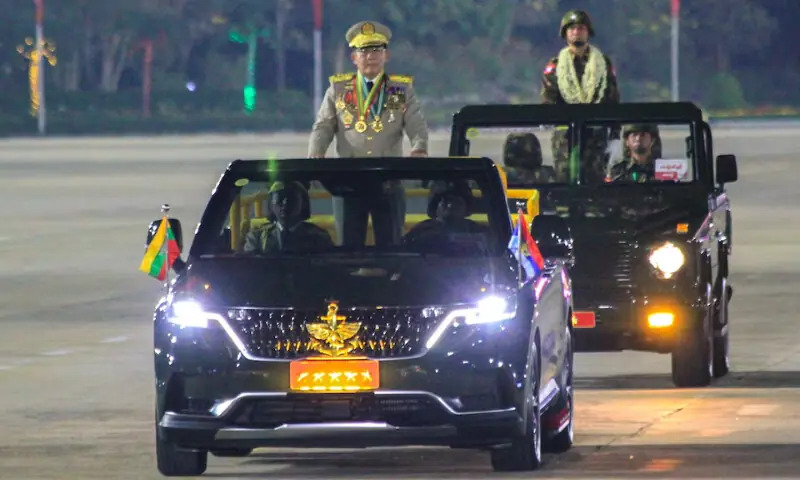
Min Aung Hlaing’s recent appointment as president, following parliamentary endorsement after elections widely criticised by Western governments as lacking credibility, has further consolidated his control over Myanmar’s political system.
Since the 2021 coup, the country has experienced sustained civil unrest, armed resistance, and a deepening humanitarian crisis.