
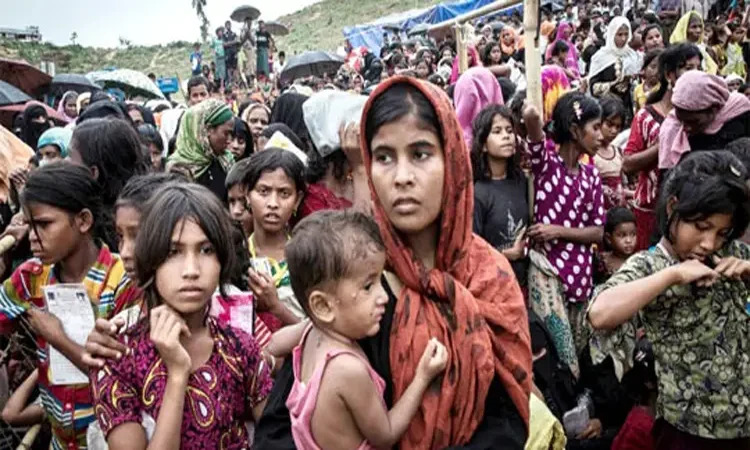
As the Rohingya humanitarian crisis enters yet another protracted and uncertain phase, the Government of Australia has pledged AUD 16.5 million in multi-year funding (2026–2028) in partnership with the United Nations Population Fund (UNFPA), marking a critical intervention at a time when global humanitarian support is rapidly declining and vulnerabilities are intensifying.
This renewed commitment—Australia’s third multi-year flexible funding agreement with United Nations Population Fund (UNFPA)—targets some of the most urgent and underfunded aspects of the crisis: sexual and reproductive health services, gender-based violence (GBV) prevention and response, and protection-focused services for women, girls, and youth across the Rohingya camps and surrounding host communities in Cox’s Bazar.
A Crisis of Scale and Neglect
More than 1.2 million Rohingya refugees remain confined in overcrowded camps in Cox’s Bazar, alongside approximately 568,000 Bangladeshis in host communities, many of whom are themselves struggling with poverty, environmental degradation, and limited access to services.
Despite the scale, the crisis has increasingly faded from global attention. Funding gaps have widened, forcing humanitarian actors to scale back essential services. The consequences are most acutely felt by women and girls, who face escalating risks of:
Gender-based violence
- Child marriage
- Trafficking and exploitation
- Lack of access to life-saving maternal and reproductive healthcare
- Compounding these risks are growing insecurity, climate-related disasters, and deteriorating camp conditions, all of which continue to erode already fragile protection systems.
Strategic Funding in a Shrinking Humanitarian Space
Australia’s contribution is notable not only for its size but for its multi-year and flexible structure—a model increasingly viewed by humanitarian experts as essential in protracted crises.
Unlike short-term, earmarked funding, flexible multi-year support allows agencies such as United Nations Population Fund (UNFPA) to:
- Sustain uninterrupted life-saving services
- Adapt rapidly to evolving needs
- Strengthen resilience among affected populations
- Maintain critical protection infrastructure
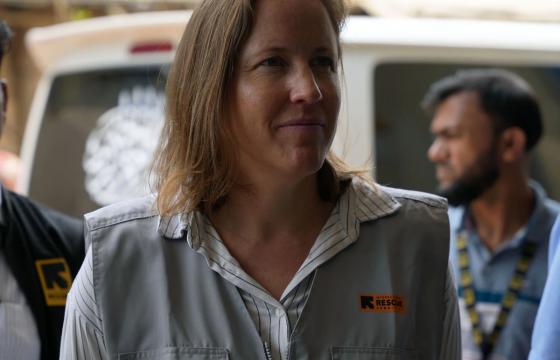
Australian High Commissioner Susan Ryle underscored this approach, emphasizing that predictable funding is vital to “saving lives, protecting women and girls, and helping communities withstand the growing pressures of displacement, insecurity, and climate-related shocks.”
Frontline Services: A Lifeline for Women and Girls
United Nations Population Fund (UNFPA) continues to play a central role in the Rohingya response, operating a wide network of:
- Reproductive health facilities
- Women-friendly safe spaces
- Adolescent and youth centres
Through these platforms, the agency delivers an integrated package of services, including:
- Emergency obstetric and midwifery care
- Clinical management of rape
- Psychosocial counseling and trauma support
- Voluntary, rights-based family planning
- Distribution of dignity kits
- Protection and empowerment programs
Over the past three years, with Australian support, United Nations Population Fund (UNFPA) has reached approximately 340,000 women and girls, including over 7,500 persons with disabilities, contributing to measurable improvements, including reductions in maternal mortality within the camps.
Gendered Vulnerabilities and Protection Gaps
Despite these efforts, humanitarian actors warn that systemic protection gaps persist. Overcrowding, lack of privacy, weak law enforcement, and limited accountability mechanisms continue to expose Rohingya women and girls to abuse.
Experts caution that interruptions in services—particularly reproductive healthcare and GBV response—can have immediate and life-threatening consequences, including preventable maternal deaths, untreated trauma, and increased exploitation.
Catherine Breen-Kamkong, United Nations Population Fund (UNFPA) Representative in Bangladesh, described the funding as “timely and strategic,” stressing that in a crisis of this magnitude, continuity of care is not optional—it is life-saving.
Accountability, Sustainability, and the Limits of Aid
While Australia’s contribution provides a critical buffer, analysts emphasize that humanitarian funding alone cannot resolve the Rohingya crisis.
Key structural challenges remain unresolved:
- Absence of safe, voluntary, and dignified repatriation pathways
- Ongoing statelessness and denial of rights in Myanmar
- Increasing donor fatigue and global funding competition
- Environmental and socio-economic strain on host communities
The Joint Response Plan (JRP), which this funding supports, continues to face chronic underfunding year after year, raising concerns about the sustainability of even basic services.
A Critical Moment for International Responsibility
Australia’s renewed engagement sends an important signal at a time when international attention is waning. However, humanitarian actors warn that isolated commitments—no matter how significant—are insufficient without broader global burden-sharing and political action.
The Rohingya crisis remains fundamentally a protection and accountability crisis, rooted in unresolved violations of international law and the continued denial of rights in Myanmar.
Without sustained international pressure, expanded funding commitments, and concrete pathways toward durable solutions, the risk is clear: a generation of Rohingya women and girls left in perpetual vulnerability, dependency, and neglect.