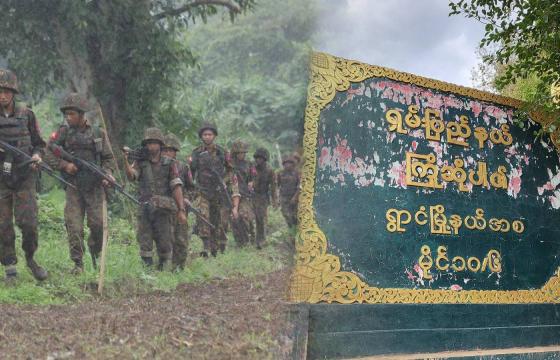

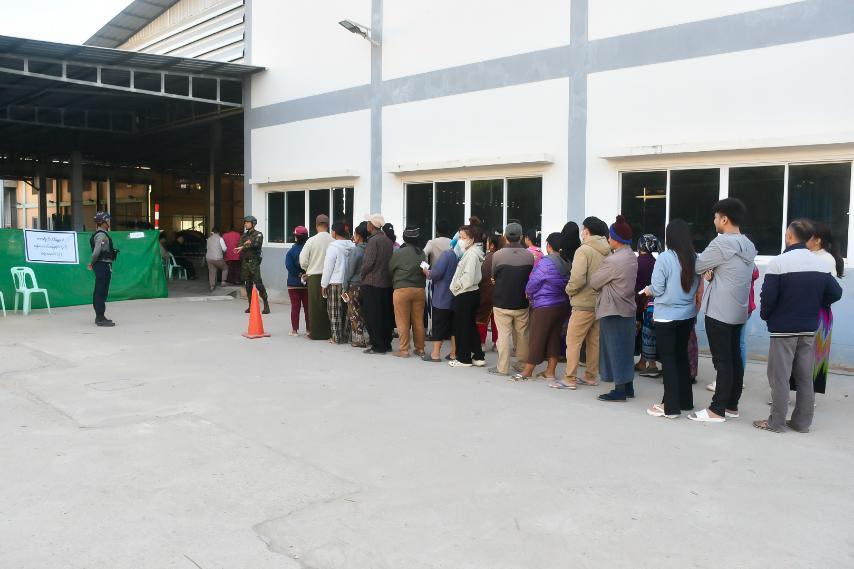
The junta-controlled election was held on December 28 in 102 townships, including Kyaingtong (Kengtung), Tachileik and Mong Hsat in eastern Shan State, where residents went to polling stations to cast their votes amid security concerns.
Explosions near polling stations, party offices and police stations in major cities such as Yangon and Mandalay on December 27, a day before the election triggered panic, and left residents in eastern Shan State hesitant to go to the polls, Tachileik residents said.
“When we heard reports of bomb blasts in other cities, everyone was worried the same thing might happen in Tachileik. Because of that, many people didn’t want to go to the polling stations. There was also a heavy security presence, with soldiers, police and junta-aligned militia members stationed nearby,” said a woman from Tachileik.
Similarly, in Kyaingtong Township, home to the Triangle Regional Military Command, heavily armed soldiers and militia members have stepped up security.
Voters in eastern Shan State not only went to the polls amid security concerns but also faced difficulties, particularly elderly and visually impaired individuals, because the party logos on the voting machine buttons were too small to see clearly.
“An elderly woman who voted said the logos on the voting machine buttons were too small. She said she couldn’t see them clearly and ended up pressing the buttons at random. This year’s election saw fewer young people voting, while older voters faced problems like this,” a Mong Hsat resident told Shan Herald.
On December 28, 111 polling stations were opened in Kyaingtong, 88 in Tachileik and 70 in Mong Hsat, with most located in schools and ward administration offices.