
The suspension of official border trade between Mae Sot and Karen State in Myanmar, due to the ongoing fighting on this key Asia Highway trading route, will cause increased foodshortages, and other impacts, say economic experts.
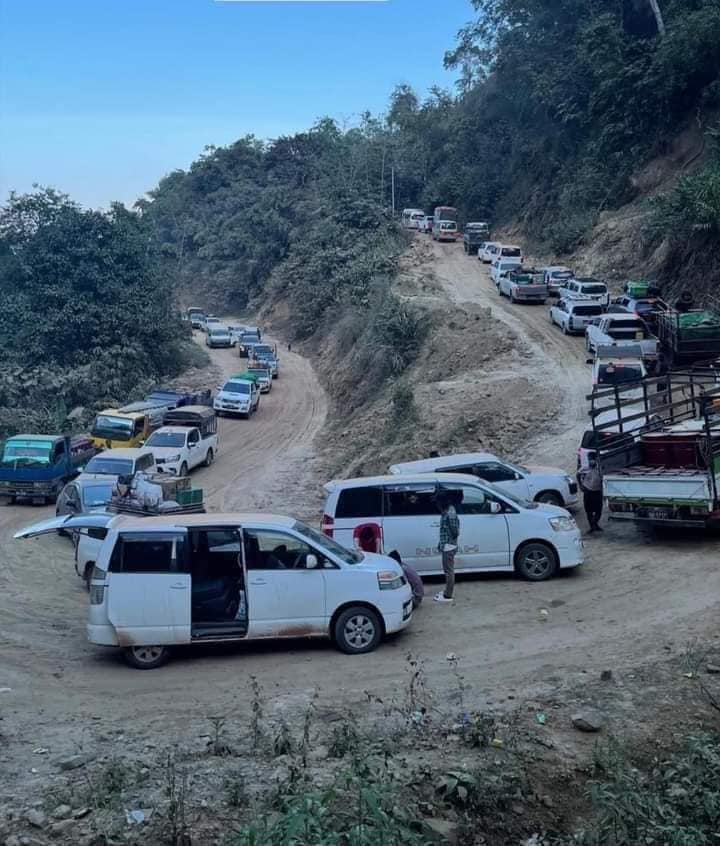
Since December 1,intense fighting has erupted between the junta army and the revolutionary joint forces on Asian Road in Karen State’s Kawkareik Township, which is the main trading route via the land frontier between Thailand and Myanmar.
That battle has halted Thai-Myanmar border tradefrom Karen State . The blowing up of the Kawt New Bridgeonthe Asian Highway on December 17th, has further hindered the movement of people and transportation. With the closure of the Asian Highway, local goods can no longer be exported,and similarly only a limited amount of Thai goods can be imported via the Htoe Ko Koe route.
According to a businessman, "As basic agricultural raw materials and local products cannot be exported, the price of basic food products will rise. Since border trade has stopped, there will be no official trade between the two countries, and the military council will no longer receiveincome from the export and import sectors. Also the demand for foreign currency will soar," he said.
The businessman was only referring to trade between the two countries via Thailand’s Mae Sot border. At the northern Thai border town of Mae Sai – cross- border trade is still flowing to Thachilek on the Myanmar side.
Some entrepreneurs are considering shipping goods by sea , but this is time-consuming, expensive, and cargos will be limited in quantity.The Thai Ambassador in Myanmar is preparing contingency plans with the Thai-Myanmar Business Council, including exploring alternative border channels to keep Thai products flowing into the market.
Official trade between the two countries has crashed, and the Thai baht exchange rate has risen from 95 kyats to 100 kyats per baht, while the price of Thai goods has surged by 3,000 kyat to 5,000 kyat, depending on the type.
Myanmar imports basic food, medicines, cosmetics, consumer goods, construction raw materials, and general consumer goods from Thailand and exports local agricultural products, aquatic products, and rubber.
The data from the Department of Trade show that the import and export sectors earned nearly $1,000 million between April and October of the current fiscal year before the clashes.
Photo- CJ