
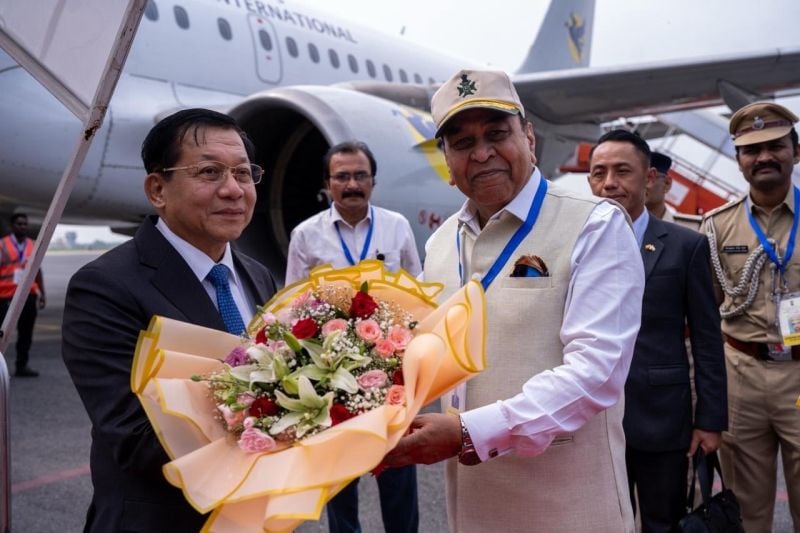
India is hosting Myanmar military chief-turned-president Min Aung Hlaing for an official state visit this weekend, a diplomatic move that has triggered sharp condemnation from Myanmar’s pro-democracy forces and civil society organizations.
The five-day state visit, initiated via a direct invitation from Indian Prime Minister Narendra Modi, marks Min Aung Hlaing’s first official foreign trip since assuming the presidency following a tightly controlled parliamentary transition in Naypyidaw in April.
While the Indian Ministry of External Affairs has framed the high-profile visit around its “Neighborhood First” policy and long-standing “civilizational ties,” regional human rights watchdogs and anti-junta resistance forces argue the invitation serves to legitimize a regime that is carrying out ground military operations, daily airstrikes, and cluster bombings against its own population.
To the resistance forces currently bleeding on the ground to establish a federal democracy, India’s pragmatic embrace of the regime, ostensibly to balance Chinese influence and secure trade routes amounts to legitimizing “rule by the gun.”
Activists point out that while Western nations and ASEAN continue to isolate the regime, New Delhi’s willingness to engage in bilateral handshakes offers the junta a vital diplomatic lifeline, directly insulting the thousands who have been killed, imprisoned, or displaced since the 2021 coup.
Diplomatic sources indicate that the bilateral talks between U Min Aung Hlaing and Prime Minister Modi will likely focus heavily on border stability, trade routes, and maritime connectivity. Security along the shared 1,600-kilometre border remains a core priority for New Delhi, which has recently moved to fence the frontier and end the Free Movement Regime (FMR) due to regional instability.