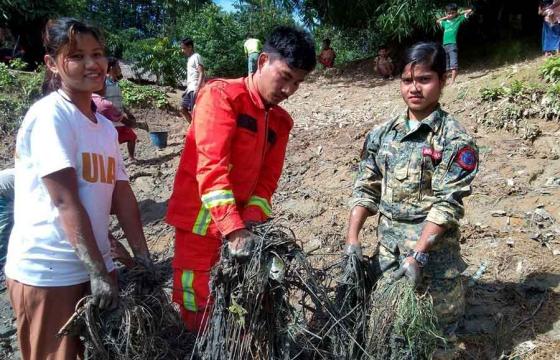

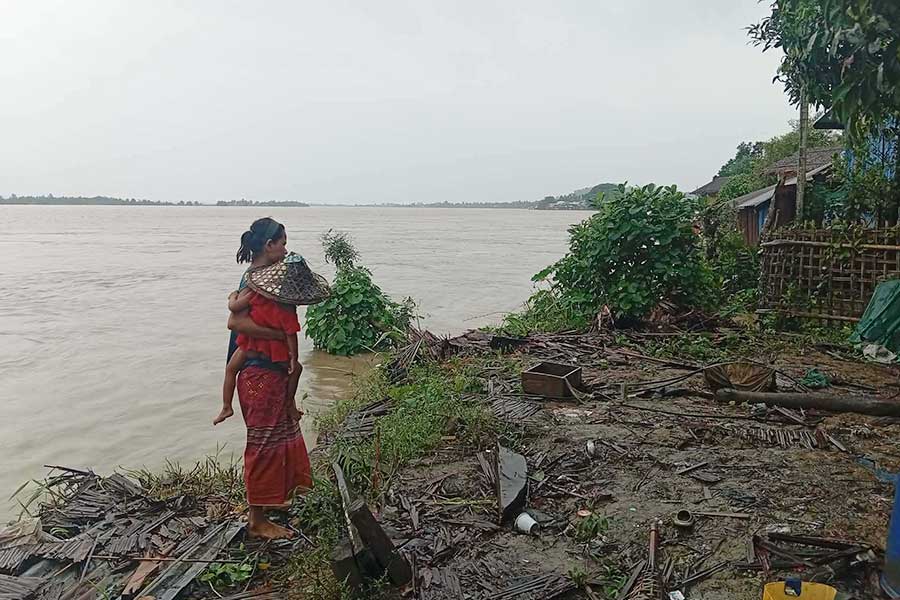
Continuous heavy monsoon rains across Myanmar’s western Rakhine (Arakan) State have triggered widespread flooding and severe riverbank erosion, forcing residents in Minbya Township to dismantle their homes and flee to temporary shelters, local sources said.
The flooding, which began on July 4 following a low-pressure system in the Bay of Bengal, has inundated low-lying areas and communities near major waterways in several townships, including Kyauktaw, Mrauk-U, and Minbya.
Powerful currents in the Kaladan and Laymyo rivers are driving landslides and riverbank collapses along the water's edge.
In Minbya, the intensifying flow of the Laymyo River is actively threatening infrastructure near the town's jetty as well as multiple residential sectors, including U Soe Tint, Pyidawtha, Pyidawhla, Shwepyisoe, and Minbargyi wards.
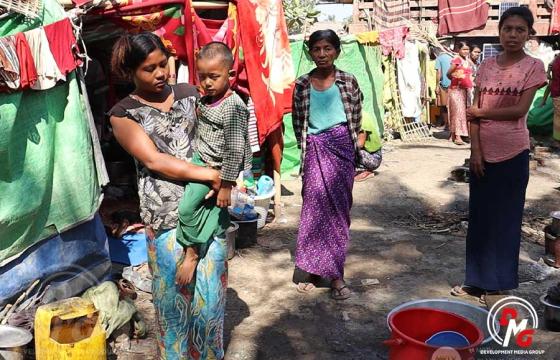
"One house in U Soe Tint Ward has already been swept into the river," a Minbya resident told DMG. "The family was forced to dismantle what remained of their home and move to a temporary plot. Displaced residents are staying on vacant land or with relatives, but they have no land for permanent relocation. They are just trying to rebuild basic shelters using old timber, bamboo, and corrugated iron sheets salvaged from their damaged homes."
The makeshift shelters offer little protection against the elements, sparking immediate health concerns for vulnerable groups.
Displaced families reported that persistent downpours and strong winds are leaking through the shelters, placing children and elderly relatives at heightened risk of illness.
Dozens of homes along the Laymyo River now hang over the eroded banks. Community members express deep anxiety that more structures will collapse as the saturated soil weakens.
"The current is extremely powerful today, and water levels are continuing to rise," a local woman said. "The banks do not collapse as much while the water is rising, but once it begins to recede, the saturated soil becomes completely unstable, leaving the remaining houses at extreme risk of sliding into the river."
Locals noted that retaining walls constructed in previous years were destroyed after failing to withstand the current. They are calling for the systematic implementation of durable, long-term riverbank reinforcement projects to prevent further displacement.