
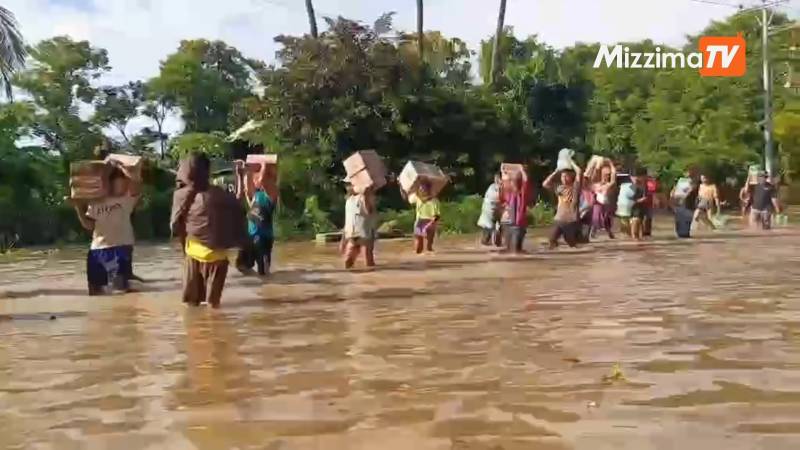
Widespread flooding triggered by torrential rainfall has left at least 1,775 internally displaced persons (IDPs) in urgent need of food, clean drinking water, and emergency shelter in Shwebo Township, Sagaing Region.
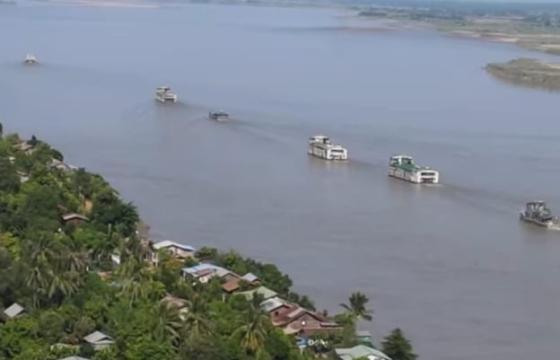
According to local relief volunteers, the flood crisis has severely impacted at least 534 households—comprising 778 men and 897 women—in western Shwebo Township along the swelling Mu River.
Local sources emphasize that these figures reflect only verified numbers in accessible zones, and the actual count of stranded victims is likely much higher.
Flooding intensified after water levels exceeded safety thresholds at the Thaphanseik Dam in Kyunhla Township, forcing water releases downstream through the Kabo Dam in Kanbalu Township.
“Many villages along the Mu River remain completely submerged,” said a resident from western Shwebo. “There is an acute shortage of clean drinking water and cooked meals. While residents in neighboring flood-free areas are preparing food packages, the scale of the disaster has created severe supply shortages and distribution gaps.”
Relief workers are struggling to navigate submerged zones to reach stranded populations.
“In areas where aid hasn’t arrived yet, people are stranded in chest-deep water,” said a flood relief worker. “We are working around the clock to cook and distribute meals, but logistically it is a huge challenge.”
Volunteers warn that the humanitarian crisis could escalate in the coming days. Three consecutive days of heavy rainfall in neighboring Taze Township are expected to further swell the Mu River, threatening downstream communities across Taze, Ye-U, Khin-U, Depayin, Ayadaw, and Shwebo townships.
In addition to ready-to-eat food and safe drinking water, emergency medical supplies and temporary shelter materials are urgently needed as rain continues across Sagaing Region.