
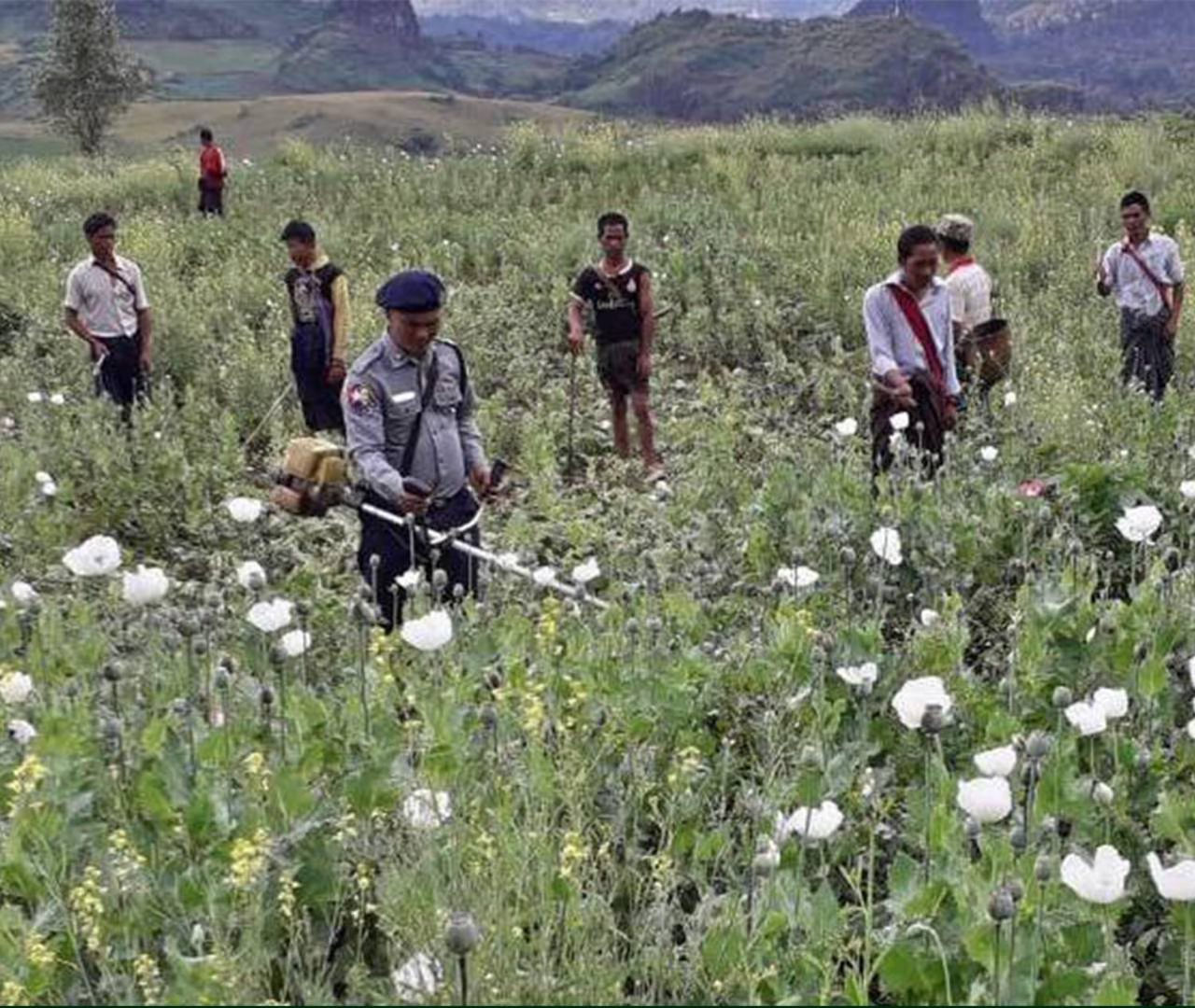
In the southern Shan State townships of Pinlaung, Hopong, and Hsihseng, opium fields have been meticulously cultivated for armed groups to destroy as a showpiece.
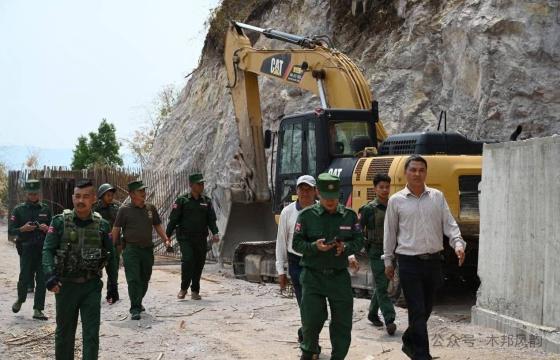
In the first week of December, police forces under the junta's command destroyed opium fields southeast of Htarngo Village in the Htipawng Village Tract of Pinlaung Township.
Opium farmers said the destroyed fields had been grown as showcase crops meant to be destroyed from the start, so they suffered no financial loss. However, they lamented that the real burden was the taxes they must pay to the junta-aligned Pa-O National Organisation (PNO) for cultivating opium.
“Not all opium fields were destroyed. Only those that had been deliberately grown from the beginning to be destroyed in a showcase display. The junta and PNO imposed a tax of 500,000 MMK on each opium farmer’s household, and farmers who didn’t pay also saw their fields destroyed,” a Pinlaung resident said.
Opium farmers said they were receiving only 600,000 MMK for one viss (about 1.6 kilograms) of opium latex. With the high costs of fertilizers, labor, and taxes paid to armed groups, they said they were making little profit and their livelihood barely covered subsistence.
Opium can be cultivated twice a year and is mainly grown in remote hillside areas. Many farmers prefer these isolated locations rather than fields near villages, as the junta and PNO are more likely to destroy opium crops close to residential areas.
“After the coup, all the local farmers turned to growing opium. It became the only way to cope with rising prices. But during the rainy season, floods can wipe out entire opium plantations, so sometimes, even after putting in a lot of money and effort, the profits end up being very small,” a Hopong resident also said.
Myanmar’s opium poppy cultivation has reached a ten-year high, according to the latest survey by the United Nations Office on Drugs and Crime (UNODC), released on December 4. The UNODC also reported that Myanmar holds the largest area of land under opium cultivation in the world.
Myanmar Police announced that between November 29 and December 5, they destroyed over 140 acres of opium poppy fields in Htiday and Narhkaik villages in Hsihseng Township, Nawnglai Muhpeik and Pangkular villages in Hopong Township, and parts of Pinlaung Township.