

The Thai-Burma Railway Museum opened its doors on the afternoon of 4 January in Thanbyuzayat Town, Mon State.
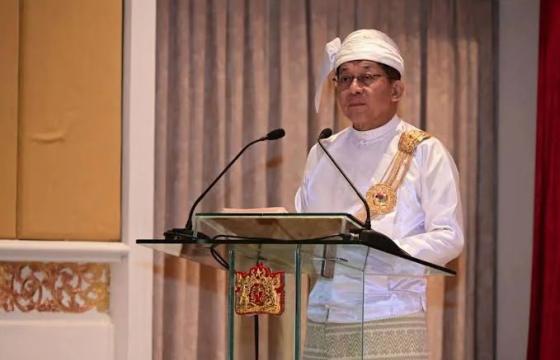
Mon State’s Chief Minister U Ohn Myint led the opening ceremony of the museum, which commemorates the construction of the Thai-Burma Railway, also known as the Death Railway, during World War II.
The event drew roughly 300 people including the State Hluttaw (parliament) Chairman U Kyin Pe, Minister for Development Affairs Dr. Toe Toe Aung, state-level ministers and officials, and staff from the Tala Mon Company Ltd.
During his speech Chief Minister U Ohn Myint said: “I am very proud to attend the opening ceremony of this museum, which acknowledges and documents the lives of the more than 80,000 people that died here in the past.”
According to Min Banyar San, the chairman of the Tala Mon Co. Ltd, in October 2014 the Mon State Government granted the company the sole rights to construct the facilities, which included a hotel, a restaurant, and a museum. The company started working on the site shortly after winning the contract.
He said: “We did this museum project under the direction of the chief minister. We only began the project once our bid was approved and under the administration of the state minister and state government.”
He added that the complex is divided into three parts: the museum, its related services like souvenir shops, and other large facilities, which include a hotel and reception hall for accommodation, activities and events such as weddings.
At the ceremony, Mon traditional dances were performed and state government officials and attendees were able to view a World War II-era Japanese steam-engine on display at the museum and a Japanese pagoda built to commemorate those who lost their lives in Wae Ton Chaung Village.
Starting in November 1942 the occupying Japanese army forced tens of thousands of prisoners of war to construct a 250 mile-long railway connecting Thailand’s Kanchanaburi Province to Mon State’s Thanbyuzayat Township. Toiling in harsh conditions and with little or no medical treatment, many labourers suffered from sickness, malnourishment and exhaustion, resulting in thousands of deaths. A ceremony marking completion of the railway was held on 25 October 1943, according to records.
Among those forced to work on the railway’s construction it is estimated that more than 80,000 ethnic people from Burma and over 10,000 prisoners of war from the Allied Forces lost their lives.
Edited in English by Mark inkey for BNI