
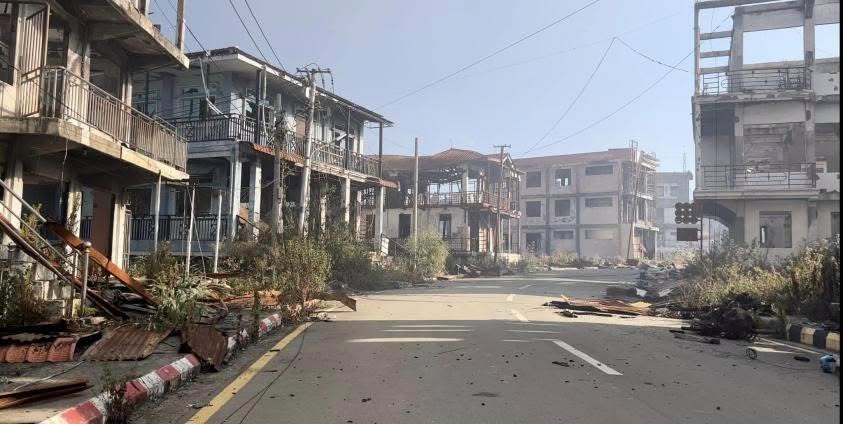
Intense urban clashes in downtown Thantlang, Chin State, have entered a new phase as junta forces have allegedly begun deploying chemical-laced munitions alongside suicide drones, according to the Chinland Defence Force–Thantlang (CDF-Thantlang).
Fighting has raged uninterrupted in Thantlang for over 20 days, from June 10 through the morning of July 1. A CDF-Thantlang spokesperson said junta troops have suffered setbacks in ground operations, while resistance forces have gained the upper hand, prompting the regime to resort to these unconventional tactics.
“The junta has started using chemical-laced bombs. On the ground, we have been stronger in direct clashes. Because of that, the regime has turned to suicide drones and larger unmanned aerial vehicles. They have also begun using gas-based munitions similar to tear gas. Fighters who inhaled the fumes became weak and dizzy, started vomiting, and felt unwell. Consequently, we had to temporarily pull back from some positions,” he said.
The group reported that resistance fighters experienced dizziness, vomiting, and general illness after exposure to the gas, though it remains unclear at this stage whether the effects reached life-threatening severity.
According to the spokesperson, junta forces carried out a sustained, heavy assault in Thantlang from around 2:00 p.m. until midnight on June 30, while the resistance coalition continued to mount a strong defense.
During that day’s fighting, a member of CDF-Thantlang, identified as Salai Bia Tak Lian, was killed in action.
Despite facing pressure from technologically advanced drones and chemical munitions, the CDF stated that Chin resistance fighters remain determined to sustain their urban warfare operations. The group also urged the public to support the revolution through any possible means.
CDF-Thantlang noted that junta troops advancing from Hakha, the capital of Chin State, reinforced regime forces already in the area, bringing their combined strength to around 400 personnel. From June 10 onward, they launched coordinated offensives against resistance positions, heavily supported by artillery bombardments and drone strikes.
In the first five days of the intense clashes, at least five junta soldiers were reportedly killed and a significant number wounded, according to resistance accounts.