
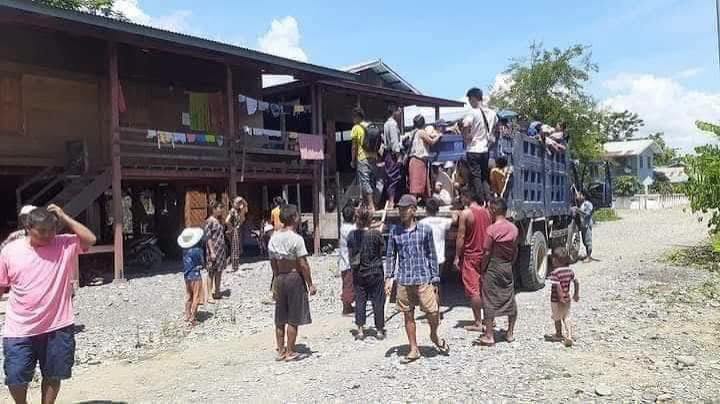
Hundreds of civilians displaced from Khampat Town and the Kanan village tract, who fled to Kale Town in northwestern Myanmar's Sagaing Region, are facing worsening healthcare crises and severe livelihood hardships. Many are falling ill as they adapt to drastic weather changes amid the ongoing monsoon season.
Both Khampat and Kanan are located in Tamu Township, near the India-Myanmar border.
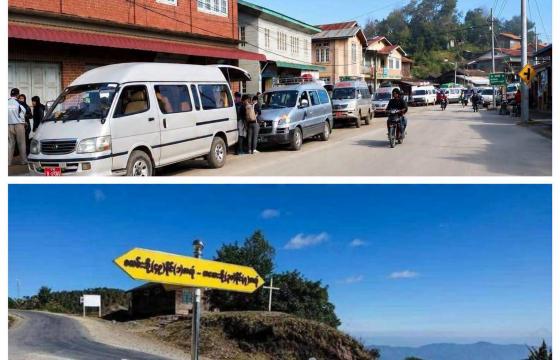
Since June 7, Myanmar's military junta has launched aggressive offensives along the strategic Kale–Tamu Road, forcing residents from Khampat and approximately 50 surrounding villages to abandon their homes. More than a month after the initial escalation, the vast majority of these displaced persons remain unable to return.
The arrival of the monsoon season has sparked a surge in illnesses among the displaced population, creating a critical shortage of medicines and medical care.
“Now that the monsoon season has arrived, a significant number of displaced people are falling sick. At least 10 people have required formal hospitalization, and that does not even account for those seeking minor treatments at local private clinics," said a volunteer providing humanitarian aid to Khampat refugees in Kale, speaking on the condition of anonymity due to security concerns.
"Khampat is located in a mountainous area and has a cooler climate. The weather in Kale Town is noticeably different and harsher, causing many to fall ill during the transition. They are in urgent need of basic medicines,” the volunteer added.
While humanitarian groups have formally documented the arrival of around 130 displaced households—totaling approximately 460 people—in Kale, the actual number of displaced individuals who have sought refuge in the town is believed to be substantially higher. Many are currently sheltering in local Christian churches or with relatives, while others have resorted to renting private accommodations.
However, skyrocketing commodity prices and sharply rising rental costs in Kale Town have compounded the hardships for displaced families already struggling to afford food and basic daily expenses.
“Food supplies and mosquito nets are the primary necessities right now. Local churches are providing what support they can, but they lack the funding to purchase rice, vegetables, and other provisions in large quantities," the aid volunteer explained. "Rental costs have surged; some families are paying around 300,000 MMK (approximately $65–$70 USD based on current market rates) per month. Those who cannot afford this are cramming three or four families into a single rented house to survive.”
Similarly, Khampat residents who fled across the border into neighboring India are also reportedly facing acute shortages of proper shelter, mosquito nets, medicines, and food as the rainy season intensifies.
Although the military junta has publicly claimed to have recaptured Khampat and Kanan—both vital hubs along the India–Myanmar No. 1 border trade route—from anti-regime resistance forces, fierce clashes continue to rage on the ground.