
Japan has pledged $16.5 million in humanitarian assistance in March 2026 to support Rohingya refugees and vulnerable host communities in Bangladesh, reaffirming its role as one of the most consistent international partners responding to one of the world’s most protracted displacement crises.
The latest commitment comes as nearly 1.2 million Rohingya refugees remain trapped in camps in Cox’s Bazar and on Bhasan Char, unable to return safely to Myanmar and increasingly vulnerable to aid cuts as global humanitarian funding declines.
For many Rohingya families, the assistance represents a critical lifeline at a time when food rations, healthcare services, education programs, and protection initiatives are under severe financial strain.
Japan Expands Humanitarian Support Through UN Partnerships
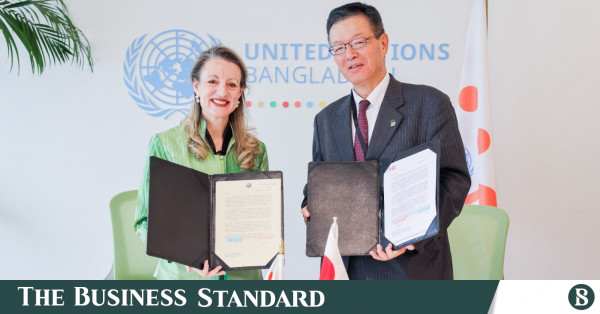
As part of the new assistance package, the Government of Japan signed agreements for five grant projects worth JPY 2.57 billion (approximately $6.5 million) with United Nations agencies between 2 and 5 March 2026 in Dhaka.
The projects will be implemented through UNICEF, UNFPA, IOM, WFP, and UNHCR, focusing on life-saving humanitarian services and long-term resilience programs for both Rohingya refugees and Bangladeshi host communities.
The funding will support a wide range of essential services, including:
- Emergency food assistance and nutrition programs
- Healthcare and maternal services
- Sexual and reproductive health support
- Protection programs for women and girls facing gender-based violence
- Education for Rohingya children and adolescents
- Water, sanitation, and hygiene (WASH) infrastructure
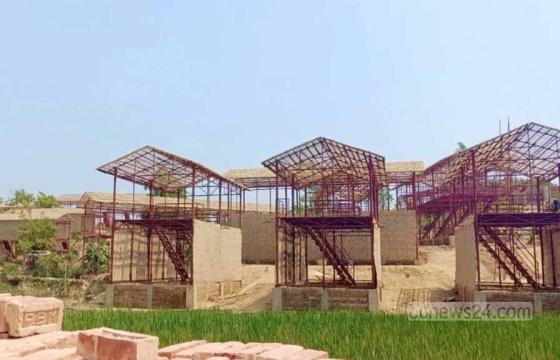
- Shelter repair and housing materials
- Clean cooking solutions to reduce environmental pressure
- Livelihood and climate resilience initiatives for host community farmers
These programs aim not only to address immediate humanitarian needs but also to strengthen the resilience of communities living on the frontlines of the Rohingya crisis.
Breakdown of the New Funding
Japan’s assistance will be distributed as follows:
- $1.4 million to UNICEF for children’s health, education, nutrition, and WASH services.
- $3.2 million to UNFPA to provide sexual and reproductive healthcare and support survivors of gender-based violence.
- $2.6 million to IOM for shelter support, healthcare services, LPG distribution, and camp site management.
- $6.7 million to WFP to sustain food assistance and nutrition programs while strengthening resilience for Bangladeshi host community farmers.
- $2.6 million to UNHCR for shelter repair materials, primary healthcare, and clean cooking equipment.
Nearly a Decade of Displacement
The Rohingya humanitarian crisis escalated dramatically in August 2017, when Myanmar’s military launched a brutal campaign in northern Rakhine State that forced more than 700,000 Rohingya to flee across the border into Bangladesh.
The campaign has been widely documented by international human rights organizations as involving mass killings, sexual violence, and the systematic destruction of Rohingya villages. The atrocities have been described by United Nations investigators as bearing the “hallmarks of genocide.”
Today, Bangladesh hosts the largest refugee settlement in the world, where the Rohingya population remains heavily dependent on international humanitarian assistance.
Japan’s Long-Term Role in the Rohingya Response
Since 2017, Japan has contributed more than $250 million to UN agencies and humanitarian organizations responding to the Rohingya crisis in Bangladesh.
Japanese Ambassador to Bangladesh Saida Shinichi emphasized Tokyo’s continued commitment to supporting both refugees and the Bangladeshi communities that have hosted them for years.
He noted that Bangladesh has shown “remarkable generosity” in sheltering the Rohingya despite significant economic, environmental, and social pressures.
Japan’s assistance, he said, aims to help sustain essential services while strengthening community resilience during a period of growing humanitarian need and shrinking global resources.
Growing International Responsibility
Humanitarian agencies have repeatedly warned that funding shortfalls threaten the stability of refugee camps, raising concerns about worsening poverty, food insecurity, and protection risks.
Aid cuts could also heighten risks of human trafficking, child labour, gender-based violence, and recruitment by armed groups, particularly among Rohingya youth who face severe restrictions on education and employment opportunities.
Analysts warn that without sustained international engagement, the Rohingya crisis could evolve into a long-term regional security and humanitarian challenge affecting South and Southeast Asia.
The Unresolved Political Crisis
Despite years of humanitarian assistance, a durable political solution to the Rohingya crisis remains elusive.
Safe, voluntary, and dignified repatriation to Myanmar remains impossible due to ongoing conflict in Rakhine State and the continued denial of citizenship and fundamental rights to the Rohingya population.
International legal proceedings related to the atrocities against the Rohingya are currently underway at global courts, while human rights groups continue to call for greater accountability for those responsible for the violence.
Sustaining Global Attention
Japan stressed that supporting the Rohingya response is critical not only for humanitarian reasons but also for maintaining stability and social cohesion in refugee-hosting areas of Bangladesh.
The government reaffirmed that it will continue working closely with Bangladesh, UN agencies, and international partners to address the crisis.
However, humanitarian experts say that financial assistance alone cannot resolve the Rohingya crisis without sustained diplomatic pressure and international action to address its root causes inside Myanmar.
Until such a solution emerges, the Rohingya remain among the world’s most stateless and vulnerable populations, dependent on international solidarity to survive.