
Large areas of farmland across Myanmar's Mon State have been left uncultivated this planting season as many rice farmers have either abandoned agriculture or drastically reduced their crop acreage, citing soaring production costs and repeated financial losses.
Farmers in Kyaikmaraw, Mudon, Chaungzon, and Paung townships reported downsizing their monsoon rice cultivation after years of poor returns and mounting economic hardship.
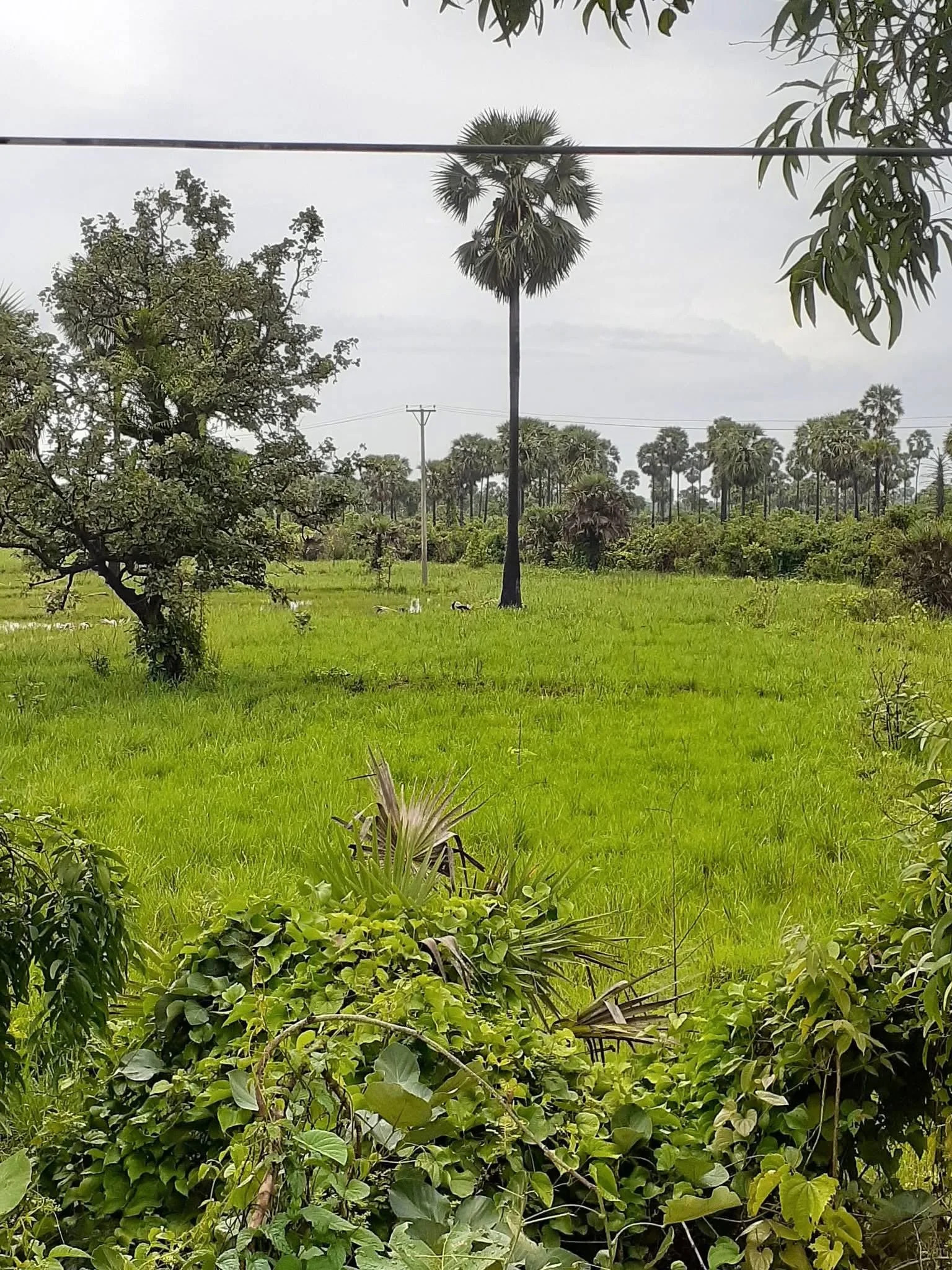
A farmer from Ka Mar Wet town in Mudon Township noted that only about a dozen households in his village are still participating in the current planting cycle, leaving thousands of acres idle.
“Last year I cultivated 25 acres of rice, but this year I could only manage about 10,” he said. “Thousands of acres in our village have been abandoned and are now overgrown with wild grass and shrubs.”
Farmers explained that the price of Thai-made fertilizer—a vital agricultural input—has surged to nearly 200,000 kyats per bag.
Concurrently, the daily wage for rice-transplanting laborers has climbed to around 30,000 kyats, while a barrel of diesel has also jumped to nearly 200,000 kyats, further inflating production costs.
To mitigate these expenses, some farmers have adopted wide-row planting techniques, though they note that this practice has resulted in lower crop yields. In several areas, seasonal flooding has further damaged remaining fields.
A farmer from Kyaikmaraw Township explained that rice cultivation is no longer a viable livelihood for rural families.
“Farmers can no longer rely on monsoon rice as their primary source of income,” he said. “Rice prices remain suppressed while production costs keep skyrocketing. After investing so much capital, there is no profit margin left. We are now only producing enough rice to feed our own households for the year.”
At the start of 2026, the government increased agricultural loans for monsoon rice cultivation to 300,000 kyats per acre, capped at 10 acres per farmer. However, growers emphasize that the additional credit has done little to alleviate the structural challenges plaguing the sector.
According to sources close to the Mon State Ministry of Agriculture, the region typically cultivates nearly 700,000 acres of monsoon rice annually.