
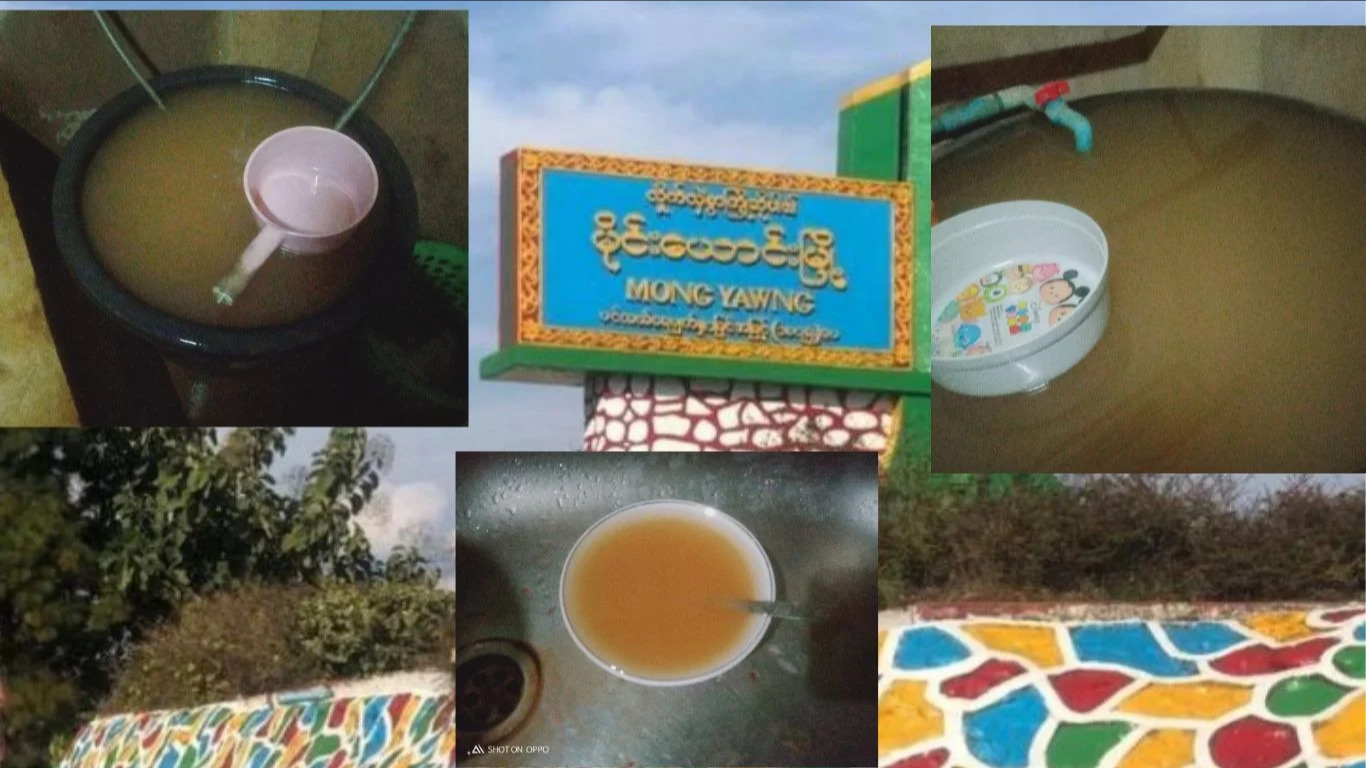
Many residents have had to leave eastern Shan State’s Mongyawng Township because gold mining has polluted local waterways so badly that previously drinkable water is not even fit to wash dishes.
Many residents of Mongyawng Township rely primarily on spring water that feeds into the Namyawng and Namkhat streams. But the water in the streams has begun to change colour and become contaminated due to the chemicals used in upstream gold mining operations in the area of the streams’ source to the north, which are leaching through the ground into the source.
The water is now so contaminated it is not even fit for irrigating farmland or washing dishes, let alone drinking and bathing, according to locals.
A woman from Mongyawng Town said: “Because of the excessive gold mining, the water in the streams is clearly polluted now. We can hardly use it anymore. All the fish, snails, and other aquatic animals have died. Since the mining is happening so close to the main water source, the entire stream has become contaminated. This water is no longer usable for daily needs or farming.”
The water contamination has greatly increased the demand for bottled drinking water in Mongyawng Township, which has driven up the price of a litre bottler of drinking water from 1,000 MMK to 2,000 MMK.
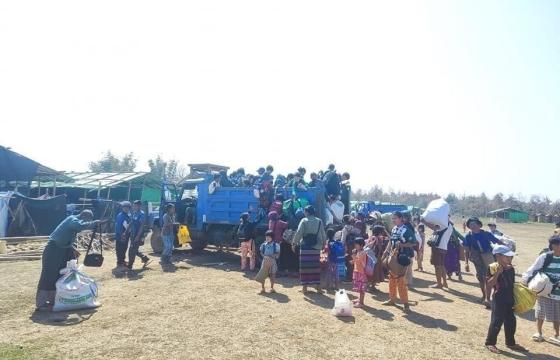
The shortage of clean water has already forced some residents of rural areas of Mongyawng Township to relocate to Mongyawng Town, according to the aforementioned woman.
She added: “The locals near the gold mining sites are leaving because they can’t stay there anymore. Some are moving in with relatives in other villages, while many others have come to the town. A lot of people from rural areas are renting houses here now, but I can't say exactly how many.”
Between February 2018 and the February 2021 coup there were temporary halts to gold mining in the northern areas of the Namyawng Stream in Mongyawng Township, but following the coup gold mining in the area has become far more intensive.
The identities of the companies currently mining gold in the area are unknown, but the junta must have given them permission to operate there.
Another Mongyawng Township resident said: “We don't know the identity of the company mining gold in Mongyawng Township right now. We’ve heard that some locals have shares in it. No one can do anything here without the junta’s permission, so the operation is happening because the junta allowed it.”
In July 2020 there were flash floods in Mongyawng Township which happened because of widespread deforestation caused by gold mining companies.
Similarly, gold mining in another eastern Shan State township, Mong Hsat, has polluted the Kok River, which flows into Thailand's Chiang Mai Province.
The Thai authorities have warned that consuming polluted water from the Kok River could lead to diarrhoea and if used for bathing it could cause skin irritation and rashes. They also said that long-term exposure to the polluted water could cause cancer and advised people to keep their use of water from the Kok river to a minimum.
The United Wa State Army (UWSA) in collaboration with a Chinese company has been mining gold in Mong Hsat township since about 2004 or 2005.
Deforestation by gold mining companies has contributed to frequent flooding in eastern Shan State during the rainy season. Since 2024 the deforestation has also caused frequent landslides.