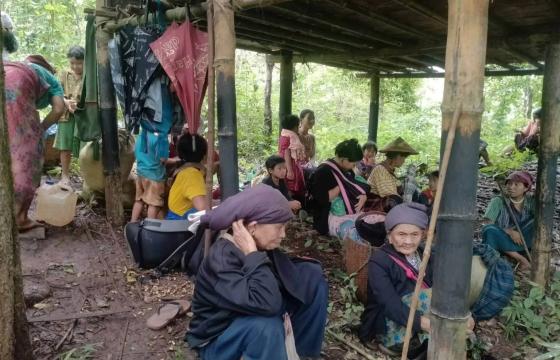

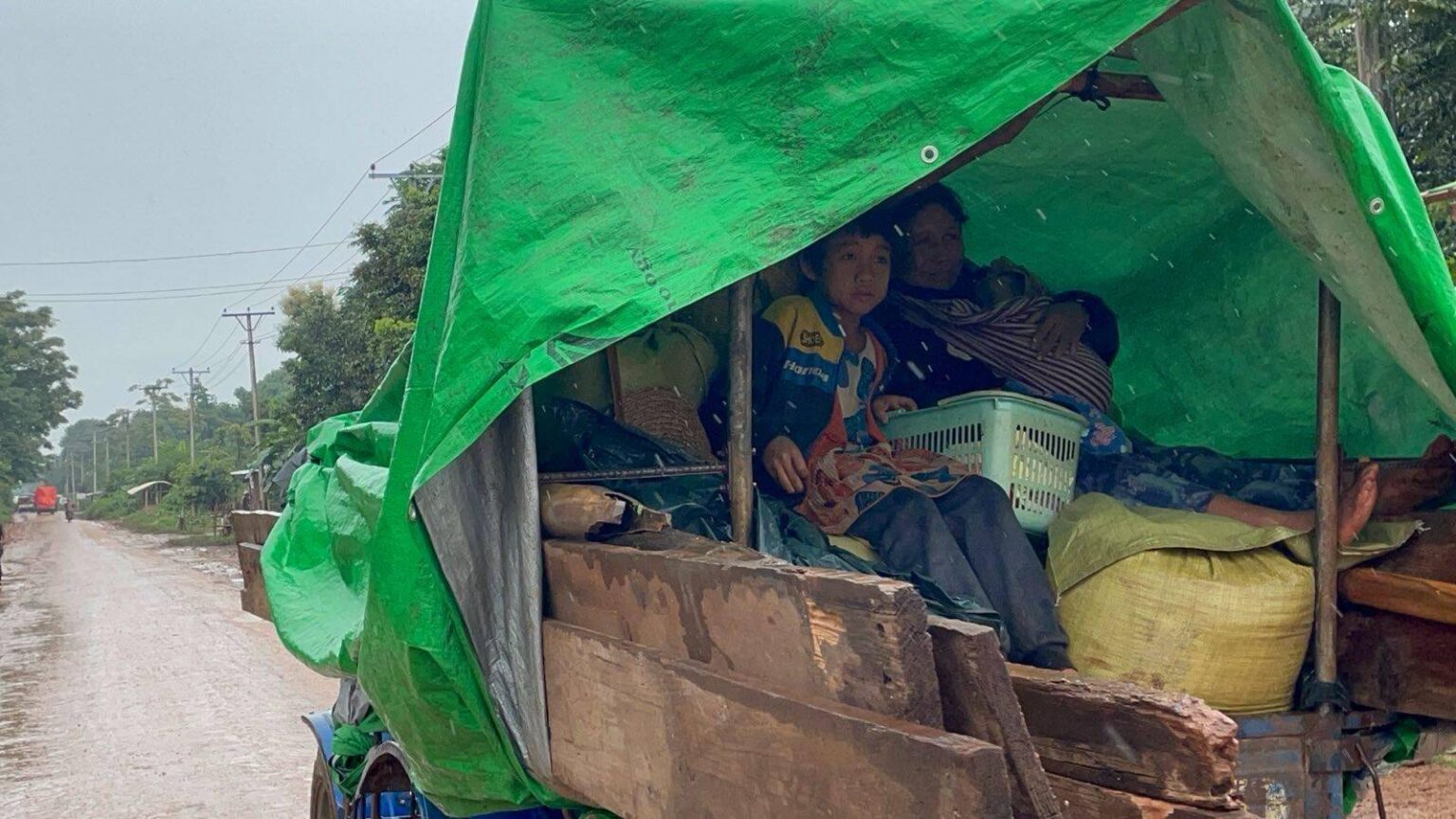
Karenni State — Food security is becoming an urgent concern in the rice-producing regions of Mobye and Pekhon, where civilians are once again being displaced by escalating conflict, according to Khun Mar Tee Yar, Director of the Department of Humanitarian Assistance and Resettlement under the Interim Executive Council (IEC) of Karenni State.
“These internally displaced people (IDPs) are facing critical shortages of food supplies. The situation is likely to worsen this year. Monsoon rains have already flooded newly planted rice fields, and now, with fighting intensifying, residents are being forced to flee again. The challenges ahead are significant,” Khun Mar Tee Yar told Kantarawaddy Times.
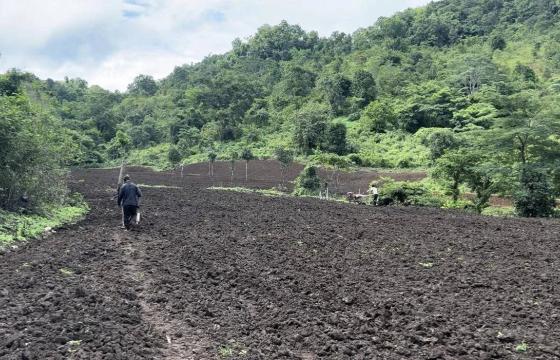
On July 25, villagers near Mobye were forced to abandon their farmland due to renewed military offensives by the Myanmar junta. Many fled without harvesting their crops, leaving behind paddy fields spanning hundreds of acres.
Those who managed to harvest before fleeing are still facing lack of market price. A local man from Mobye noted that falling rice prices may discourage planting in the upcoming season.
“In the current situation, rice prices have plummeted. Farmers are no longer breaking even, so many are significantly cutting back on cultivation. If this continues, there will definitely be fewer rice farmers next year,” he said.
In Karenni State, the threat of artillery shelling and landmines has drastically reduced the areas available for farming. Only a small number of people are able to return to their villages to cultivate, and arable land remains scarce.
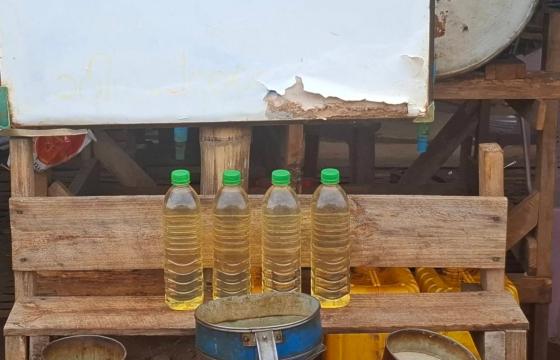
Because many IDPs cannot farm and must rely on purchasing food, Khun Mar Tee Yar warned that food insecurity will likely become an increasingly serious issue.
Among those trying to resume farming, many have had to rely on credit to finance their operations. Without a stable market, some may only be able to grow enough for personal consumption.
“Some are taking on debt to farm,” said another local man. “If there’s no market for the rice, they’ll have to keep it for themselves — they can’t repay the loans. And if they repay the debt, they’ll have nothing left to eat. That’s why people are becoming hesitant to grow rice, even for their own use.”
Since the military coup in 2021, the number of displaced civilians in Karenni State has continued to rise.
While the IEC’s Department of Humanitarian Assistance and Resettlement is providing food aid to both long-term and newly displaced populations, it faces serious funding shortages. According to Khun Mar Tee Yar, the department may soon have to rely on loans to continue delivering aid.