

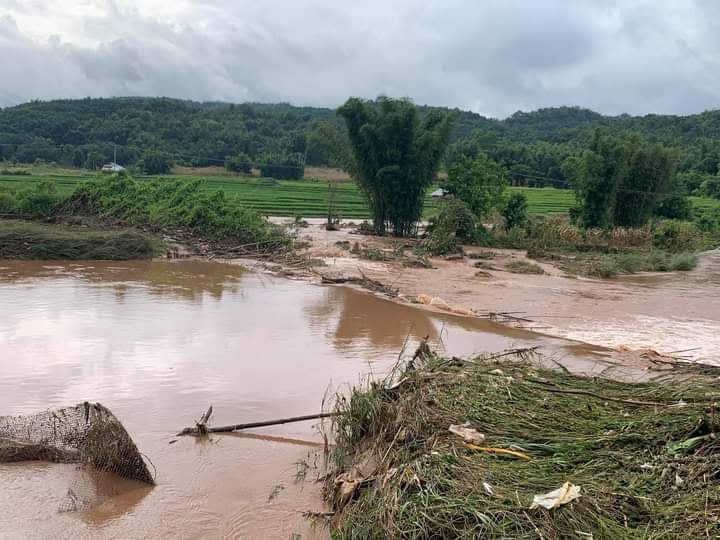
Sai Hseng Hlaing — Flooding caused extensive damage to Nam Salap village, in northern Shan State, this Saturday (September 26), with homes and farms completely inundated after water overwhelmed the village in the middle of the night.
Residents say they’ve never experienced flooding this severe in Hsenwi Township.
“At least 36 homes were flooded. Of these, three are completely damaged,” Sai Oo Kham, a parliamentarian for Hsenwi Township, told SHAN. He suspected it could have been by excessive logging and waste material blocking the irrigation canal.
“Heavy rain started at around 11:00 p.m. And water started to seep into the homes around 2:00 a.m,” said Nang Ying Seng, a resident of Nam Salap. Because they had to flee in the dark, they had to leave their valuables behind. Many residents lost important items after their homes filled with water.
For others, they also lost their livelihood.
“My paddy field is totally destroyed– I’ve lost it all! I have never experienced anything like this before in my life,” said a 50-year-old resident.
Sai Oo Kham said the government will provide assistance to the flood victims. At press time, he couldn’t say how many farms were destroyed by the flood water. The agriculture department is accessing the damages to the residents’ paddy fields.
Ner Hai Lon village, located in Tachilek District, was also flooded on September 24. It’s suspected that a combination of heavy rain and environmental degradation by gold mining in the area caused the flooding in the village in eastern Shan State.