
The Election Commission (EC) has issued a series of strict security directives aimed at preventing Rohingya refugees from participating in the upcoming national election and referendum scheduled for February 12.
In official letters sent on Wednesday, the EC instructed concerned government departments, returning officers, and law enforcement agencies to take preventive action based on intelligence and special reports warning of potential risks linked to Rohingya involvement in election-related activities.
The parliamentary election and referendum will be conducted in 299 constituencies across the country. According to the Ministry of Home Affairs, law enforcement personnel will remain deployed from February 8 to February 14, covering the four days before polling, election day, and two days afterward.
Nearly 130 million voters are registered nationwide, with voting set to take place at around 43,000 polling centres and approximately 250,000 voting booths.
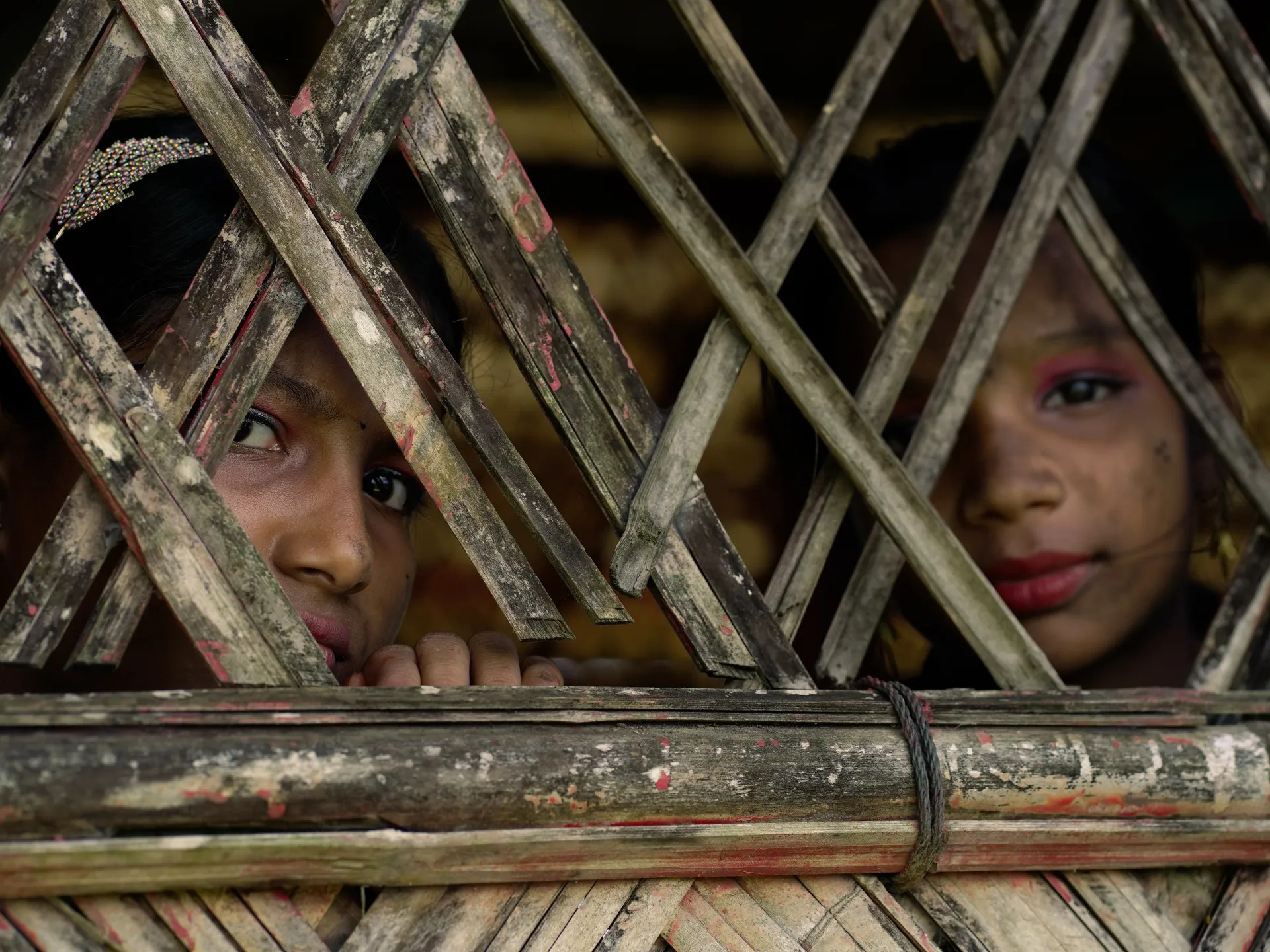
More than 1.1 million Rohingya refugees from Myanmar’s Rakhine State are currently residing in camps in Ukhiya and Teknaf of Cox’s Bazar. Over the years, authorities have reported cases of some Rohingya moving to other parts of the country and allegedly obtaining forged national identity cards and passports.
While the EC has previously taken measures to prevent Rohingyas from being included in voter lists, it is now moving to block any form of engagement in election-related activities.
As part of the new directives, Rohingya refugees will not be allowed to leave their camps during the election period. Law enforcement agencies have been instructed to maintain heightened vigilance, strengthen identity verification, and intensify searches at checkpoints.
A Home Ministry report presented at a meeting in early January warned of the presence of armed groups and illegal weapons inside the camps. The report noted that Rohingyas who may have been unlawfully included in voter lists could attempt to vote or engage in political activities.
The report recommended preventing Rohingya involvement in politics, launching operations to recover illegal arms, establishing checkpoints at least seven days before polling, restricting unauthorised movement, and closely monitoring foreign nationals to maintain law and order.
Another intelligence assessment flagged the risk of illegal interference in the electoral process, including the possible use of Rohingya individuals by parliamentary candidates for local campaigning, staffing polling centres, casting fake votes in exchange for money, or intimidating rival candidates.
Unregulated movement of Rohingya outside the camps was identified as a major security concern. Authorities also warned that misuse of Camp-in-Charge (CiC) outpasses or illegal crossings through barbed-wire fences into Ukhiya–Teknaf localities could further destabilise the situation.
The reports additionally cautioned that active social groups inside the camps could spread rumours or provocative messages, while armed groups such as the Arakan Rohingya Salvation Army (ARSA), Rohingya Solidarity Organisation (RSO), and the Arakan Army (AA) could engage in clashes near border areas during the election period, potentially creating public fear.
Security Measures
–To mitigate these risks, the Election Commission and the Home Ministry have outlined the following measures:
-Rohingya refugees will remain confined to camps throughout the election period, with Armed Police Battalion (APBn) checkpoints ensuring 100 percent identity checks and intensified searches.
-Movement of all vehicles, including autorickshaws and motorcycles, will be suspended inside the camps on the day before polling and on election day.
-All social media activities, meetings, and gatherings by Rohingya organisations inside camps will be suspended from seven days before the vote. Mosque imams and local boatmen will assist in awareness campaigns to discourage electoral involvement.
–Border Guard Bangladesh (BGB) patrols will be strengthened, with increased surveillance along the Myanmar border. Visits to camps by local and foreign NGO officials and visitors will be restricted during the election period.
-Local administrations will warn traders against employing Rohingya labourers for election campaigns. To prevent large gatherings, major markets near the camps — including Balukhali, Leda, and Nayapara — will remain closed on the day before polling, election day, and the following day.
-Adequate numbers of executive magistrates will be deployed, with mobile courts operating inside camps to ensure immediate legal action. Joint surveillance by APBn and BGB will be intensified at key checkpoints, including Morichya, Rejukhal, and Whykong.
-All political parties will be formally warned against involving Rohingya individuals in any election-related activities. Security coordination between APBn and Camp-in-Charge (CiC) offices will be strengthened to prevent illegal campaigning, vote-buying, or voter intimidation.
Election Commissioner Abul Fazal Md Sanaullah said that 943,050 members of various security forces will be deployed nationwide to maintain law and order during the polls. In addition, around 800,000 officials will be engaged in election-related duties.