
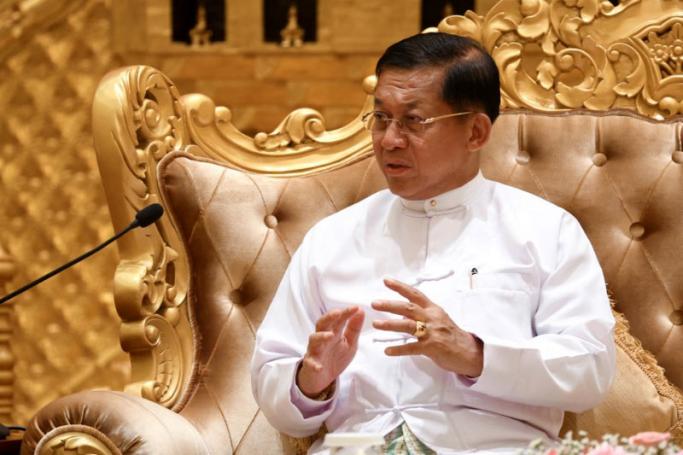
In a review of the junta’s activities from 2021 to 2025, Senior General Min Aung Hlaing dismissed criticisms of the recent three-phase election by claiming that losing political parties simply failed to utilize the three-year preparation period and “opportunities” provided since 2023.
“It was observed that some parties could not effectively utilize the opportunities given, while parties that engaged more with the public were found to have received more popular votes,” the junta leader said.
He added that the junta began allowing political party registrations in 2023, giving parties approximately three years to prepare.
Furthermore, the junta leader stated that organizing activities to increase party membership were permitted, noting that recruiting members is a way of organizing the public. He claimed that an increase in membership leads to more supporters and that procedures for member recruitment and campaigning were systematically allowed.
However, some political parties previously told Mizzima that they faced difficulties during the designated campaign period due to the strict regulations imposed by the junta’s Union Election Commission (UEC).
In the junta-organised election, held in three phases starting from 28 December 2025, a total of 57 political parties participated, with the military-backed USDP (Union Solidarity and Development Party) winning the majority of seats.
The elections were widely condemned as a “sham” by resistance organisations, rights groups, and international organisations.
Following the election, the junta leader said that parliamentary sessions will be held in March and power will be transferred to the incoming government in April.
During the ceremony, the junta leader spoke not only about the election but also addressed issues regarding peace, education, health, and international relations.
Regarding peace, the junta leader stated that the junta would make appropriate concessions, while adding that armed groups should only make demands that are realistic.