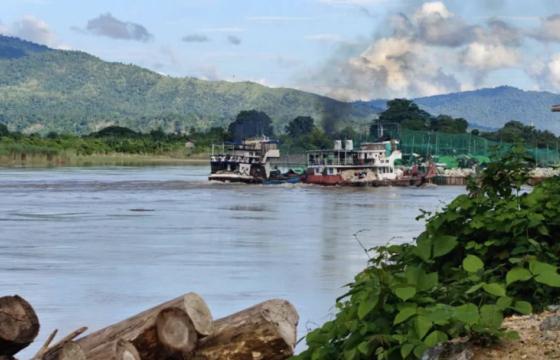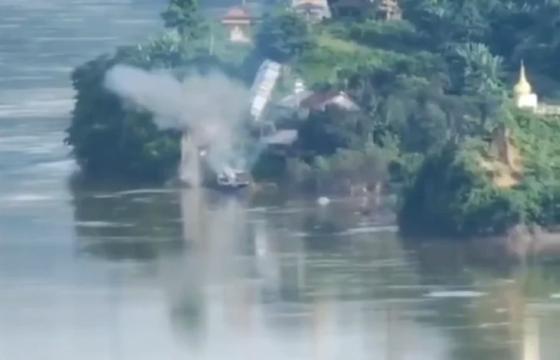

In Myanmar, mining activities are expanding not only in Kachin State but also gradually across Shan State.
Local communities are now calling for collective action to address river pollution and toxic contamination caused by mining operations along the Thailand–Myanmar border.
Environmental activists have also warned that growing demand for minerals from major world powers could drive a further increase in mining activities across Myanmar, resulting in continued cross-border river pollution.
“Rare earth mining is steadily increasing across Myanmar. It’s no longer limited to Kachin State—it’s also expanding in Shan State, and mining activities are growing in the Wa region (Wa Self-Administered Division) as well. If this trend continues, rising demand for minerals will likely result in persistent pollution of rivers that flow across national borders,” said U Zoan Taint, an environmental conservation researcher.
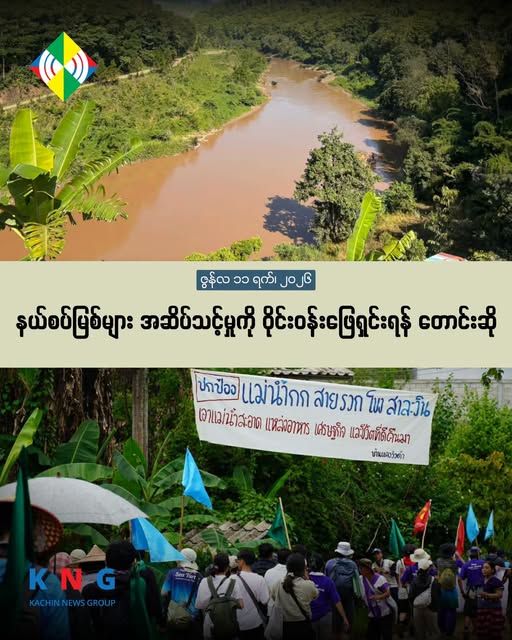
From May 31 to June 5, a six-day peaceful march known as the ‘Peace Walk for Rivers’ was held in Thailand, covering a route from Chiang Mai to Chiang Rai.
Participants included Myanmar students living in Thailand, environmental activists, Thai civil society organizations (CSOs), academics, and members of local ethnic communities.
The campaign aimed to raise awareness about environmental destruction and toxic mining activities affecting rivers that flow between Thailand and Myanmar, including the Kok River, Sai River, Ruak River, Mekong River, and Thanlwin (Salween) River.
“River pollution doesn’t stop at national borders. It affects everyone, not just one country. That’s why we believe this problem needs to be solved together,” said Cham, a member of the Myanmar Students’ Association (MSU) who took part in the campaign.
On June 5, World Environment Day, representatives from the Thai government, CSOs, religious leaders, and local residents gathered at the Chiang Rai Provincial Government Office to call for urgent action to address cross-border river pollution.
In particular, they urged authorities to carry out systematic, state-level investigations into the presence of toxic substances, including arsenic, in the rivers and to implement appropriate measures to address the problem.
There have also been growing calls for closer monitoring and regulation of mining operations conducted by Chinese companies, which are primary purchasers of minerals extracted from Myanmar.
“Rivers don’t recognize borders. If pollution in upstream areas is left unchecked, countries downstream will inevitably be affected. That’s exactly what Thailand is concerned about right now,” said U Zoan Taint.
Observers noted that regulating mining activities remains difficult in conflict-affected areas, including Kachin State and the Wa Self-Administered Division in eastern Shan State. As a result, water pollution is increasingly impacting neighboring countries across the border.
Local communities are urging that the issue be treated not as a problem affecting a single country, but as a global environmental challenge requiring international cooperation and collective action.