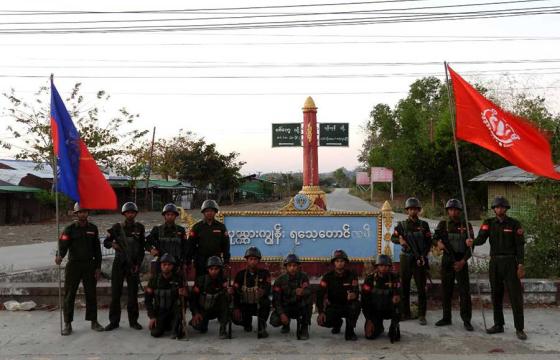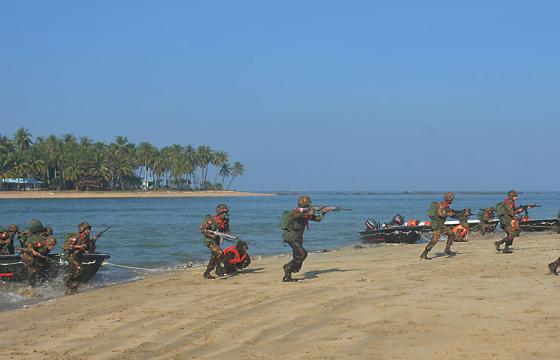
The Humanitarian and Development Coordination Office (HDCO), the humanitarian arm of the Arakan Army (AA) and its armed wing, the United League of Arakan (ULA), announced that efforts are underway to provide effective humanitarian assistance to internally displaced people (IDPs) in southern Arakan State.
ULA provided 1,164 bags of rice to 2,188 IDP families, totaling 7,049 people, across nine sub-townships in Thandwe Township during July and August, HDCO said on September 2.
According to HDCO figures, Thandwe Township had 2,345 IDP families, totaling 8,098 people, as of June. HDCO pledged to continue providing assistance to IDPs in other townships who have not yet received aid.
HDCO said that humanitarian aid for IDPs in southern Arakan State is very limited, so it is placing greater emphasis on assisting them.
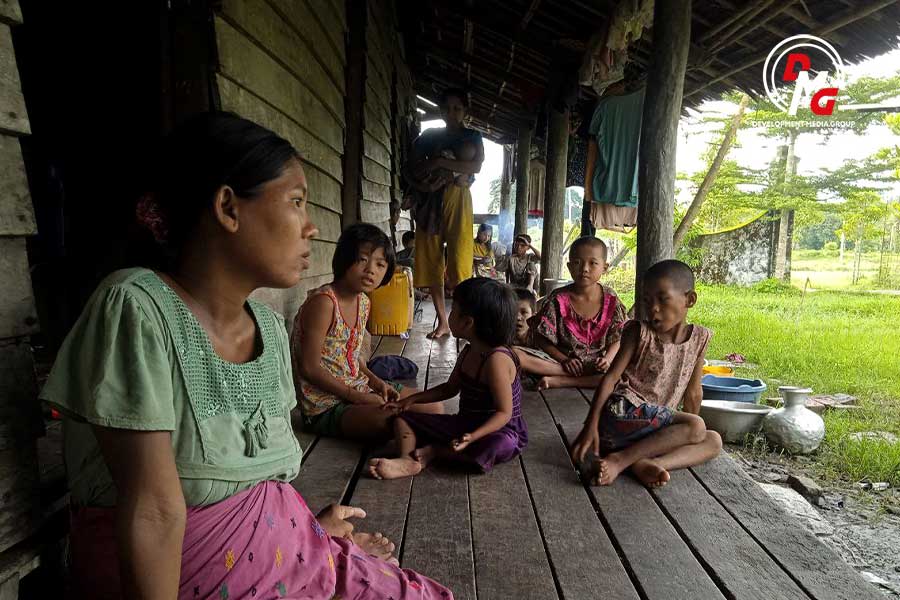
“The situation for IDPs in Ann is really bad. They aren’t getting any aid, so life is very hard. There are families who don’t even have rice for their daily meals,” said a humanitarian worker in southern Arakan State’s Ann Township.
He noted that IDPs are still unable to return home, and their livelihoods are severely affected by the lack of jobs and limited aid in their current shelters.
Thousands of IDPs live in Ann Township, most taking refuge in remote areas with difficult access, making it harder for them to receive aid and healthcare support.
The situation has been worsened by the lack of civil society organizations and relief groups in southern Arakan State.
“Southern Arakan State hasn’t really been affected by war in the past, so most aid groups never set up there. Now that fighting has reached the region, there’s basically no one to provide effective help to the IDPs,” a local aid worker said.
“Another reason aid can’t reach southern Arakan State is the blackout of communication networks. International organizations can only support IDPs if they can stay connected online and report on the situation on the ground. In northern Arakan, some areas still have internet, so aid reaches those regions much more easily than in the south,” he told DMG.
HDCO also pointed out that aid organizations need to step up efforts to reach remote areas with limited access to aid.