

More than 100 civil society organizations (CSOs) called for changes to the framework of the Union Peace Conference, which is due to begin on 12 January according to a statement they issued on 5 January.
 The statement sums up its recommendations by concluding: “…at a time when a sustained ceasefire that is inclusive of all ethnic armed revolutionary forces is yet to materialise, we, the civil society organisations, call for the postponement of political dialogues, reconsideration of the representation proportions and voting quorums for political negotiations, and mustering suggestions and views of those ethnic armed organizations which have not yet signed the Nationwide Ceasefire Agreement [NCA].”
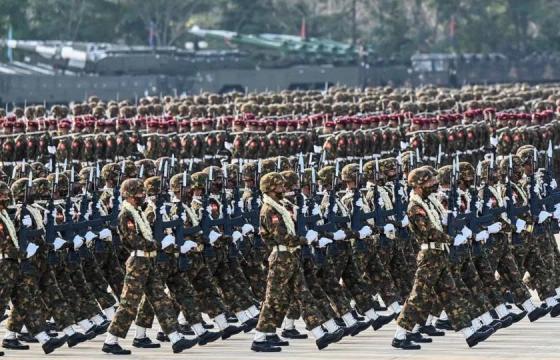
According to the recently released framework for the country’s political dialogue stage, 150 seats are reserved for the Tatmadaw, ethnic armed groups, and political parties, 75 seats are allotted each to the government and the parliament, and 50 seats are reserved for other invitees including ethnic leaders who do not represent a particular armed group.
The political dialogue structure was previously understood to be “a tripartite dialogue with equal proportion and number of representatives from the government, political parties and ethnic armed groups. Individual experts and organizations will also get involved in the tripartite through the respective groups,” according to Nai Hongsar, the Vice-chairman of the United Nationalities Federation Council (UNFC), in an earlier interview with IMNA.
The CSO's statement pointed out that expanding the political dialogue to include extra participants such as the Tatmadaw would weaken the dialogue's focus on democracy and ethnic equality issues, which are "key to Burma's political problems."
When Daw Khin Ohmar of the Burma Partnership was interviewed by IMNA she said: “We want the proportion [of representatives] not to be a number, but what we mainly want to point out is that with that proportion, it is just like giving the Tatmadaw power to make the decisions for these political talks. If the decisions for this talk can be made only when the government agrees, a genuine Union Peace Conference won’t be achieved as the people expect.”
She added that the power of the Tatmadaw, or Burmese Army, should be reduced when it comes to political decision-making. Instead, resolutions should be agreed upon by consensus among the participating political parties and ethnic armed groups. The current allotted proportion of representatives appears to place ultimate decision-making power with the Tatmadaw, she warned, and it must be reconfigured for the intent of the Panglong Agreement to be achieved.
She said: “This is the best time to implement national reconciliation. If the points from the Panglong Agreement cannot be implemented at this moment, the new road towards future peace won’t be realised.”
The statement was supported and signed by more than 130 civil society organizations including Burma Partnership, Burma Women’s Union, the Assistance Association for Political Prisoners – Burma, Network for Human Rights Documentation – Burma, Human Rights Foundation of Monland, and the Karen Human Rights Group.
Edited in English by Mark Inkey for BNI