
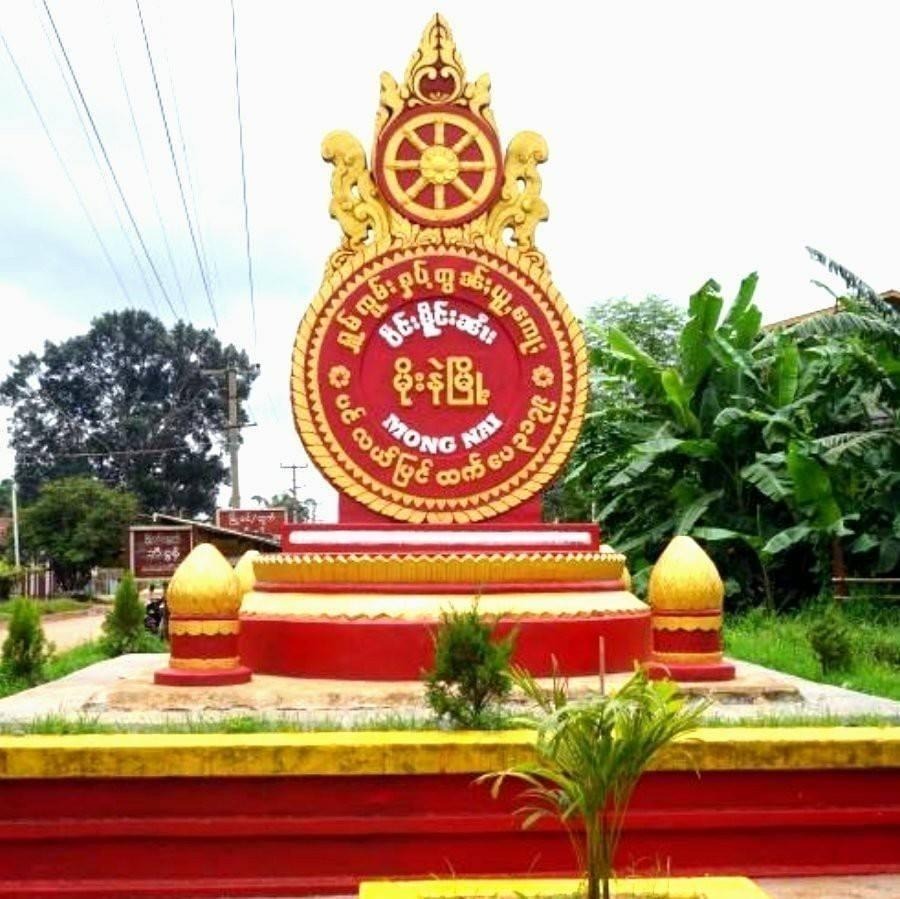
Residents of Mongnai Township in southern Shan State have raised alarms following the recent arrival of a group of Chinese nationals suspected of operating notorious telecom scam networks, locally referred to as Zhapian.
Since early June, Chinese nationals who communicate exclusively in Mandarin have been frequently spotted purchasing large quantities of food supplies and construction materials at Myoma Market, the town's primary commercial hub, a local grocery shop owner told Shan Herald.
“Last month, they focused entirely on buying food provisions. But since the start of this month, they have also been purchasing vast amounts of construction materials. They never bargain over prices and speak only Chinese. They do not live within the town limits,” the shop owner said, speaking on the condition of anonymity due to security concerns.
According to local accounts, the Chinese nationals are avoiding establishing a presence within the town or nearby civilian villages. Instead, they have reportedly set up an isolated, highly secretive base deep inside a forested area, away from the local population—an operational pattern characteristic of Southeast Asia's illicit cyber-scam syndicates.
“They have constructed secure compounds deep in the forest and are living there in isolation. In our experience, groups that build heavily fortified structures hidden in remote forests are almost always Zhapian (telecom scam) operators,” another female resident explained under similar anonymity protections.
The remote area where the Chinese nationals are allegedly based lies within the operational territory controlled by the Southern Shan State (SSS) armed militia, led by U Maha Ja. The group's tight control over the sector makes it virtually impossible for local civilians to enter or travel through the zone.
The influx into Mongnai follows a wider regional crackdown. In May, military junta authorities arrested more than 50 Chinese nationals allegedly linked to cyber-scam operations in the neighboring Mong Pan Township, also located in southern Shan State.
Those arrests took place along the Mong Pan–Kengtawng Road, a highly volatile transit corridor where the military junta, the SSS militia, and the Restoration Council of Shan State/Shan State Army (RCSS/SSA) have overlapping territorial presence.