
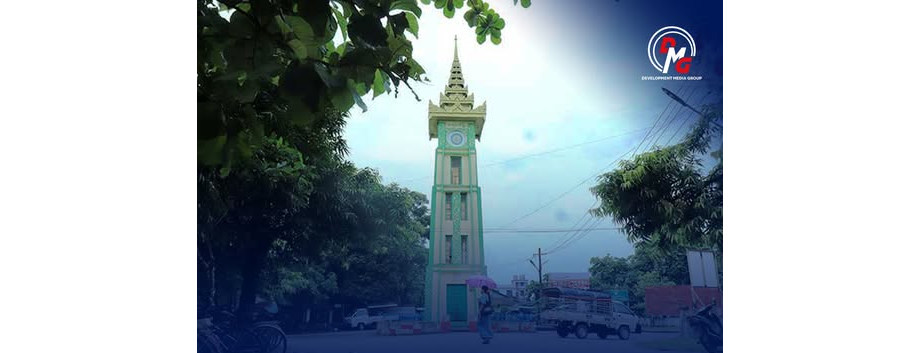
An increasing number of people in junta-controlled Kyaukphyu Township, Arakan (Rakhine) State, are being forced to beg for survival as worsening economic hardship and livelihood crises grip the town.
Residents said widespread unemployment and soaring prices of basic food staples have left poor households and families without steady incomes with little choice but to rely on begging to get by.
"You hardly ever saw beggars in Kyaukphyu before. Now they're everywhere—in the markets, on the streets, and going around residential neighborhoods. Some ask for money, while others just ask for leftover food. They range from toddlers who have only just learned to walk to elderly people," a female resident of Kyaukphyu said.
Runaway prices for essential commodities, including rice, cooking oil, onions, and dried chilies, have further intensified the hardship faced by the town's poorest residents.
The junta has blocked all land routes into and out of Kyaukphyu, preventing essential goods from being transported overland. Instead, basic commodities are shipped from Yangon, Myanmar's largest city, by sea around three times a month, after which local traders sell them at marked-up prices.
The prices of meat, fish, and vegetables have also surged. As a result, a family of four now needs to spend at least 30,000 MMK per day just to prepare basic meals.
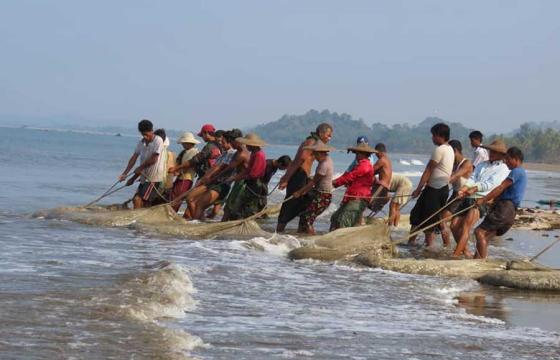
"Ever since the fighting began, there hasn't been any work left in Kyaukphyu. Some people have turned to farming, growing vegetables to sell and feed their own families. Others fish along the riverbanks after getting permission from the authorities. Those are about the only options left to make a living. If things keep going like this, the whole town will end up starving," another female resident said.
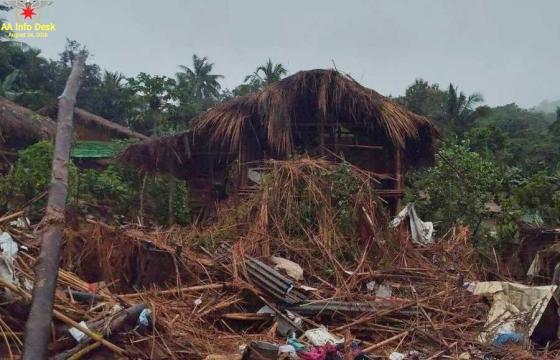
Some residents have even dismantled their own homes and sold the timber as firewood to survive, leaving themselves without proper shelter and forcing them to live in makeshift conditions.
Since late 2023, the coup regime has imposed blockades on both land and water transport routes connecting Kyaukphyu, while employment opportunities have all but disappeared. As a result, impoverished residents, laborers without regular work, and their families have suffered severe hunger.
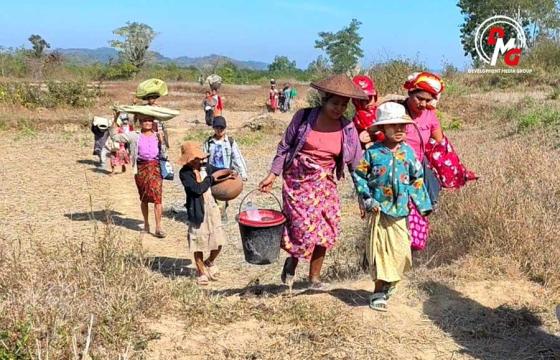
Alongside these economic hardships, arbitrary arrests by the junta, a rise in thefts and robberies, and worsening security threats, have driven around half of Kyaukphyu's population to flee by any means possible to mainland regions or to other parts of Arakan State controlled by the Arakan Army (AA).