

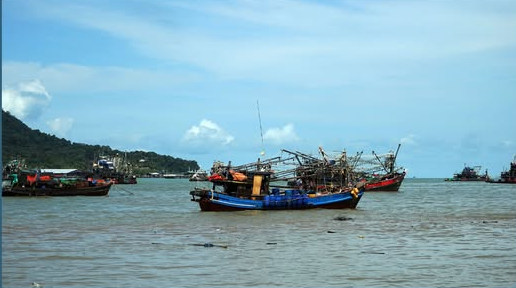
Coastal fishing operations in Tanintharyi Region are on the verge of shutting down due to fuel shortages, according to FE5 Tanintharyi, a local monitoring group.
In Tanintharyi Region—Myanmar’s southernmost, long and narrow coastal area—soaring fuel prices have created mounting challenges for the coastal fishing industry, a cornerstone of the local economy.
Across Tanintharyi Region, 8 of its 10 townships, except Dawei and Tanintharyi, are grappling with severe fuel shortages and rising prices.
As a result, inshore fishing trawlers can no longer put out to sea, forcing fishermen to take up random, unsustainable work on land.
“Out of the 10 townships in Tanintharyi Region, Dawei and Tanintharyi have the fewest fishing communities, so they haven’t been hit as hard. But in the other 8 townships, fuel shortages are really taking a toll. Most fishing operations have had to shut down for now, and fishermen are getting by however they can—taking on tough, unfamiliar work just to support their families,” an analyst from FE5 Tanintharyi said.
The three-month period from April 1 to June 30 each year is designated as the fish breeding season, when offshore fishing is banned. As a result, many coastal families depend on inshore fishing for their daily livelihoods but now find themselves at risk amid the current fuel crisis.
Previously, fuel prices in Tanintharyi Region were around 700,000 MMK per barrel, but they have now surged to between 1.4 and 2 million MMK.
The ongoing global oil crisis triggered by the Iran war has driven international fuel prices sharply higher, while unnecessary transport restrictions imposed by the current junta-turned-false civilian government have further worsened the situation, residents from Tanintharyi Region said.
“The new administration has tightened its fuel control policies and also limited how much fuel can be sold at stations through quotas. Locals say these measures have only made the situation worse instead of solving it. Before the current crisis, fuel in Tanintharyi Region was around 700,000 MMK per barrel, but now it has doubled or even tripled, reaching between 1.4 and 2 million MMK,” the FE5 Tanintharyi analyst added.
Fishermen are hoping for fuel prices to return to reasonable levels and for fish prices to improve so they can earn a fair income. Meanwhile, many fishing businesses have temporarily suspended operations and are continuing to monitor the situation.
“We hope fuel prices will come back down to reasonable levels and fish prices will improve as well. But for now, most offshore and inshore fishing businesses are still watching the situation closely, as they have to consider the risks caused by the fuel crisis,” a local fisherman told NMG.
If the situation is not resolved soon and continues for an extended period, the entire fishing industry—a key economic pillar of Tanintharyi Region—could collapse, locals warned.
The fuel shortages and high prices have not only hit the fishing industry in the region but also orchards and plantation businesses. Furthermore, military conflicts have strained the Tanintharyi Region’s economy, leaving locals struggling with rising costs as their incomes decline.