

While the European Union continues to emphasize voluntary and safe repatriation of Rohingya refugees, conditions inside Myanmar’s Rakhine State—particularly in the north—suggest a widening gap between policy frameworks and on-the-ground realities.
Speaking after the 9th EU-Bangladesh Joint Commission meeting in Dhaka, Paola Pampaloni, Deputy Managing Director of the European External Action Service, emphasized that any repatriation process must be voluntary and conducted in a peaceful manner.
“The EU will continue its political and financial support to Bangladesh in addressing the Rohingya crisis,” she said.
Recent reports of arbitrary detentions, forced recruitment, and movement restrictions imposed by armed actors—including the Arakan Army—highlight an increasingly volatile environment for Rohingya civilians.
Analysts warn that such conditions fundamentally undermine the core principles of “safe, voluntary, and dignified return” promoted by international stakeholders.
The detention of Rohingya youths, including minors, raises serious concerns about whether returnees would face coercion, forced labor, or recruitment into armed structures.
Furthermore, the absence of citizenship rights and legal protections continues to be a structural barrier to repatriation.
Humanitarian experts argue that without addressing these systemic issues—security, rights, and accountability—repatriation efforts risk becoming politically symbolic rather than practically viable.
The divergence between diplomatic assurances and ground realities is likely to remain a defining challenge in the Rohingya crisis.
Across the Border: Diplomacy and Assurances
While fear deepens inside Rakhine, a very different narrative unfolds in Dhaka.
At the 9th EU–Bangladesh Joint Commission meeting, the European Union reaffirmed its commitment to:
Safe
Voluntary
Dignified
Sustainable
repatriation of Rohingya refugees.
EU official Paola Pampaloni emphasized that returns must be peaceful and based on consent.
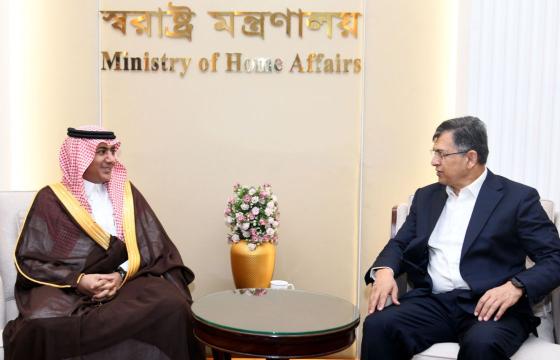
Bangladesh reiterated that relocation efforts, including those to Bhashan Char, remain voluntary.
The language reflects established international frameworks. The problem lies elsewhere.
The Reality Gap
Between diplomatic language and field conditions lies a widening gap.
Inside northern Rakhine:
Arbitrary detentions persist
Armed actors operate without civilian accountability
Recruitment pressures are increasing
Citizenship remains unresolved
These realities fundamentally contradict the criteria for safe return.
A return cannot be considered:
Safe, if individuals face detention or coercion
Voluntary, if structural conditions leave no alternatives
Dignified, if rights and identity remain denied
The case of Mohamed Ayas becomes emblematic—not exceptional.
Legal and Accountability Framework
Under international law, the current patterns raise serious concerns:
Potential Violations
Arbitrary detention (ICCPR principles)
Forced recruitment of civilians
Possible recruitment of minors
Coercion under conditions of statelessness
Relevant Legal Instruments
Universal Declaration of Human Rights (UDHR)
International Covenant on Civil and Political Rights (ICCPR)
Convention on the Rights of the Child (CRC)
Customary International Humanitarian Law (IHL)
Additionally, ongoing proceedings at the International Court of Justice (ICJ) concerning genocide allegations against Myanmar heighten scrutiny over continued abuses.
The Structural Barrier: Statelessness
At the core of the crisis is a single structural reality: Rohingya remain stateless.
Without citizenship:
There is no enforceable legal protection
No political representation
No institutional recourse
No security guarantee upon return
This transforms every incident—like the detention of Ayas—from an isolated abuse into part of a systemic condition.
Repatriation Without Reform?
Policy discussions continue to emphasize return.
But analysts warn:
Repatriation without structural reform risks:
Re-exposing returnees to abuse
Reinforcing cycles of displacement
Legitimizing unsafe conditions
Key prerequisites remain unmet:
Restoration of citizenship rights
Demilitarization of civilian areas
Independent monitoring mechanisms
Accountability for violations
Conclusion: A Crisis of Contradiction
The Rohingya crisis is no longer defined solely by displacement.
It is defined by contradiction.
On one side:
Diplomatic commitments
Policy frameworks
Financial support
On the other:
Detentions without cause
Fear as governance
Coercion as survival
Until that contradiction is resolved, the promise of safe return will remain just that: a promise.