

The European Union has announced €63 million in humanitarian assistance to support people affected by the ongoing conflict in Myanmar and Rohingya refugees in neighboring countries, with the largest share of funding directed to Bangladesh.
The European Commission said the allocation comes as Myanmar’s crisis—triggered by the military coup—enters its fifth year, and forms part of the EU’s initial humanitarian funding package for South and Southeast Asia in 2026. The announcement was made on Friday.
Of the total amount, more than €38.6 million has been earmarked for humanitarian operations inside Myanmar. The funding will support critical interventions including food assistance and emergency nutrition, shelter for displaced populations, access to clean water and sanitation, healthcare services in hard-to-reach areas, mine risk education, assistance for landmine survivors, and emergency education programs.
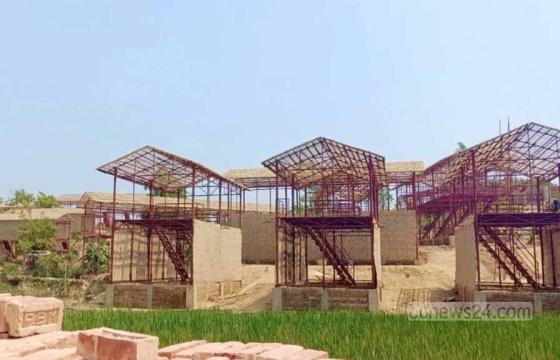
An additional €23.4 million will be allocated to Bangladesh to assist nearly 1.2 million Rohingya refugees—most of whom reside in Cox’s Bazar—as well as surrounding host communities. The funding will be used to provide food and nutrition support, maintain refugee camp shelters and infrastructure, and deliver essential services such as healthcare, emergency education, and access to safe water and sanitation.
Regional Support Beyond Myanmar and Bangladesh
The European Commission also announced €1 million in additional funding for life-saving humanitarian assistance for refugees and host communities in other affected countries, including India, Indonesia, Malaysia, and Thailand, highlighting the regional spillover effects of the Myanmar crisis.
All EU humanitarian assistance will be implemented through partner organizations, including United Nations agencies and international non-governmental organizations.
EU Commissioner for Equality, Preparedness and Crisis Management Hadja Lahbib reaffirmed the bloc’s commitment to supporting vulnerable populations in Myanmar and those forced to flee abroad. She also urged all parties to the conflict to respect international humanitarian law and ensure civilians have access to essential services.
Humanitarian needs in Myanmar have sharply increased since the military takeover five years ago and were further exacerbated by a powerful earthquake in 2025. Following a UN-led reprioritization amid global funding shortages, more than 16 million people are now identified as requiring urgent assistance.
Over 3.6 million people have been forcibly displaced, with armed conflict affecting most parts of the country.
Meanwhile, a safe and voluntary return to Myanmar remains impossible for nearly 1.2 million Rohingya refugees in Bangladesh, more than eight years after their mass displacement. Ongoing fighting continues to drive additional refugees across the border into Bangladesh.