
Around 80 percent of families hit by landmine blasts during the ongoing military conflict in Arakan (Rakhine) State are suffering from serious livelihood consequences, according to research carried out by DMG.
In its report published on November 17, DMG noted that households with members injured by landmines or explosive remnants in Kyauktaw, Mrauk-U and Ponnagyun townships have seen significant follow-up impacts on their day-to-day survival.
Many landmine survivors who lost limbs said they have been desperately seeking job opportunities to secure a stable future.
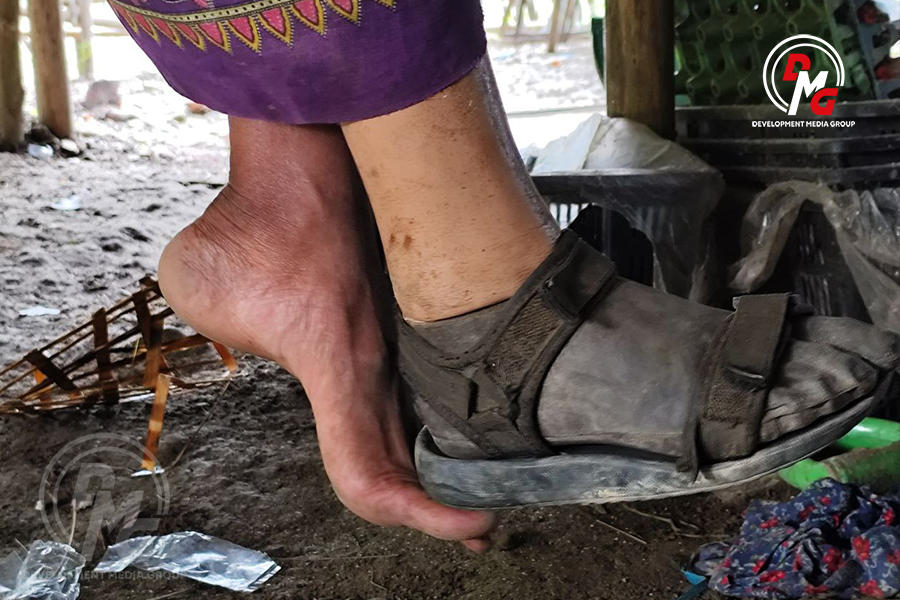
“When I get even a little sick, my amputated leg starts hurting. I can’t afford medicine every day. Some nights I can’t sleep, so I end up drinking alcohol. I don’t want to just sit and watch while my family works, so I weave bamboo baskets. But the quality isn’t good because one of my legs is amputated, and people don’t like them much. There’s not much demand. That’s why I’m hoping for some support, maybe a job or some money,” said U Than Tun Hla, over 40, who lost one leg in a landmine blast.
U Than Tun Hla, from Buddhaw Village in Ponnagyun Township, stepped on a landmine in 2019 while collecting firewood in the mountains west of his village, resulting in the loss of his right leg.
According to the DMG research, 49 percent of landmine injuries occurred in or near victims’ home compounds, while the remaining 51 percent happened in forests and other areas.
Most of those injured were farmers and low-income villagers who rely on forest resources. The report added that 69 percent of victims lost limbs or other body parts due to the explosions.
“We can see that villagers’ livelihoods are getting tougher because of the risks posed by landmines and unexploded ordnance. People are now too afraid to go into the mountains and forests, worried about possible explosions. Many of them are simply trying to get by by cutting firewood,” said U Pan Thar, administrator of Khapaw Village in Kyauktaw Township.
Khapaw Village, located near Mount Tinma Taungshae in northern Kyauktaw, has already seen 10 villagers killed or injured by landmines while searching for food or fishing in nearby forests.
The DMG report further noted that 17 percent of those affected by landmines and explosive remnants also suffer from long-term anxiety, while 14 percent have insomnia caused by psychological trauma.
Additionally, 31 percent of victims deal with chronic physical pain, 19 percent struggle with mobility issues, and 84 percent said they lack information on where to seek assistance or how to perform emergency life-saving procedures.
As armed clashes intensify across Arakan State, calls are growing for urgent demining efforts, with landmines and unexploded ordnance continuing to endanger civilians, undermine livelihoods, and cause frequent casualties.