
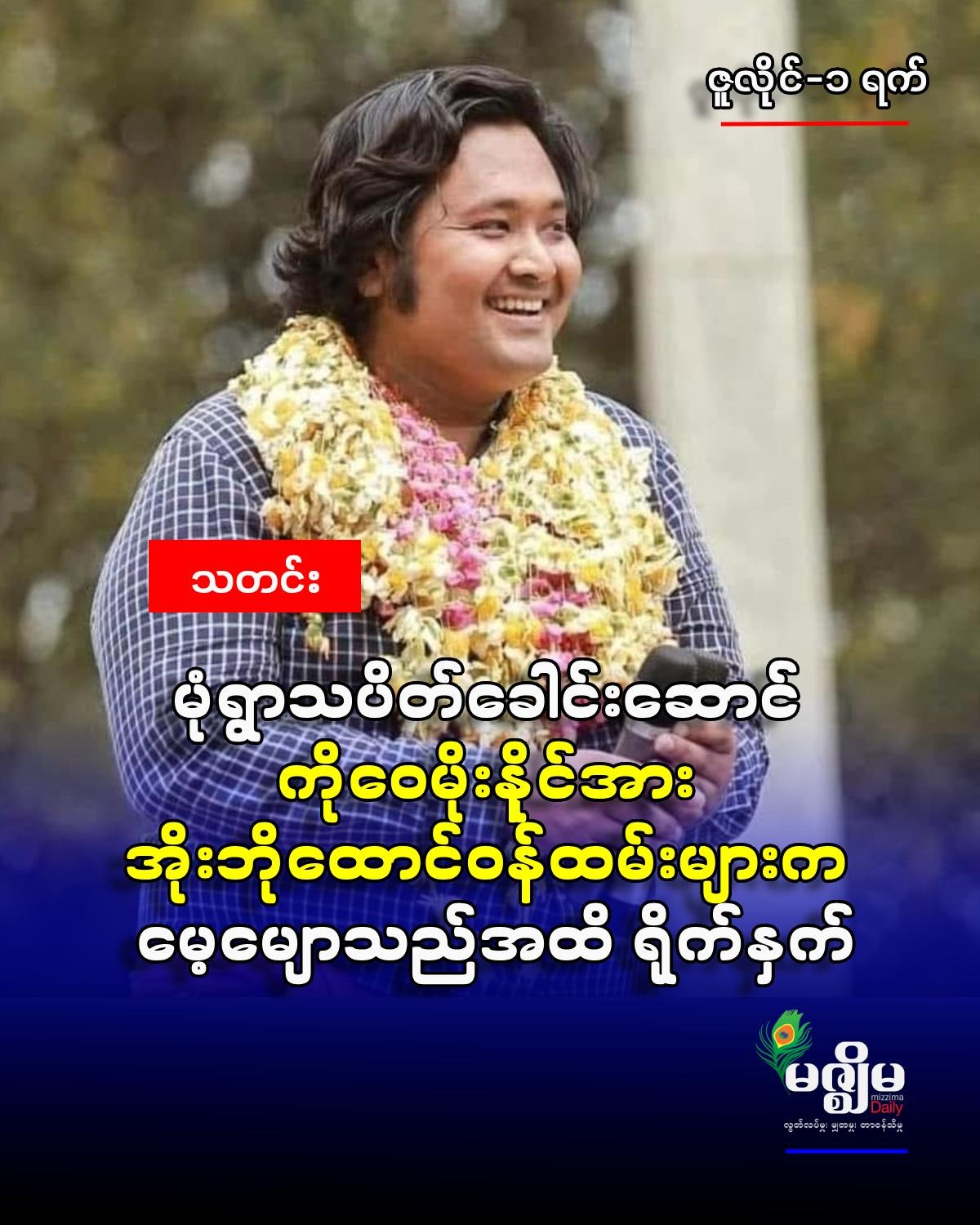
Wai Moe Naing, a leading figure in the anti-coup movement and chairman of the Monywa University Students’ Union, was brutally beaten by prison staff upon arrival at Obo Prison in Mandalay, according to a statement released on 1 July by the Political Prisoners Network – Myanmar (PPNM).
PPNM reported that Wai Moe Naing was struck on the head with a metal rod, causing heavy bleeding and loss of consciousness. Despite the seriousness of his injuries, prison authorities failed to provide emergency medical care or transfer him to the prison hospital.
“As in previous incidents, he received no medical attention, not even basic first aid. The beating
happened right at the prison gate,” said PPNM spokesperson Thaik Htun Oo.
Wai Moe Naing is now being held in solitary confinement with his legs shackled, the group said. They also reported that prison officials have restricted family visits and banned the delivery of care packages.
He was among nearly 200 political prisoners who were transferred from Monywa Prison to Obo Prison around 5 am on 12 June. Upon arrival, many were reportedly subjected to unprovoked beatings by prison staff.
Concerns over the deteriorating treatment of political detainees have intensified in recent days. On 29 June, parliamentary representatives and committees from the state and federal levels released a joint statement condemning the inhumane conditions and lack of medical care for prominent detainees, including Daw Aung San Suu Kyi.
Obo Prison has come under growing scrutiny after several prominent political prisoners died in custody this year, reportedly due to medical neglect. These include National League for Democracy (NLD) Vice Chairman and former Mandalay Region Chief Minister Dr. Zaw Myint Maung, former Minister of Electricity and Energy U Win Khaing, and most recently, Mandalay Region Parliament Speaker U Aung Kyaw Oo, who died on 27 June.
On the same day, Myanmar Prison Witness reported that 56 political prisoners have died at Obo Prison over the past six months due to the denial of medical treatment and access to external healthcare facilities.
According to the Assistance Association for Political Prisoners (AAPP), as of 30 June, a total of 29,342 people have been arrested since the junta seized power in 2021. Among them, 22,184 remain in detention, and 10,882 have been sentenced to prison terms.