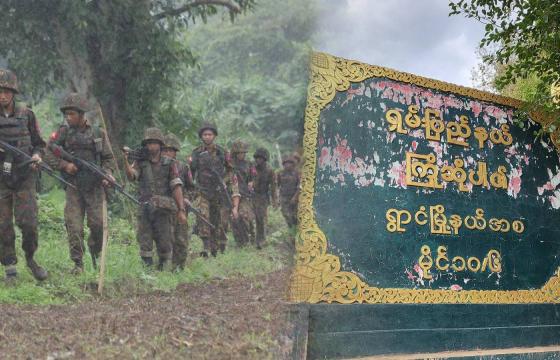

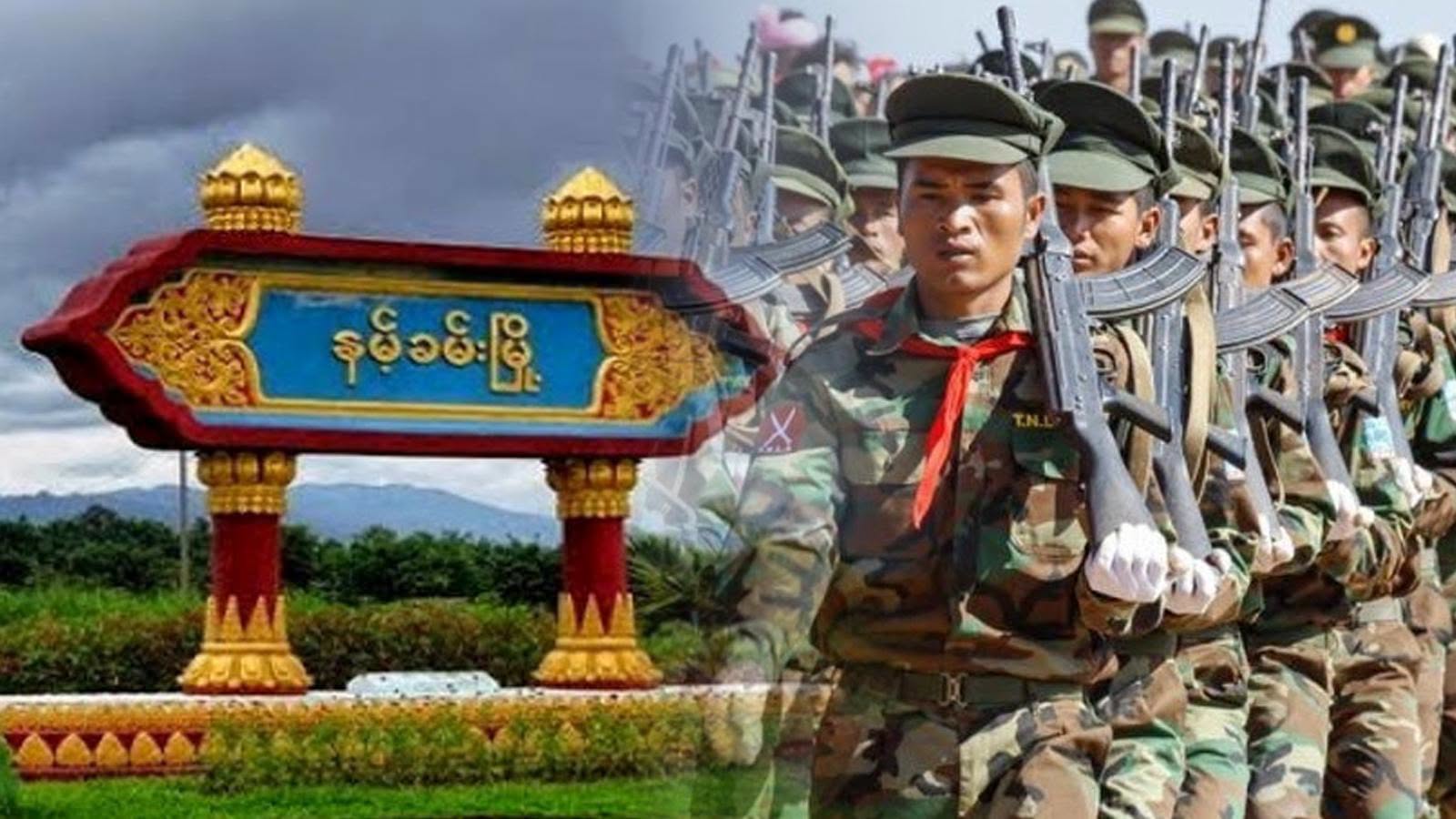
Troops from the Ta'ang National Liberation Army (TNLA), an ethnic armed organization in Myanmar, have been deployed across several villages in Namhkam Township, northern Shan State.
While the group states the move is part of a regional crackdown on illicit drugs, the stationing of combatants has raised significant safety and logistical concerns among residents.
Since the beginning of August, groups of approximately 10 TNLA soldiers have set up camps in the villages of Weinhsar, Nawnghkan, Kawngwein, Manhkam, Konehsar, and Sanlwe.
Each village is home to about 200 households.
Previously, these communities had no armed groups stationed within their boundaries. According to locals, troops have now occupied vacant plots of land inside the villages and erected structures resembling checkpoints.
Residents traveling through these areas report being frequently stopped and questioned by the soldiers.
"People are worried about their safety," a Namhkam Township resident explained. "They may have other reasons for being here, including monitoring the villagers. Whatever the stated reason, people feel unsafe when armed groups establish a permanent presence inside their communities."
Another local source echoed these sentiments: "We don’t like having armed combatants deploy like this. Whenever we pass their stations on our way to work, we feel insecure."
While acknowledging the need to address the region's drug trafficking issues, villagers suggested that the TNLA could conduct mobile patrols, targeted searches, or daily inspections to provide security, rather than permanently occupying residential areas.
Beyond immediate privacy and security concerns, locals fear that the visible presence of TNLA troops within civilian-populated areas could provoke retaliatory airstrikes by the Myanmar military junta.
Additionally, there are growing anxieties about the purpose of the deployment, specifically whether the local communities will need to take the burden of supplying food and drinking water for the troops.
Under International Humanitarian Law (IHL), all parties involved in an armed conflict bear a responsibility to protect civilians and residential areas.
Military actors are legally required to minimize civilian harm and take constant precautions during operations to avoid placing non-combatant populations at risk.