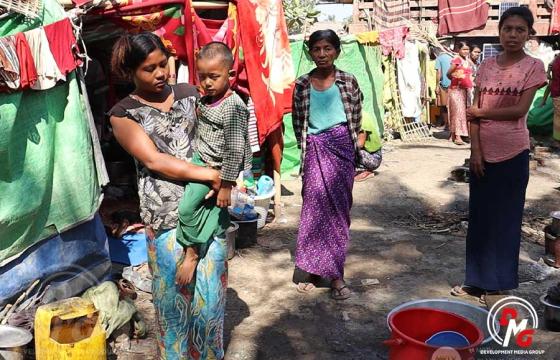

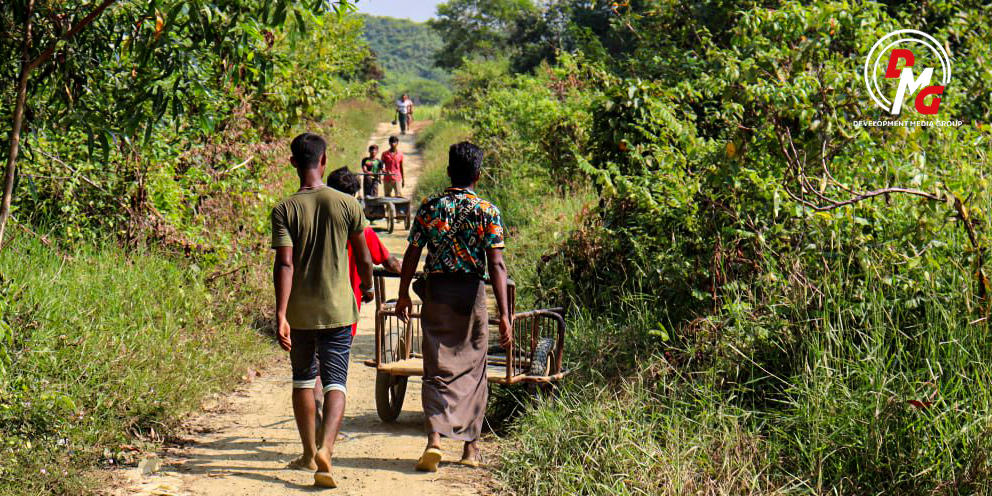
Some Rohingya refugees in Bangladeshi camps are returning to Arakan (Rakhine) State with their families due to them facing growing livelihood challenges and other hardships in the camps.
The World Food Programme (WFP) was previously providing each Rohingya refugee in Bangladesh with a monthly allowance of 12.50 USD, but this was reduced to 6 USD a month as of April 2025.
This has made the lives of the refugees in the camps, who were already suffering from livelihood challenges, even harder. As a result, some of the refugees have begun to return to Arakan State, according to a Rohingya refugee currently staying in Kutupalong Refugee Camp who spoke to DMG.
He said: “Because of the rules, refugees aren’t allowed to leave the camp to work outside. For families with many members and children, the WFP support just isn’t enough. That’s why some families have started returning to their native Arakan State. But for now, it’s still just a small number. Only those who are sure they can’t survive here any longer choose to go back.”
Some reports have also suggested that some Rohingya refugees are returning to Myanmar because they were harassed and intimidated by Rohingya armed groups operating in the camps.
According to an 18 June 2025 report by the international Crisis Group (ICG) titled ‘Bangladesh/Myanmar: The Dangers of a Rohingya Insurgency’, Rohingya armed insurgent groups in the Bangladeshi refugee camp are recruiting and training young Rohingyas to fight the AA in Arakan State.
The ICG report warned that such activities could escalate tensions between the AA and Bangladesh and potentially delay plans for refugee repatriation.
Bangladeshi officials denied the ICG report’s claims and said there were was no recruitment or military activities in the refugee camps, in an interview with the Dhaka Tribune.
The exact number of Rohingya refugees who have returned to Myanmar is still unknown.
They are now living in villages such as Mingalar Gyi, U Shint Kya, U Thula, Kyauk Hlegar, and Lakeya in northern Maungdaw Township, as well as in several villages in Buthidaung Township.
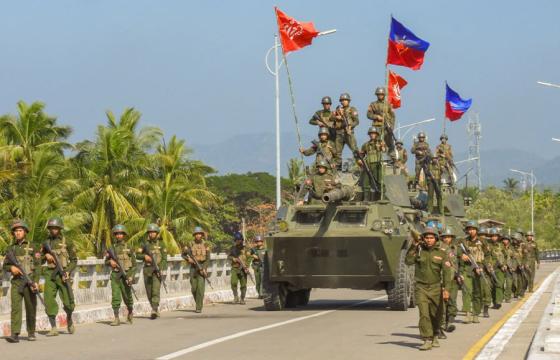
Most of Arakan State, including Maungdaw and Buthidaung Townships where the Rohingya have returned to is now controlled by the Arakan Army (AA). But, the AA has no clear idea how many Rohingya refugees have returned to Myanmar, though it has managed to verify and count some of them, according to a source close to the AA.
They said: “They [the Rohingya refugees] came back planning to settle in Rohingya villages in northern Maungdaw Township. Some were checked by AA officials, but others slipped through without being verified.”
In 2017, following a brutal crackdown on Rohingyas by the Myanmar military around 700,000 of them fled from Arakan State to Bangladesh. In 2024, following the February 2021 coup, fighting in Arakan State between the AA and the junta increased which caused more Rohingyas to flee to Bangladesh.
Currently there are about 1.2 million Rohingya refugees originally from Arakan State sheltering in refugee camps in Bangladesh, according to the Bangladeshi authorities.
Previously, when the National League for Democracy (NLD) civilian government was in power in Myanmar it tried to repatriate Rohingya refugees back from Bangladesh. The current junta regime has also tried to repatriate Rohingya refugees. But, so far, there has been no significant progress on returning Rohingya refugees to Myanmar.