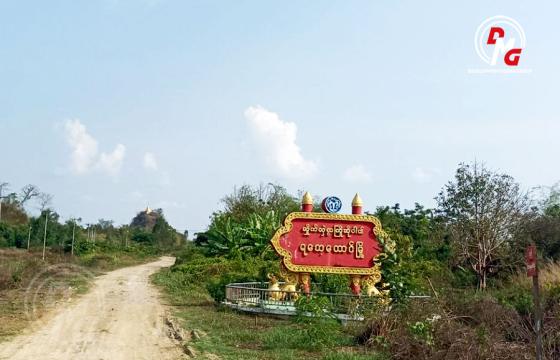

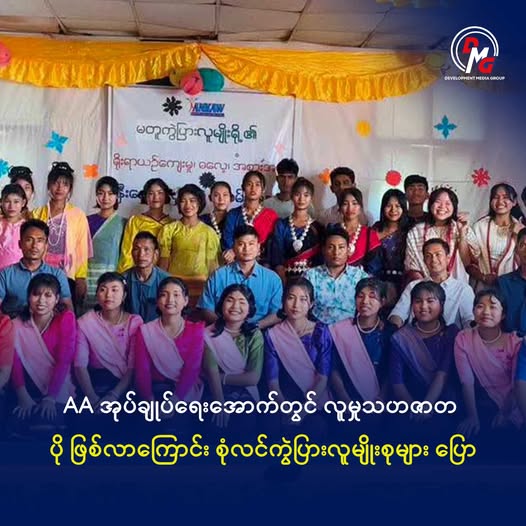
Chin and Maramargyi communities along the Lemyo (Lemro) River, in areas under the control of the Arakan Army (AA)—which now holds most of Arakan (Rakhine) State—said the group has taken steps to foster social harmony among diverse ethnic groups, with improving inter-ethnic relations seen as a sign of these efforts.
In the upper reaches of the Lemyo River in Mrauk-U Township of Arakan State—home to Arakan, Chin, Mro, Khami, and Maramargyi communities—locals said that inter-ethnic relations have become more peaceful under the AA’s administration compared to the past.
“The United League of Arakan (ULA) treats everyone equally. As ethnic Chin living in Arakan State, we have the same responsibilities and rights as others. There’s no discrimination. We are treated kindly and with respect,” said U Kan Thein, a 53-year-old Chin resident from Jeitchaung Village in Mrauk-U Township. The ULA is the political wing of the AA.
Residents in the Lemyochaung area—communities living along the Lemyo River—mainly depend on forest foraging and farming crops such as peanuts, chilies, eggplants, corn, and bananas for their livelihoods.
Another Chin resident, 61-year-old U Ingar Aung, also noted that relations among local communities have grown stronger under the AA's current administration.
“Under the military regime, ethnic minorities faced various forms of oppression. Now, the AA leader promotes unity regardless of race or religion, treating everyone as brothers and sisters, and through his message, we’ve been able to achieve a sense of true unity,” he told DMG.
To encourage social harmony, the AA organizes ethnic national day celebrations and religious festivals, urging people in areas under its control to live together in peace.
Maramargyi residents in the Lemyochaung area also praised that trade, communication, and inter-community relations have improved markedly compared to the past.
“Things have improved compared to the past. Travel is much easier now. Even at night, if children or pregnant women need medical attention, we can transport them without restrictions. That wasn’t possible before. Overall, both administration and transportation have become much smoother than in the past,” said Daw Oo Saw Nwe, a Maramargyi woman from Yawmani Village in Mrauk-U Township.
Residents further claimed that the AA frequently conducts seminars and cultural exchange programs aimed at fostering dialogue among ethnic groups and strengthening long-term social cohesion across Arakan State.