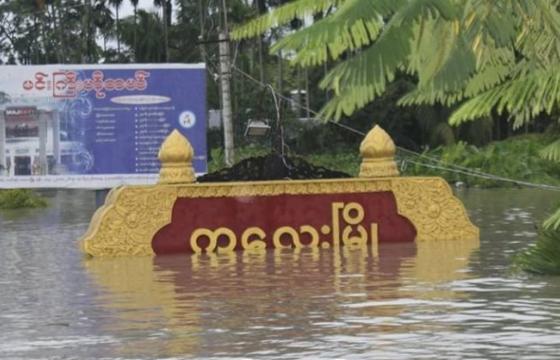

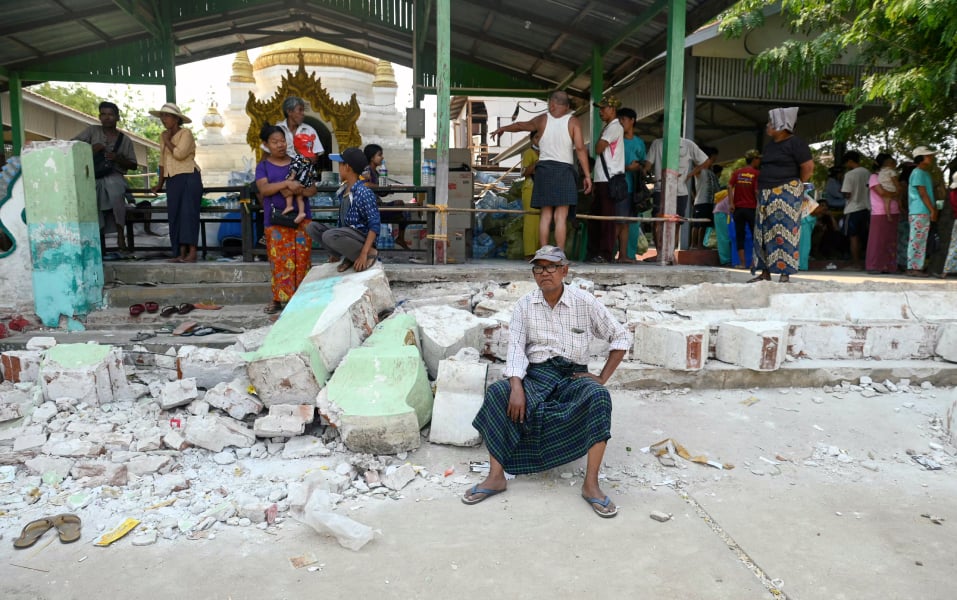
Two months after the devastating March 28 earthquake, the people of Myanmar’s Sagaing Region remain caught between the destruction left by the disaster and the continued threat of junta military attacks, making recovery nearly impossible.
According to a May 23 report from the U.N. Office for the Coordination of Humanitarian Affairs (OCHA), humanitarian needs in Myanmar have reached record levels. An estimated 19.9 million people require assistance, including 2 million in urgent need and 509,400 still in critical need of food following the quake.
Entire communities in Sagaing remain in makeshift shelters or tarpaulin tents along roadsides, too afraid to return to their damaged homes. Structural instability, the threat of aftershocks, and continued military violence have made recovery nearly impossible. With the monsoon season now underway, these temporary shelters offer little protection from relentless rains and strong winds. Many families urgently need metal roofing to survive the coming floods.
The International Committee of the Red Cross (ICRC) reports that communities are still reeling from the devastating March earthquake, with many families now taking shelter in monasteries and religious compounds.
Terra Renaissance, a Japanese NGO founded in 2001 to support communities affected by conflict in Asia and Africa, has documented severe destruction across multiple districts. In District A, approximately 80% of structures have been reduced to rubble. Brick buildings in particular were devastated, leaving behind a landscape of shattered remnants. In District B, although fewer buildings collapsed, the destruction of key commercial centers has triggered a major economic blow, leading to widespread unemployment and leaving many families without a means of support.
In District C, the collapse of religious structures, especially temples, has deprived communities of vital places of spiritual solace. Residential buildings also suffered major damage, forcing large numbers of people into displacement and temporary shelters.
The earthquake has claimed many lives in the area. While the official death toll stands at 590, the real number is likely much higher. Conditions in the shelters are dire, with critical shortages of food, clean water, and medicine. Sanitation continues to deteriorate rapidly, placing the elderly and children at grave risk.
As monsoon rains begin to fall across central Myanmar, conditions in the displacement camps have gone from bad to worse. Families living under tarpaulins now face waterlogged grounds, overflowing latrines, and a surge in waterborne illnesses. Health workers report frequent cases of acute watery diarrhea and skin infections, and warn that the risk of dengue fever is rising, with mosquito breeding accelerated by stagnant water and poor sanitation in the overcrowded camps.
Medical needs remain overwhelming. The World Health Organization (WHO) has been mobilizing vaccine doses with Tetanus shots being administered to 120,000 people, and rabies vaccines are being used to address a spike in dog bite cases. However, only 87,000 people, just 19% of the target population, have received health services so far. They also report a persistent demand for non-communicable disease medications, which are scarce in conflict zones.
A lesser-known danger has also emerged: the shifting earth has dislodged landmines and unexploded ordnance, resulting in injuries and deaths among displaced civilians. Many of the hardest-hit townships were already contaminated with landmines, and the earthquake has further exposed or relocated explosive remnants, dramatically increasing the risk for families fleeing their homes. This hidden threat now complicates both aid delivery and reconstruction, turning even the simple act of walking into a deadly gamble.
International aid efforts continue to be severely obstructed by military checkpoints, restricted access, and other barriers imposed by the junta. These restrictions are preventing vital humanitarian assistance from reaching those in greatest need, further deepening an already dire crisis. Despite international pledges, very little aid has reached affected communities.
Meanwhile, airstrikes and artillery fire continue to plague Sagaing and the surrounding region, compounding trauma and disrupting aid delivery. On May 12, the State Administration Council (SAC) launched an airstrike on a school in Tabayin Township, located in northwestern Sagaing Region. The attack killed more than 20 children and two teachers. The school was operated by the National Unity Government (NUG), formed by lawmakers ousted in the 2021 military coup.
The junta has denied responsibility, claiming through state-run media that "illegal anti-government media outlets have spread false news." However, the attack has been well-documented and independently verified by resistance groups and ethnic media reporting networks.
Mental health is a hidden crisis in Myanmar’s earthquake-hit regions. Research shows that people displaced by conflict face heightened psychological risks and urgently need support systems that foster resilience and social safety. Children and adolescents are especially vulnerable, but no one is immune. A rapid assessment by humanitarian agencies found that 67% of survivors are experiencing emotional distress, while 84% lack access to any mental health services. Ongoing violence and continued aftershocks have triggered a surge in anxiety, disconnection, and untreated trauma, particularly among children.
UNICEF and youth volunteers warn that without proper support, these “invisible wounds” may persist long after physical recovery begins. Yet Myanmar is vastly unprepared to meet the need, with fewer than one mental health worker per 100,000 people and only two psychiatric hospitals nationwide. In Sagaing, almost no trained professionals are available to provide the care people urgently need.
This earthquake should be the wake-up call that finally spurs international action. The world must intervene to deliver lifesaving aid to desperate civilians across Burma and hold the junta accountable for its ongoing crimes.
Antonio Graceffo is an economist and China expert who has reported extensively on Burma.