
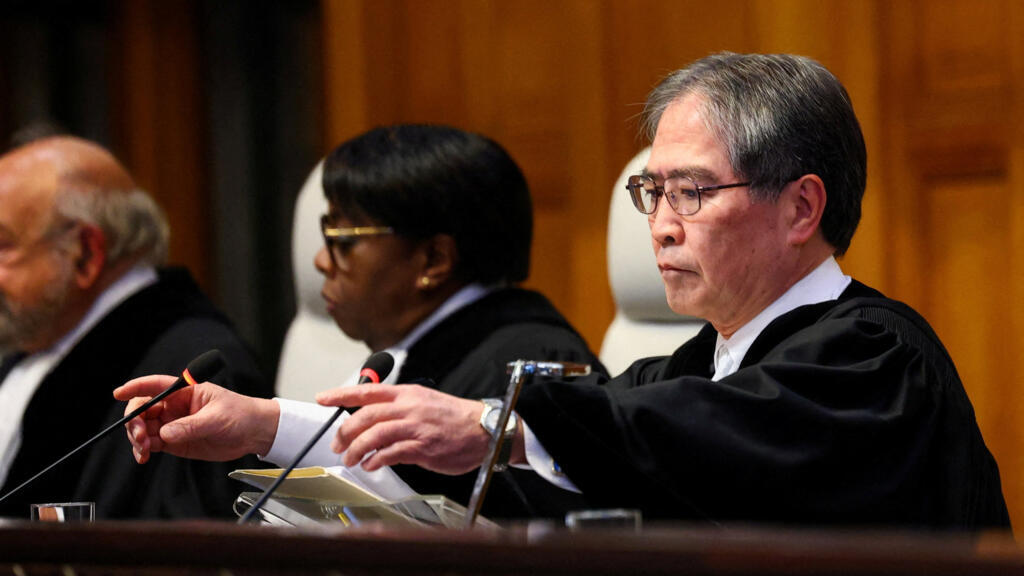
The decision by Rohingya survivors to testify before the International Court of Justice (ICJ) represents a powerful act of courage and a significant step toward accountability for alleged atrocities committed in Myanmar, according to a United Nations human rights expert.
As oral arguments concluded in the landmark genocide case brought by The Gambia against Myanmar, the UN Special Rapporteur on the situation of human rights in Myanmar, Tom Andrews, praised Rohingya survivors for coming forward to share first-hand accounts of the violence they endured.
In a statement issued following the hearings in The Hague, Andrews emphasized that while legal representatives from both The Gambia and Myanmar presented their arguments, the most consequential moments came from the testimonies of Rohingya survivors themselves.
“These first-person accounts allow the Court to focus on what matters most—the Rohingya men, women and children who were subjected to brutal attacks by the Myanmar military,” Andrews said. He described the survivors’ willingness to testify as an extraordinary demonstration of courage, noting that their presence ensured that “the light of truth shines through the darkness of the most horrific crimes.”
He also acknowledged the efforts of those who worked to ensure the survivors’ safe, dignified and meaningful participation in the historic proceedings, calling their contributions vital to the pursuit of justice.
According to Andrews, the testimonies underscore that justice is not an abstract concept, but one built on the bravery of individuals willing to speak truth to power.
The UN expert further highlighted a striking omission during the hearings: Myanmar’s representatives repeatedly avoided using the term “Rohingya,” instead referring to the community as “Bengali,” a label widely regarded as derogatory and deeply offensive.
“The most telling aspect of the proceedings was not what was said, but what was not said,” Andrews noted, adding that the Rohingya have a fundamental right to self-identify by their name.
The hearings come amid continued reports of escalating military attacks on civilians in Myanmar, alongside ongoing discrimination and disenfranchisement of the Rohingya and other minority communities.
Andrews stressed that the ICJ proceedings constitute an important step in the broader pursuit of truth, justice and accountability. He called for robust protection measures to ensure that survivors who cooperate with the Court are not subjected to intimidation, harassment or reprisals.
“We honor those who have come forward by listening to them, supporting their call for justice, equality and dignity—and by calling the Rohingya by their name,” he concluded.