
Nearly half of Chin State’s population has been displaced since the military coup, according to a new report by the Institute of Chin Affairs (ICA), released on 16 July.
Citing data from aid groups and its own field research, the ICA said that out of the roughly 500,000 people who lived in Chin State according to the 2014 census, around 200,000 have been forced to flee their homes. Of that number, approximately 130,000 people remain internally displaced within Chin State, while some 70,000 have sought refuge in India, particularly in Mizoram, Manipur, and New Delhi.
According to official figures from the Mizoram state government, at least 33,036 Myanmar nationals are currently sheltering in the state. The ICA also documented 127 refugee camps across seven districts in India, with many others living in rented houses or makeshift farm shelters.
Salai Van Sui San, the ICA’s information officer, said immediate legal protection and long-term support strategies are urgently needed to address the worsening refugee crisis.
“For long-term sustainability, vocational training programmes that enable self-sufficiency are necessary. Aid organizations also need to implement long-term plans,” Salai Van Sui San said.
The ICA report states that the military coup, along with violent crackdowns on peaceful protesters, arbitrary arrests, and escalating clashes between the Military Council and resistance groups, has forced tens of thousands to flee Chin State.
The report emphasized the urgent need for food, education, and healthcare support, particularly as international funding dwindles. The recent withdrawal of support from USAID has significantly affected refugees’ access to basic necessities.
While some refugees rely on short-term food aid from NGOs and donors, the ICA stressed the importance of sustainable livelihood programmes such as tailoring and weaving. The report also called on the United Nations High Commissioner for Refugees (UNHCR) to issue refugee recognition certificates and extend its operations beyond New Delhi to Mizoram and Manipur, where most Chin refugees are currently based.
“The central and state governments of India lack a robust legal framework for refugees, leaving them vulnerable. They face employment bans and have limited access to education and healthcare,” said Salai Van Sui San.
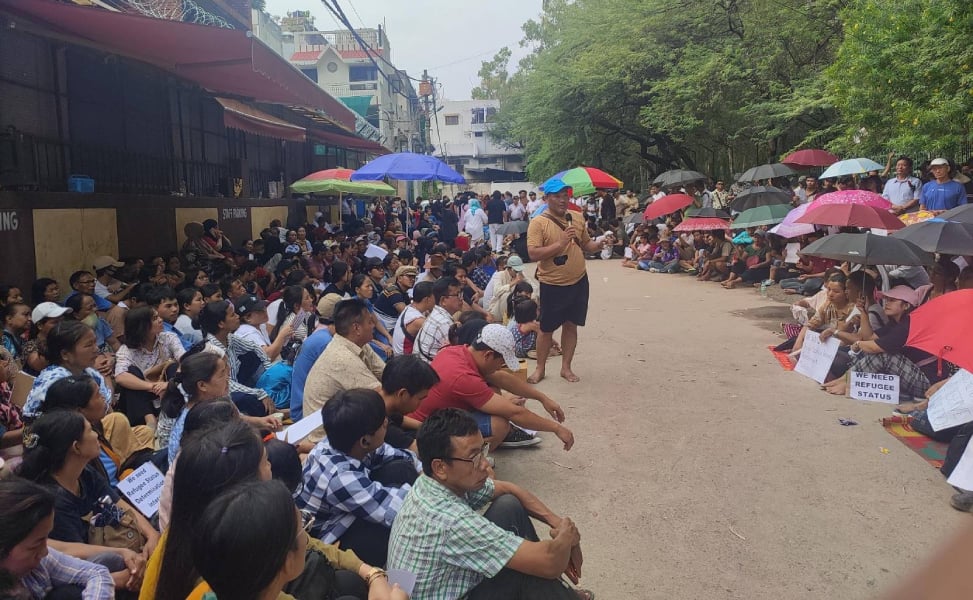
Meanwhile, protests demanding refugee status for those who fled after the coup have been ongoing in front of the UNHCR office in New Delhi since 7 July. The demonstration marked its 10th consecutive day on 18 July, according to the Chin Refugee Committee (CRC). More than 10,000 Myanmar nationals are currently taking refuge in the Indian capital.
Founded in May 2021, the Institute of Chin Affairs conducts research and provides education, healthcare, and humanitarian assistance to conflict-affected communities in Myanmar and displaced refugees in neighbouring countries.