

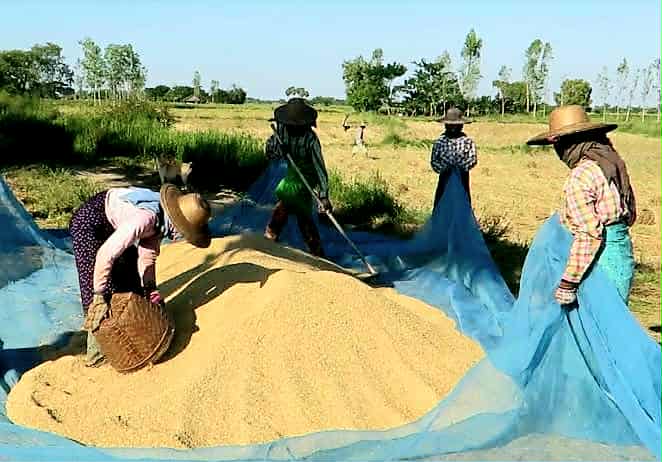
Local farmers in Mon State are struggling to find buyers and facing economic losses after the junta banned the transport of their rice to other regions.
In previous years, rice grown in Mon State during the rainy season was often bought by procurement agents and traders from other regions. This year, however, the junta has restricted rice transport, and those caught violating the rules face arrests and heavy extortion by junta-affiliated authorities.
Trading rice with other regions now requires paying large sums to the authorities, making it economically unviable. As a result, traders and agents have stopped coming, leaving Mon State farmers struggling due to the lack of buyers.
“There are almost no rice buyers right now. Traders told us that even if they have all the proper documents to transport rice, they still have to pay extra tolls at every junta checkpoint. It’s just not economically viable for them. With no buyers around, rice prices are dropping—but even as prices fall, no one is coming to buy,” a local farmer told Than Lwin Times.
As a result, after harvesting the rainy-season rice, farmers can do little but store it. Some cannot even afford the harvest fees since they cannot sell their rice, forcing them to borrow money at high interest rates, he added.
When planting rice, farmers incur many routine expenses, including plowing, fertilizer, and harvesting costs, but they often suffer losses when yields drop or adverse weather damages their crops. As farmers struggle with these challenges, they face additional burdens from restrictions imposed by junta-affiliated authorities. But the junta is not stepping in to help, farmers lamented.
On the other hand, during a visit to Mawlamyine, the capital of Mon State, on November 16, coup leader Senior General Min Aung Hlaing blamed farmers for failing to meet the per-acre rice yield targets set by his regime, claiming this has caused an annual economic loss of around USD 8 billion.
Mon State typically cultivates nearly 700,000 acres of rice during the rainy season, producing over 43 million bushels annually, which are sold both locally and to other regions.