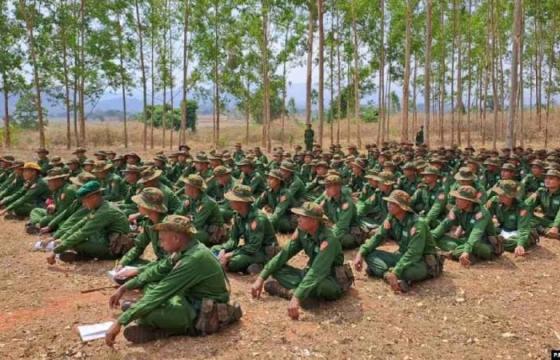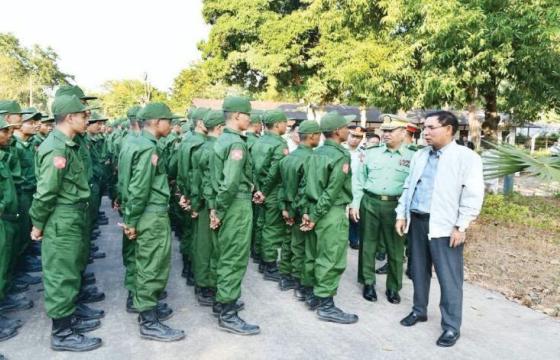

The Myanmar government’s recently announced plan to enlist civilians as a ‘regional police force’ in Myanmar’s troubled northern Rakhine State is likely to aggravate an already dire human rights situation, warned the International Committee of Jurists (ICJ) on 4 November.
“In a country where the regular police and military are notorious for grave human rights violations, it’s difficult to extend the benefit of the doubt to poorly trained civilians,” said Sam Zarifi, ICJ’s Asia Director.
“Establishing an armed, untrained, unaccountable force drawn from only one community in the midst of serious ethnic tensions and violence is a recipe for disaster,” he added.
Over the last month the region has experienced increased tension and violence including attacks on border police and allegations of human rights violations by security forces, including attacks on Rohingya villages and sexual assaults.
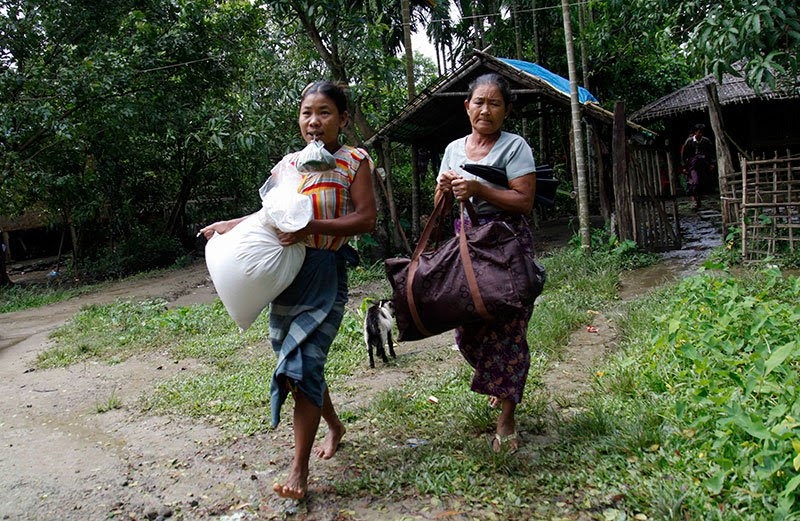
Humanitarian assistance and independent monitors, including the media, remain severely restricted in the area.
The Rakhine State police are recruiting civilians for the force along ethnic and religious lines, officially excluding Rakhine state’s Muslims, most of whom belong to the area’s persecuted Rohingya community.
Recruits will reportedly be armed and paid by the border police after undergoing abbreviated training.
The ICJ considers that a civilian regional police force necessarily lacks the adequate training and oversight to perform policing functions in accordance with human rights and professional standards on policing.
Moreover, there does not appear to be an appropriate accountability mechanism in place to deal with instances of misconduct and human rights abuses, the ICJ says.
Such a ‘regional police force’ will be dangerously under qualified and prone to committing human rights violations, especially as they will answer to the military rather than civilian government, the Geneva-based organization adds.