

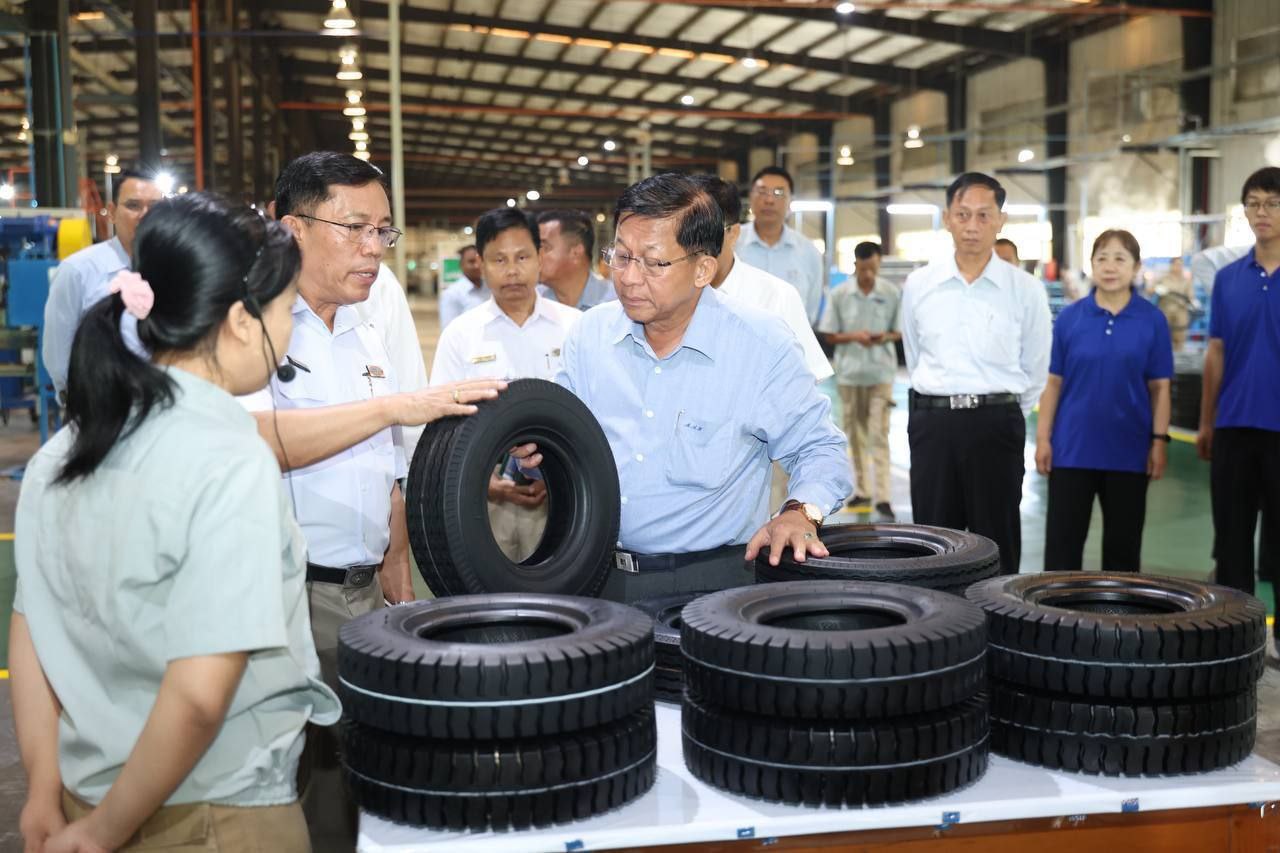
The coup leader, General Min Aung Hlaing, has called for the widespread adoption of solar power in Myanmar because the country does not have enough electricity generating capacity.
On a 21 June 2025 visit to factories in Yangon Region, Min Aung Hlaing told junta officials and factory management that Myanmar imports large amounts of fuel from abroad to generate electricity, which it would not need to do if domestic renewable energy sources, such as solar power, increased their output.
He argued that Myanmar, with over 300 sunny days a year, should be using solar power to help lower production costs and increase profits.
He also urged wealthy businessmen to invest more in the solar power sector and emphasised the need to expand the use of solar generated electricity in ministries, homes, and factories.
A businessman said that though the idea of solar generated power was appealing, the high cost of initially installing it and the substantial investment this required made it economically unfeasible.
He said to Than Lwin Times: “It would be great if we could use solar power effectively. But the investment needed is really high. Especially to generate enough power to run industries, it would take a huge amount of money. That could become an extra burden for entrepreneurs and might even make it unprofitable.”
He added that running factories on solar power was not viable for small and medium-sized businesses because of the high investment and likely low increase in profits that it would bring. He said only large industrial plants and factories could realistically consider solar power as an option.
Since the coup, Myanmar’s power generation capacity has sharply declined, forcing factories to rely on diesel generators during frequent blackouts. Whilst solar power has been considered as an alternative, business owners say the high installation and investment costs have prevented its widespread adoption.