
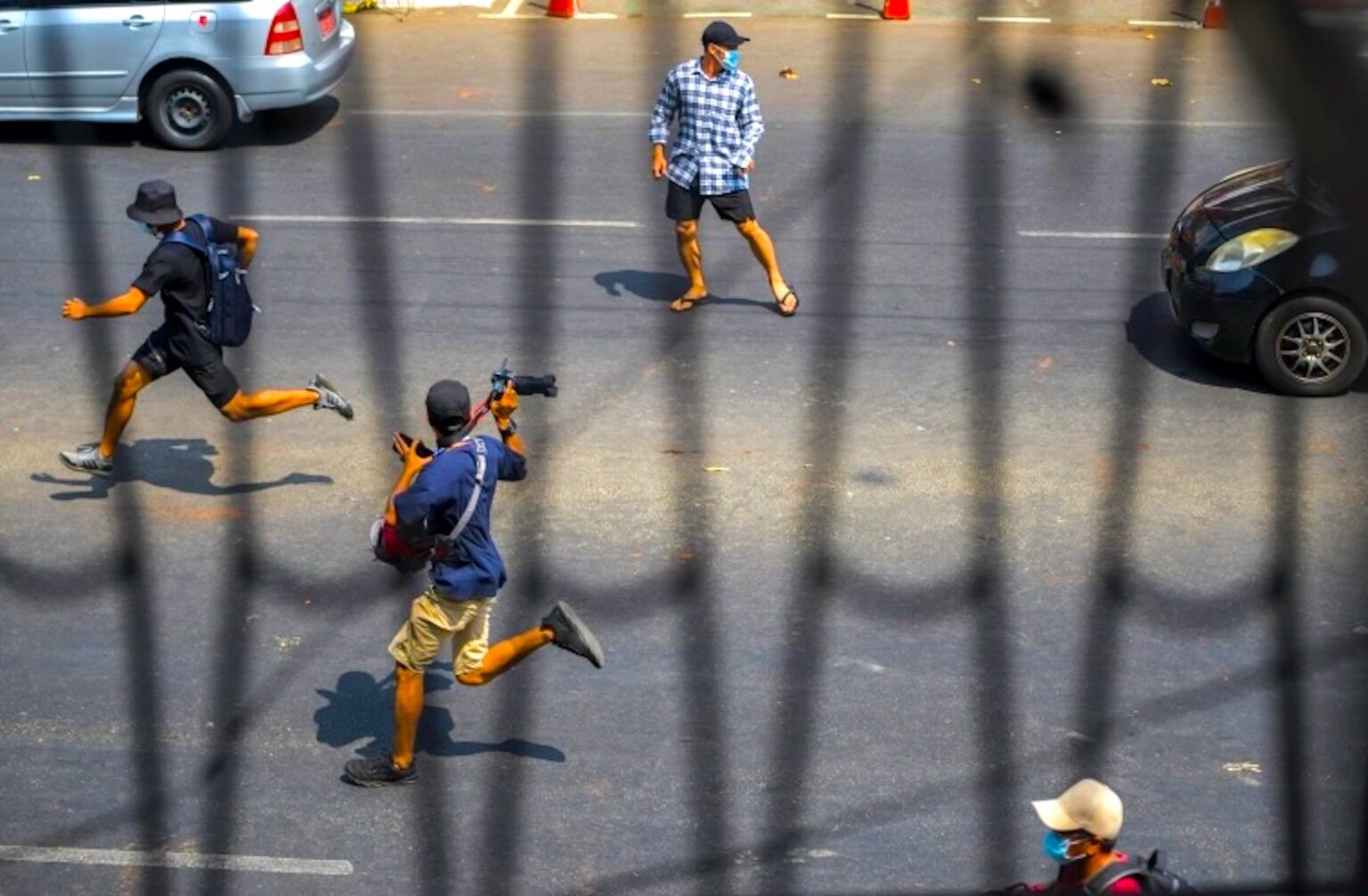
The junta has issued a law punishing anyone who speaks, organizes, incites, distributes leaflets or publishes content deemed harmful to the electoral process, but journalists criticize it as a threat to press freedom and media professionals.
On July 29, junta leader Senior General Min Aung Hlaing promulgated the ‘Law on the Protection of Multiparty Democratic Elections from Obstruction, Disruption and Destruction,’ comprising 8 chapters and 32 sections.
The Independent Press Council Myanmar (IPCM), representing media agencies and journalists in Myanmar, abroad, and in ethnic regions, has criticized the junta’s laws and restrictions as a growing threat to journalists committed to upholding press freedom.
“In fact, what the junta is really doing is trying to shield its planned election from any criticism or opposition. This law will also target the media. It’s clearly meant to intimidate journalists, to make them afraid to criticize or report freely. Anyone who dares to write something critical can be arrested and jailed at any time,” said U Toe Zaw Latt, the secretary of the IPCM.
Chapter 6 of the law bans speeches, organizing, protests, incitement, and the distribution of materials intended to sabotage the election. It imposes penalties ranging from three to seven years in prison, fines, and even the death penalty in cases that result in fatalities.
The junta has announced plans to hold the election in more than half of Myanmar’s townships by the end of 2025 or early 2026. Political analysts suggest that the junta will conduct the vote primarily in its stronghold areas and regions with weaker resistance.
A veteran journalist commented that the junta may have enacted this law in advance to suppress other forms of opposition to the election in junta-controlled areas, despite the low likelihood of armed resistance, and that journalists are also at risk as a result.
“According to this law, even if you write news that goes against the election, you could be arrested and prosecuted. It’s still too early to tell how big the impact will be, but from my experience, the risk to journalists is already real,” he said.
The junta has also established a special committee to ensure security for the campaigns, voters, polling station staff, and polling stations, granting full authority to the interior and defense ministers. It claimed that the committee will not only oversee election security but also monitor and take action against all domestic and foreign activities aimed at sabotaging the election.
Since the junta staged the coup in February 2021, dozens of journalists have been arrested and imprisoned on serious charges, including terrorism. According to data collected by IPCM, as of May 2025, 40 journalists remain imprisoned by the junta, with 11 sentenced to long-term or life imprisonment.