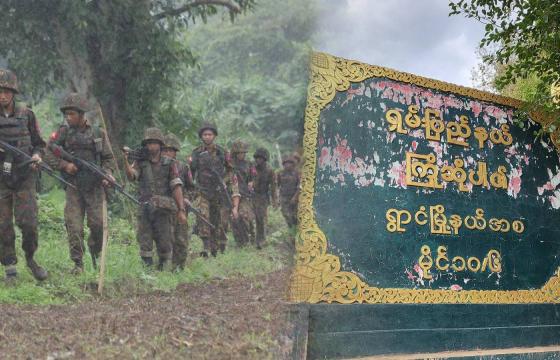

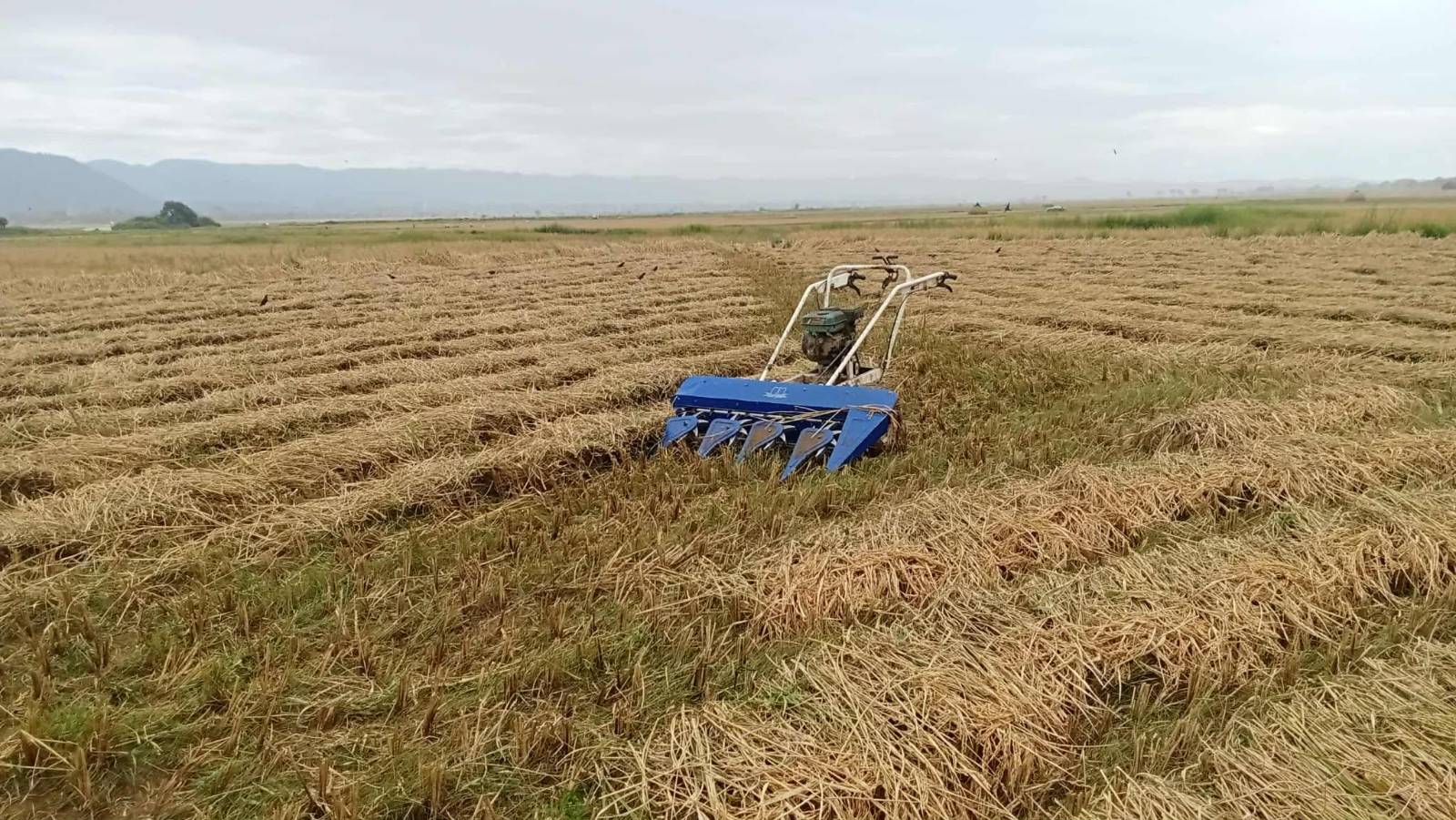
The junta’s strict rice export restrictions have left Mongnai locals in southern Shan State unable to sell their crops, causing significant economic losses.
Mongnai, a major rice-producing town, faces economic hardship as junta restrictions block rice exports to other regions. A local farmer in Mongnai lamented that 16 bushels of rice, which sold for 500,000 MMK last year, now fetch only about 400,000 MMK due to junta restrictions, with demand remaining low.
“Last year, we got 500,000 MMK for 16 bushels, but this year we only got 400,000 MMK. There are very few buyers, and we mostly depend on the mill owners. If they don’t buy, we won’t be able to sell our rice anywhere,” he told Shan Herald.
When the junta banned rice transportation outside the town, mill owners could not export the rice they had already milled and had to store it, making it difficult for them to purchase new supplies.
“Rice can’t be transported because the junta is enforcing stricter inspections. The mill owners are struggling too since they can’t sell the rice they’ve stored, so they can’t buy new rice from us,” another Mingnai resident said.
Following the junta’s closure of Friendship Bridge 2 in Myawaddy Township, Karen State, a major border trading point with Thailand, Tachileik Town in eastern Shan State was used as an alternative for trade. Since early September, however, the junta has imposed tighter restrictions on Thai imports there.
Not only that, the junta also banned the movement of goods to mainland regions. As resistance forces took control of border posts, the junta, fearing that trade could boost these groups financially and organizationally, began cracking down. On August 12, Senior General Min Aung Hlaing declared such trade illegal and ordered arrests.
“At junta checkpoints, even a bag of rice can trigger strict questioning. Drivers must explain it is only for personal use before being allowed to pass. Thai-made goods are completely prohibited. The checks are very strict. Any Thai goods found are taken off the truck, and none are allowed to pass beyond Shan State’s Mongpun Town,” a Mongnai resident told Shan Herald.
Over 9,000 acres of rice are cultivated around Mongnai Town, and although a quarter of this year’s crop has been harvested, farmers are struggling due to a shortage of buyers.
“The town’s economy depends heavily on rice cultivation. If the farmers collapse, it will have a huge domino effect. Everyone, from landlords to day laborers, will suffer if rice sales don’t go well this year. And without income from this year’s harvest, there won’t be enough money to plant rice next year,” a 30-year-old town resident warned anxiously.
He also called on relevant authorities and armed groups to address and resolve the economic challenges currently facing farmers.
The price of basic rice has dropped to a record low after the junta intervened to regulate prices amid falling production caused by military conflicts nationwide. In response, the junta has resumed rice exports.
This means that around 3 million tons of rice are expected to be exported in the current fiscal year, compared to 2.5 million tons exported in the entire previous year.